Trst u prijevodu/Trieste in Translation

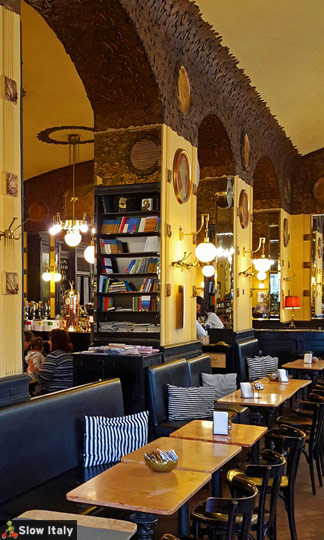
Cafe San Marco opened on January 3 in 1914. The café was originally named after its first owner Marco Lovrinovich, a wine dealer. Under pressure by the Austrian government, it was renamed Cafe San Marco after the Venetian San Marco Lion. .https://slowitaly.yourguidetoitaly.com/2016/04/top-10-historic-cafes-in-trieste/

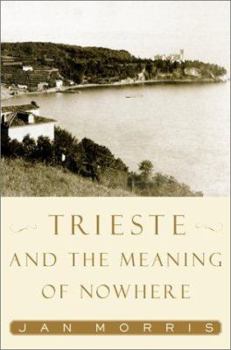
Trieste and The Meaning of Nowhere was Welsh-born author Jan Morris’s last book. Morris, who did not like to be called a travel writer, provides an explanation of her memories, and maybe of all travel writing, as ‘a little book of self-description.’ It is a lively, personal, interpretation of a city over time, reminiscent of lingering conversations over coffee. This is a hallmark of Morris’s Trieste and of Trieste itself, which like Vienna, had and still has, a thriving cafe culture that supported writers. In 1933 Francesco Illy founded Illy coffee in Trieste https://www.illy.com/en-ww/illy-caffe-history and accidentally, the beginnings of literary tourism. Paul Clemens 2001 review for The Guardian calls Morris’ Trieste ‘neither guide book, travel memoir, nor a chronological history but is a relaxing, reflective essay written from a personal perspective by someone who clearly knows the place well and is attuned to its history.’ Morris captures the feeling of Trieste as she knew it with, ‘Melancholy is the city’s chief rapture.’ In Trieste Morris adopts a wistful tone that pervades this once economically and politically strategic Mediterranean port. 

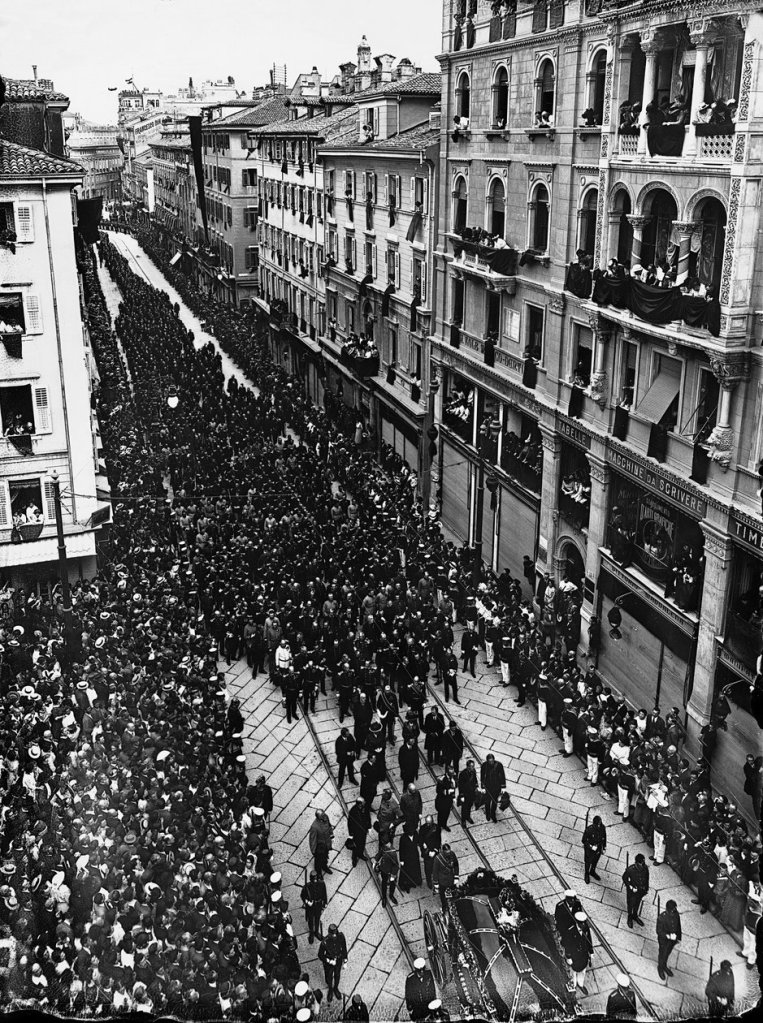
Funeral Procession of Archduke Ferdinand in Trieste, June 1914 by Carl Wulz
https://www.theflorentine.net/2025/01/08/fotografia-wulz-trieste/#google_vignette

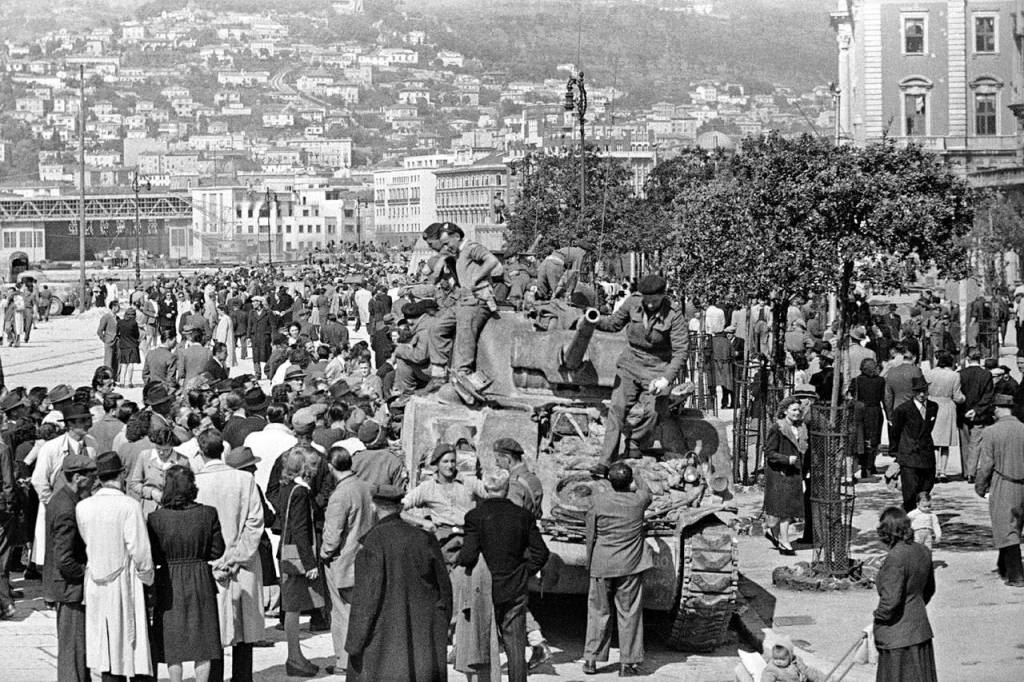
Jan was posted to Trieste during WWII as James Morris, one of the 9th Queen’s Royal Lancers and a regimental intelligence officer.  Her WWII service influenced her perception of Trieste, but more interesting are parallels between Morris’s own identity formation and the many changes in and to Trieste throughout the 19c and 20c. In Trieste, Morris describes first experiencing the city as a young military man  who was not a published author, not a public figure, unmarried, and not yet a father. Morris describes her engagement with Trieste in 2000 as an old woman, parent, grandmother, devoted partner, and civilian who was a widely recognized expert and author on travel in cities.  Bridging cultural-generational divides is one way of looking at Morris’s Trieste, another is the way in which the city welcomes—or tolerates—outsiders. 

Trieste residents crowd around an Allied tank, 1945. GETTY IMAGES

When she began her transition in 1964, Jan was already a distinguished journalist and adventurer. She was the first journalist to climb Mount Everest in 1953 with Edmund Hillary and Tensing Norgay.  Jan’s anthropological research of cities, notably; Venice, Oxford, Hong Kong, New York City (Manhattan) and Trieste mark her as a historian who values human connections. Like Rebecca West’s Black Lamb and Grey Falcon, Trieste and The Meaning of Nowhere,  describes the zeitgeist and multiple identities of what are sometimes referred to as the Balkans—places seen as outposts by those who did not care so much about those places and the people who lived there as West and Morris did.  West often praised Morris and seemed irritated by her success in a somewhat snarky 1974 New York Times review of Morris’s Conundrum which documents her gender-reassignment (then called sex-change). https://www.nytimes.com/1974/04/14/archives/conundrum-by-jan-morris-a-helen-and-kurt-wolff-book-174-pp-new-york.htm

Morris’s Trieste traces the history of a city with a confounding past. It was often hard to pin down who was in charge. Trieste has been governed by Venetians, Ottomans, Austrians/Hapsburg’s, post-WWII Western Alliances, Yugoslavs, Slovenes and again as in the past, Italians. Those transitions helped this multi-level town framed by the Adriatic, cradled by mountain forests and carved from karst to assume multiple, if murky identities. It is a transitory place one wanders into coming from and going to somewhere else. Morris draws on the geopolitical tenet, geography is destiny1 and her Trieste gives vibes similar to Joyce’s description of Trieste as ‘bittersweet, it is a wounded city like Dublin.’  Both Joyce and Morris express an affinity with the Triestini, whose identity, like their own was often in flux. Joyce’s literary reputation was undoubtably known to Morris. Joyce left Dublin for Trieste in 1905 to teach at the Berlitz School. After a short detour in Pula which was deporting foreigners at the time, Joyce returned to Trieste to teach at Berlitz. While in Trieste Joyce completed Dubliners, an autobiographical collection of short stories, A Portrait of the Artist as a Young Man, poetry, a theater play and the first three chapters of his most famous novel, Ulysses. Trieste was the city where he matured as a writer (frequenting taverns and brothels) and called home until 1920.

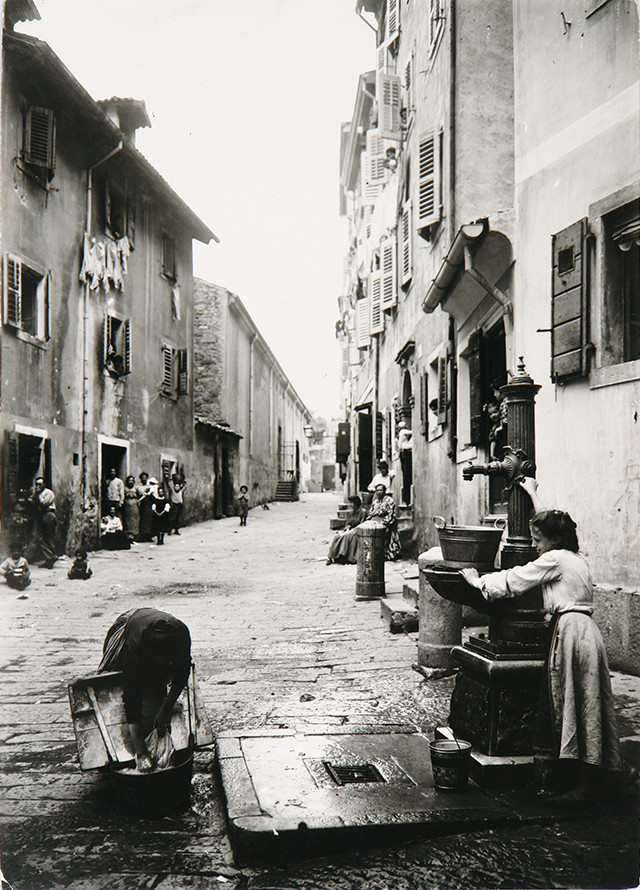
This street in the old town of Trieste housed many brothels during Joyce’s time there. Il Metro Cubo is said to have been one of Joyce’s and Svevo’s haunts along with the more savory Caffe Stella Polare. https://itinerari.comune.trieste.it/en/the-trieste-of-james-joyce/

Joyce began an important friendship with Triestino Italo Svevo (born Aron/Ettore Schmitz) when they met in London. There the wealthy Svevo, a businessman, and erstwhile writer hired the impoverished Joyce to tutor him in English—other influential clients followed. Svevo is thought to be the inspiration for Leopold Bloom inUlysses.  Svevo’s wife, Livia Veneziani, whose hair Joyce describes as a river, inspired a character in Finnegans Wake. https://www.ebsco.com/research-starters/history/italo-svevo. When Joyce returned to Trieste 1919, the Mussolini-led government provoked his move to Paris. He did not come back to Trieste.  Today’s Trieste has a hotel, trail and museum devoted to Joyce. https://museojoycetrieste.it/en/history-of-the-museum/ 

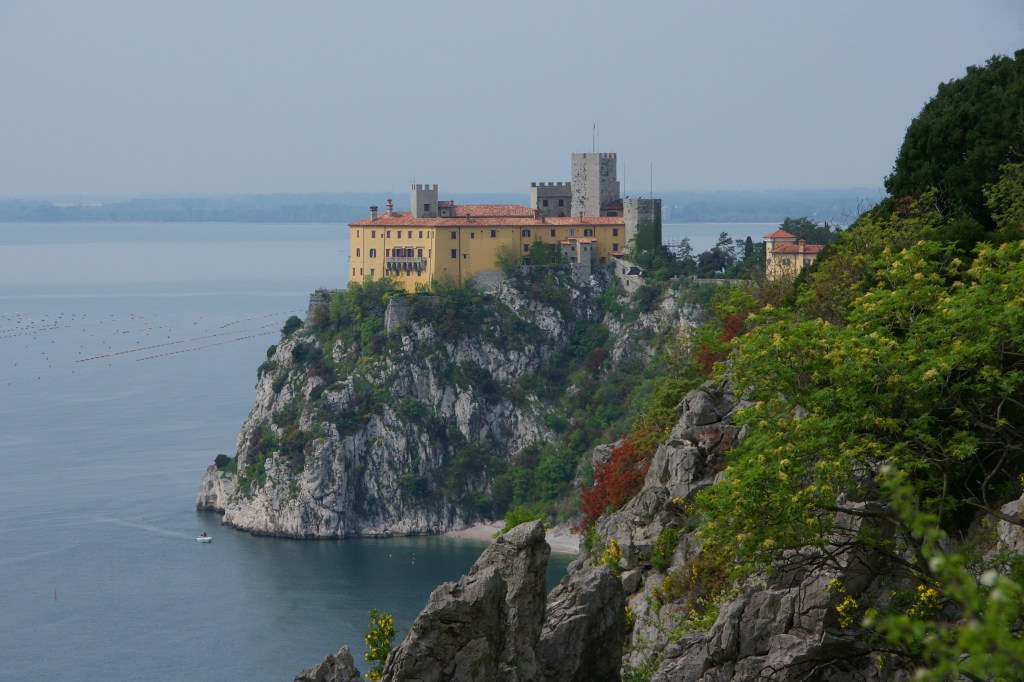
The tone of Morris’s Trieste echoes another influential writer of the early 20c, poet Rainer Maria Rilke.  Rilke began writing the Duino Elegies in 1912 while holed up (by invitation) at the Castle Duino 33 kilometers north of Trieste. Rilke’s Duino Elegies were completed in 1922 after his WWI military service. His poetry foreshadows the existential crises that pervaded Europe following two World Wars and expresses how spirituality and the natural world give meaning to everyday life in ways that religion did not. It’s hard to believe Rilke did not influence Joyce and Morris.

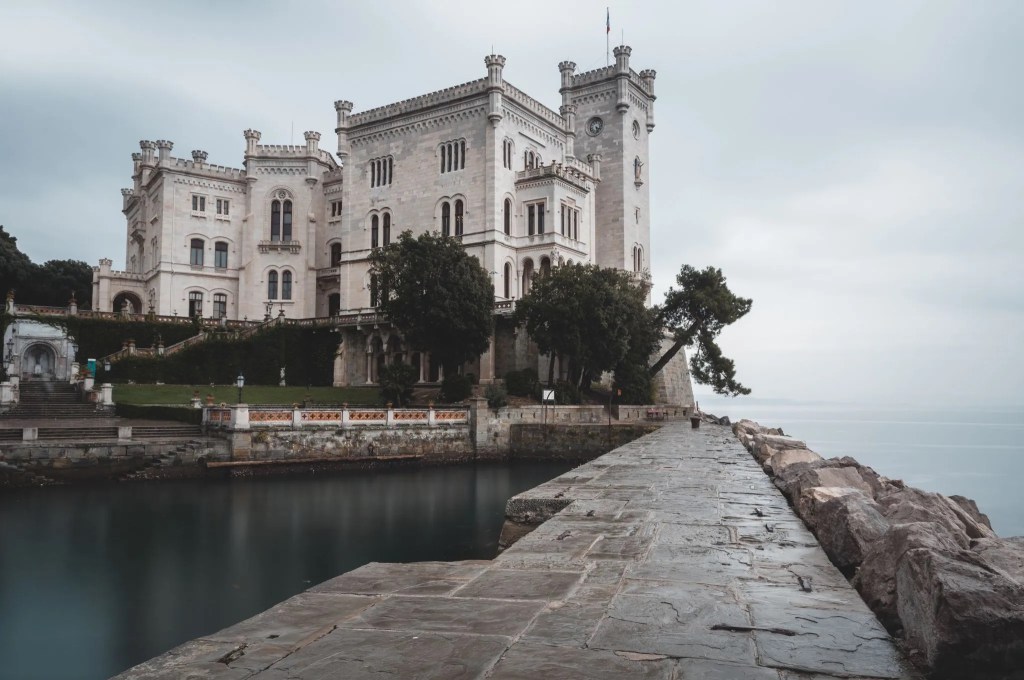
Castello di Duino formerly the home of German Prince Alexander von Thurn und Taxis and Czech Princess Marie, and Castello di Miramare built by Archduke Maximillian of Austria are 15 kilometers apart. Travel south from Miramare along the coast Gulf of Trieste and you will arrive in Trieste in less than an hour. The Rilke Trail is another story.

So how did the convergence of these writers impact Trieste? I’m not sure they did, and that may be one of Morris’ points. She suggests the city gave writers the space and freedom of a blank canvas with tragic undertones. During WWII the San Sabba Rice Mills were transformed into the only death camps in Italy. https://risierasansabba.it/san-sabba-rice-mill-national-monument-and-museum/ After WWII Trieste became a refugee camp for Italians fleeing Communists who took over Istria, Kvarner and Dalmatia. The city was declared a Free Territory in Article 21 of the Treaty of Paris, but that designation did not mean peaceful. Trieste was divided into antagonistic Italian and Yugoslav areas. Although considered de-militarized and neutral Trieste, retained the psychological and socio-economic trauma of war.  Morris wades with precision into this morass as he documents a time when to some, Trieste represented refuge and freedom, to others uncertainty and cruelty.

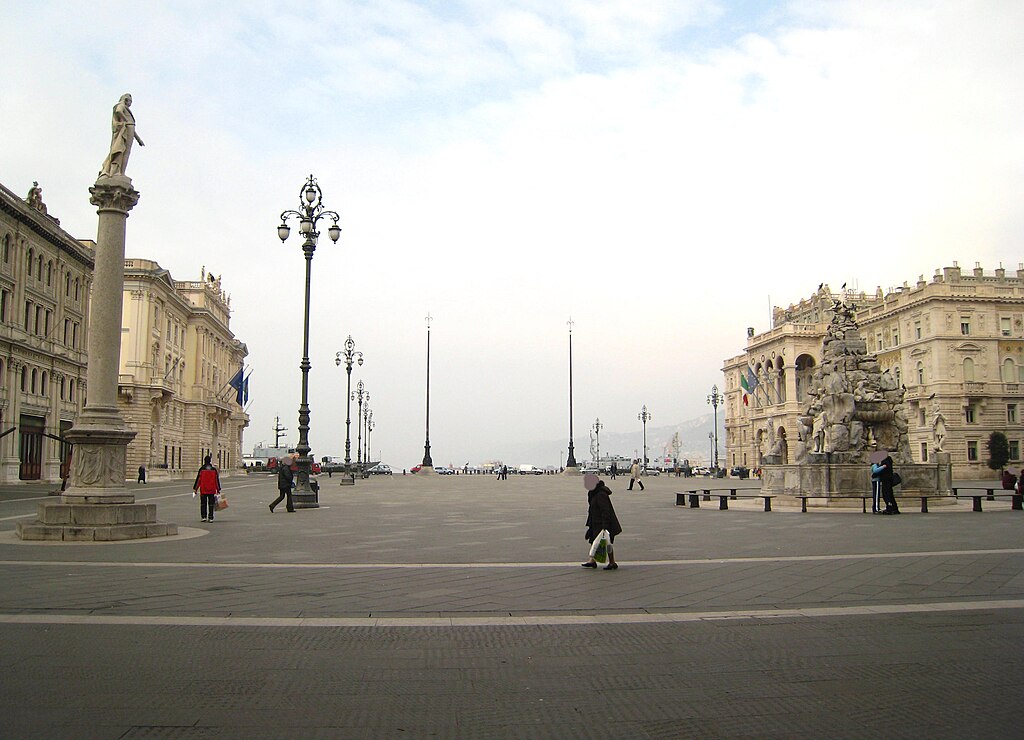
Even with Morris’s skillful observations it is hard to find a cohesive sense of Trieste’s identity. In 2006 my daughter related that getting there from Pula along the coast was tricky because of the many highways. She never felt like she cracked into the real Trieste. So what is the real Trieste? My experience in 2014 was colored by the fatigue, apprehension and preferences of my travel partner. Like Morris, no nostalgic yearnings there. I found Trieste moody, sparkling and a bit forlorn. It took me a while to figure out why Piazza Unita d’Italia seemed like it was missing something. It’s the only square in Italy without a cathedral.

Piazza Unita d’Italia.
Wikimedia Commons, public domain

Does Trieste welcome visitors more or less than other cities? How can we know? From the standpoint of tourism studies, a single person’s experience over time, even those of an expert observer, has limited value. Eco (economic and ecological) perspectives would likely find Morris’s lack of quantitative data that sustainable tourism (industry and practitioners) rely upon to create policy, a weakness of his analysis. I guess it might be tempting to pigeonhole Morris as a time bound memoirist, wallowing in the heyday of the world’s cities. Morris counters irrelevance by calling out travel blogs and vlogs in 2000 as they began to dominate a fading genre but booming industry. She also calls out guidebooks, from Baedeker’s to Lonely Planet as facile introductions based on cursory understandings that helped to created the tourism as we know it today. Morris is not concerned with accumulating consumptive experiences as she is with the ways places effect the inner workings of her heart and mind.

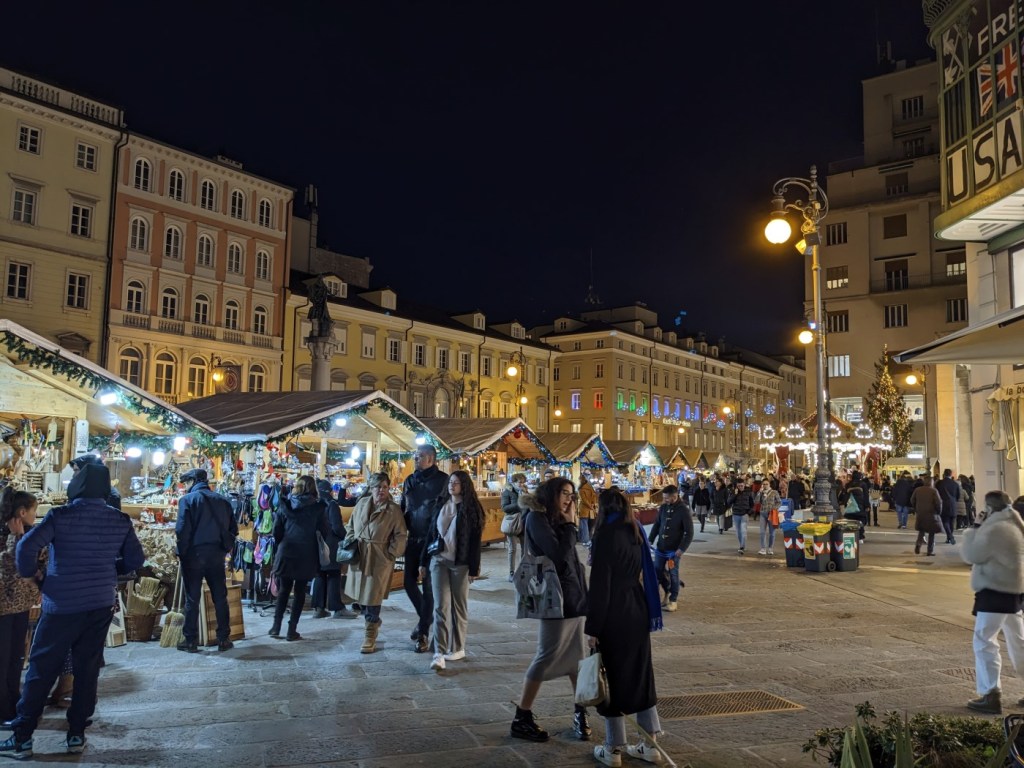
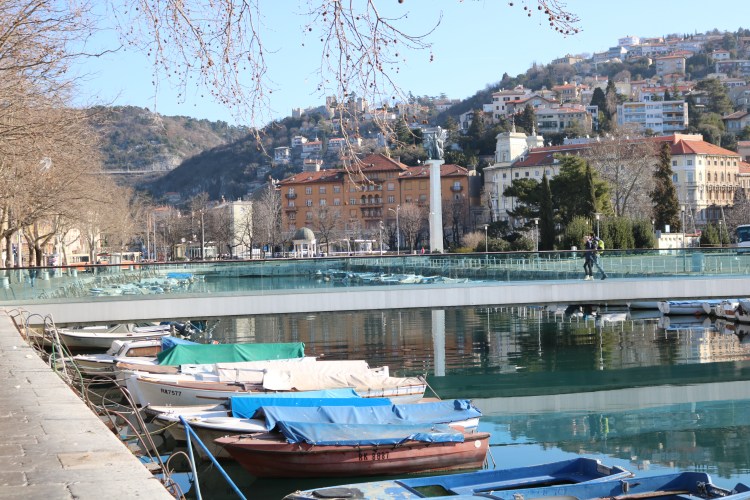
Christmas in Trieste. Looks like Rijeka! https://www.italymammamia.com/things-to-do-in-trieste-italy.html

Why did Morris feel compelled to describe cities?  Where did she feel at home? In her descriptions and witty exchanges Morris tells us that deeply felt connections are entry points into self-discovery. As a child she knew she was living in a body where her true self didn’t belong. Maybe that is why she began searching landscapes for hidden meanings. Karst—harsh, full of secrets and an important morphic feature of Trieste’s history—was cited by Morris as elemental to the city’s character. Morris’s describes the setting for his swan song, a ‘hallucinatory city’ appreciated by those who are intrigued with its chimerical identities and who value ‘kindness, the ruling principle of nowhere!’  Morris’s passion was to share his understanding of gloriously complex places and the people who live there. It is curious that the last of her 40 plus books is far from where she ended up retiring—going home—to rural Wales.

For more Trieste see Daniel Scheffler 9 December 2025 excellent Substack article https://withoutmaps.substack.com/p/trieste-and-the-meaning-of-nowhere

  1. Geography is destiny recently re-examined by Ethiopian-American author Abraham Verghese MD, and Russian-American poet Joseph Brodsky whose works are worth checking out. ↩︎

FJAKA TIME

FJAKA FOREST: DINE & CHILL, DALMATIAN ISLAND STYLE ON JEROLIM, HVAR
https://total-croatia-news.com/news/travel/fjaka-forest-hvar/Paul Bradbury for Total Croatia 26 July 2023

Fjaka may be one of the few cultural trends millenials, babyboomer and z generations can agree upon. Fjaka expresses a 21 c. zeitgeist prioritizing well-being and work-life balance that is achieved by taking the time to relax, just be, traveling to places of serene natural beauty and immersing yourself in a natural landscape and/or seascape. Could travel create understanding across generational divides?  Interpretations of the concept and term reveal how fjaka helps to make Croatia an attractive destination to travelers seeking peaceful, uplifting experiences. Like spending summer in Dalmatia, where fjaka is thought to originate.

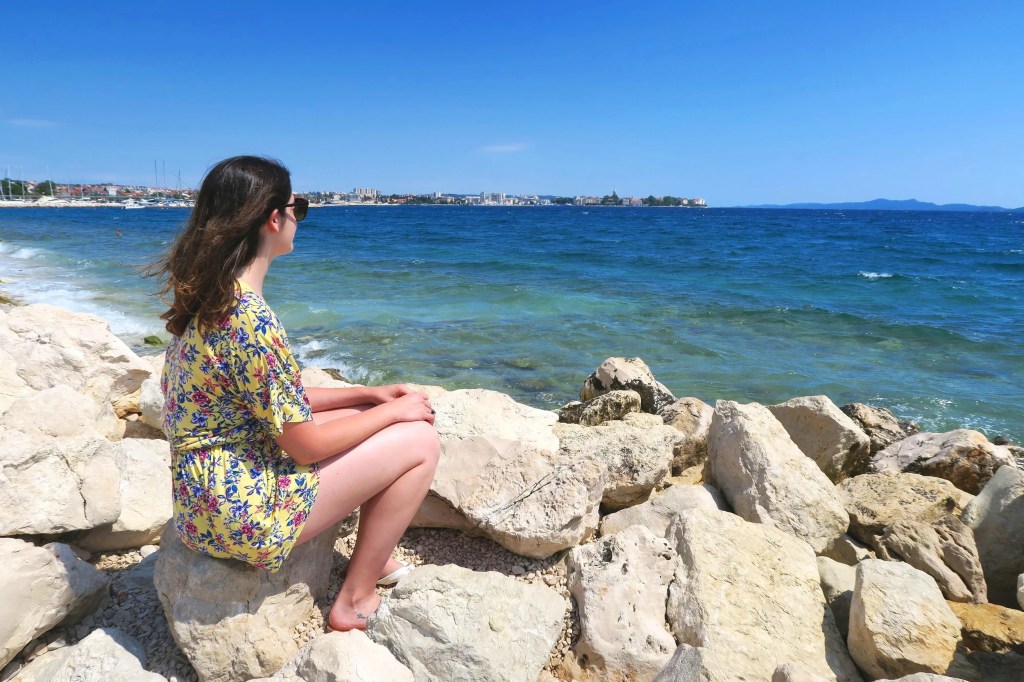
https://herquirkyjourney.com/blog/backpacking-lesser-known-europe-zadar-croatia-part-4

Encyclopedia Britannica has been compiling information written in English by international experts since 1768. This year Encyclopedia Britannica introduced the Croatian term “fjaka” which they define as complete relaxation or the art of doing nothing. https://www.croatiaweek.com/encyclopaedia-britannica-introduces-croatian-term-fjaka/  Fjaka is sometimes confused with laziness, but more aptly it is about having a sense of time where stillness prevails over doing. Like meditation without meditating.

Fjaka: A Croatian Season, by Polish/Swedish/Croatian/Serbian writer and scholar Aleksandra Wojtaszek has not (yet) been translated into English. Since my Croatian is at a pre-school level and I don’t know Polish, I haven’t read it. I discovered her work on Peter Korshak’s podcast Yugoblok, reading some of Dr. Wojtaszek’s articles listed at the end of Yugoblok episode #113 ‘Fjaka YU’. Wojtaszek’s early background as a journalist is evident from her bibliography. According to her interview with Mr. Korshak, Dr. Wojtaszek’s translated work (to English) is ‘crisply descriptive, people focused, and not so much on memory or nostalgia, her eye and heart gives her a soft edge and sharp eye.’


https://www.bbc.com/travel/article/20180118-dalmatias-fjaka-state-of-mind
Kristin Vuković: “I grew to appreciate the sublime state of fjaka” (Credit: Mark-Shenley/Alamy

Fjaka is reminiscent of ‘Pomalo’ or slowly. Unlike the somewhat fatalistic ‘que sera, sera,’ ‘what will be, will be,’ fjaka skews more towards ‘Let it go.’  The ‘it’ meaning worries and other stressful thoughts. Fjaka is not pauza which refers to a short break from working. Fjaka is closely aligned to the Italian dolce far niente which means the sweetness of doing nothing. Like dolce far niente, fjaka is about doing nothing because you choose to—and delighting in this way of being in the world. The Dalmatian coast’s stunning summer heat combined with the rhythm and pulse of the Adriatic creates the perfect circumstances for fjaka to arise. So fjaka is shaped by nature and in turn shapes people’s natures. When ‘on fjaka’ I surmise beta brainwaves produce the simultaneously calm, relaxed and alert state which is the key to fjaka’s restorative benefits.

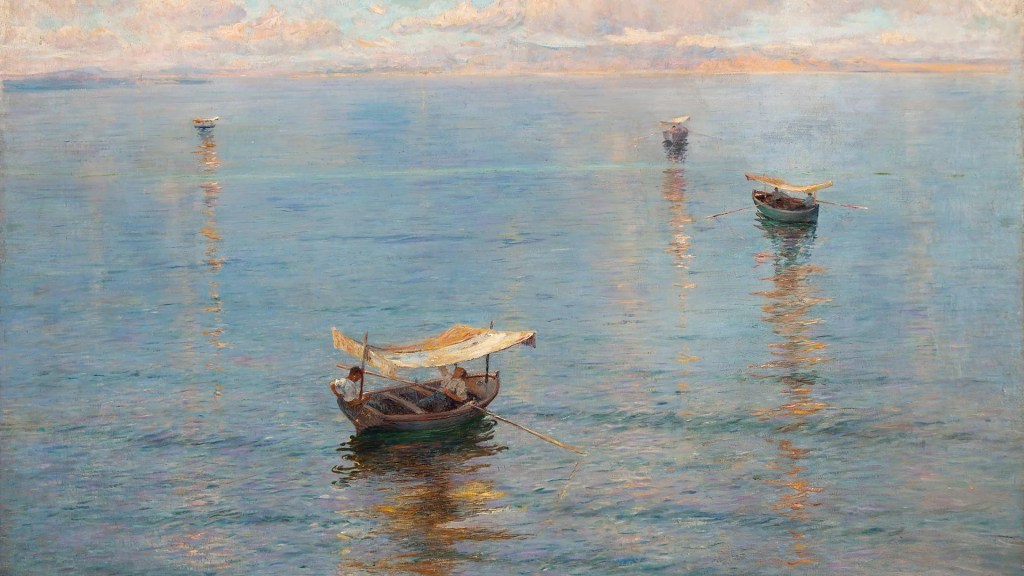
Mato Celestin Medović, Bonaca,1908, oil on canvas (Credit: Kallay Collection)
https://www.bbc.com/travel/article/20180118-dalmatias-fjaka-state-of-mind


The Croatian poet Jakša Fiamengo (1946-2018) who wrote lyrics for the fjaka infused songs of Oliver Dragojević, defined it

…like a faint unconsciousness… a state beyond the self or – if you will – deeply inside the self, a special kind of general immobility, drowsiness and numbness, a weariness and indifference towards all important and ancillary needs, a lethargic stupor and general passivity on the journey to overall nothingness. The sense of time becomes lost, and its very inertness and languor give the impression of a lightweight instant. More precisely: it’s half somewhere and half nowhere, always somehow in between.”

Brač Island Restaurant https://unforgettablecroatia.com/blog/the-sweetness-of-doing-nothing-how-to-embrace-fjaka

In recent years fjaka has been written about in popular and scholarly articles. This past May National Geographic featured ‘In Search of Fjaka: The Croatian Art of Doing Nothing.’ https://www.nationalgeographic.com/travel/article/what-is-fjaka-the-croatian-art-of-doing-nothing For many years award-winning journalist and author of The Cheesemaker’s Daughter, 1 Kristin Vuković, https://muckrack.com/kristin-vukovic/articles has been writing about her native Croatia and its relationship to fjaka.

Because fjaka can only be experienced in its natural environment you must travel to Croatia’s coast or islands. And that’s where cultural institutions and the tourist industry come into the picture. The Museum of Fjaka located in Split opened this past July to celebrate and study fjaka as part of Croatia’s intangible cultural heritage https://muzejfjake.hr/ Fjaka Tours https://fjakatours.com headquartered in Split crafts niche tours including something called ‘Mastering Dalmatian Fjaka.’

Maybe because I was born in the summer and have fond memories of my maternal Croatian grandparents I feel connected to their part of the world. Those connections real and imagined, make me think I can research, write coherently and maybe glean insights which might be interesting to people other than an immediate circle of family. Full disclosure: I have never visited a Croatia’s coast or islands in the summer where people are routinely ‘on fjaka,’ but I believe the timelessness of island time aka fjaka holds a key to happiness.2

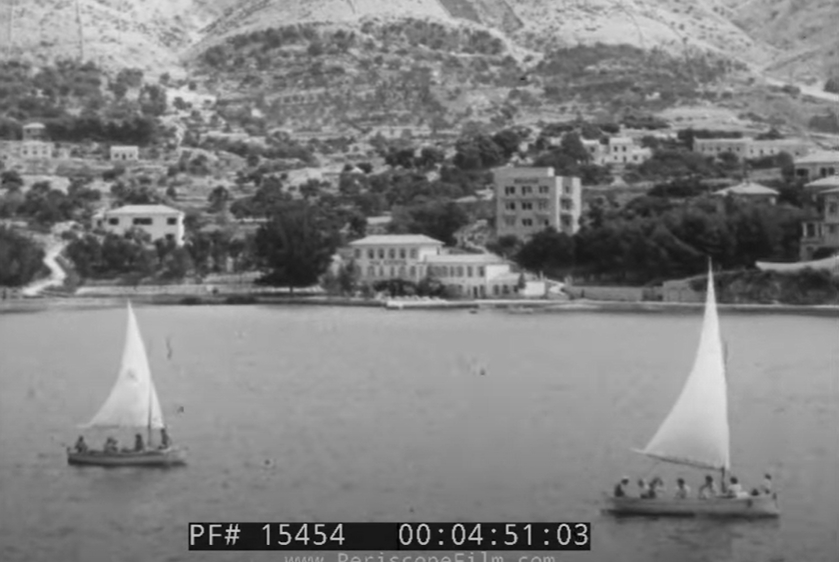
https://total-croatia-news.com/lifestyle/adriatic-splendor-video/ Rab island harbor in 1955 from the film Adriatic Splendor

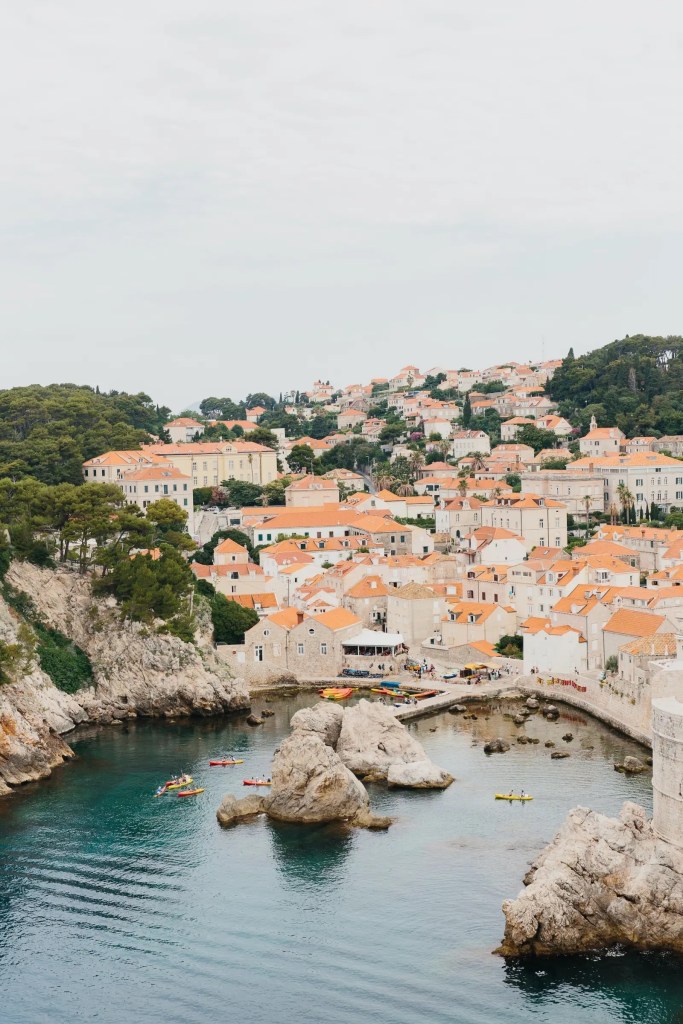
Dalmatian towns where fjaka was born; Zadar, Sibenik, Split and especially Dubrovnik, the ‘Pearl of the Adriatic’ are being challenged by hordes of tourists on an anti-fjaka experiences racing from historic site to beach to restaurant. Locals are intent on preserving fjaka-drenched places such as Dubrovnik from the impacts of overtourism as author and journalist Vuk Tesija outlines for Balkan Insight. https://balkaninsight.com/2023/10/03/croatias-dubrovnik-bans-building-of-holiday-apartments-to-curb-tourism/ Growth for tourist-based economies usually translates into income generated by overnight visits. But tourism development founded on this indicator is often unsustainable. So re-interpreting what health growth looks like combined with current travel trends emphasizing personal connections to place may go a long way to redefining what tourism is, what it does, and what it can be.

View of Dubrovnik
Photo by Kevin Faingnaert
https://www.afar.com/magazine/unlocking-croatias-secret-to-slow-living

A Croatian design company FJAKKA, https://www.spacetime.company/fjakka is based Split. Since 2012 industrial designers Kristina Lugonja and Filip Havranek create spaces, furniture and appointments with a minimalist vibe that echo the serenity of fjaka–being so in the present moment that everything extra falls away. 

UNFORGETTABLE CROATIA  24 April 2025 Nichol Marie Lomison
https://unforgettablecroatia.com/blog/the-sweetness-of-doing-nothing-how-to-embrace-fjaka

Marina Rogoznica is Product Manager and Cruise Director at Unforgettable Croatia https://unforgettablecroatia.com/about-us, a luxury travel agency that specializes in custom, immersive experiences. She describes her uncle as:“He is the poster child of fjaka, sitting on his porch, staring at the sea, drinking his own wine and saying: there is nothing in the world better than this.”

“Every time I come to Croatia, something shifts. It’s not just the scenery that impacts me – though the beautiful sea, cobblestone streets, and endless summer sunshine certainly helps…Maybe this is what travel is meant to do – not just show us new landscapes, but hold up a mirror to our lives. To gently wake us up to what we’ve forgotten.” Frances Vidakovic, Croatia Week 14 July 2025 https://www.croatiaweek.com/questions-croatia-has-me-asking/

Notes

  1. For a review of The Cheesemaker’s Daughter outlines the story’s context on the island of Pag https://chick-who-reads-everything.com/2024/08/05/the-cheesemakers-daughter-book-review/ ↩︎
  2. Tomislav Oroz. Pomalo and Fjaka as the Island State of Mind. Cultural Anatomy of Time(lessness) on the Dalmatian Islands of Hvar and Dugi Otok. CIST2020 – Population, temps, territoires, Collège international des sciences territoriales (CIST), Nov 2020, Paris-Aubervilliers, France. pp.43-47. hal- 03114132 ↩︎
Dvi knjige, jedna priča na dva načina

We travel to find ourselves and to lose ourselves, to open our hearts and eyes, to learn more about the world, to experience hardship, and to see the world clearly while feeling it truly.~ Pico Iyer

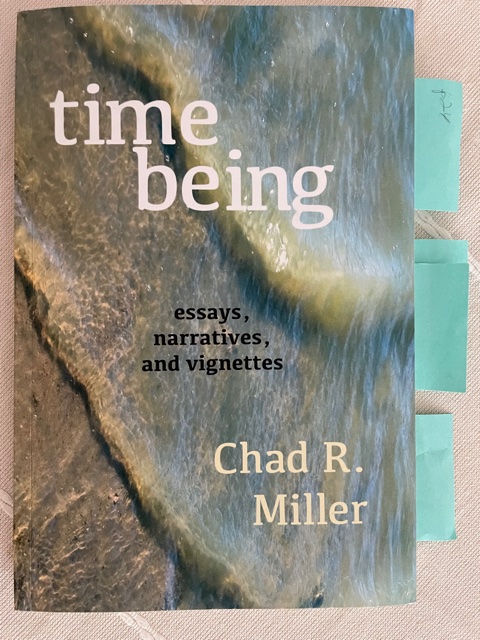
I recently read American writer and Peace Corps volunteer Chad Miller’s Time Being: Essays, Narratives and Vignettes alongside British expat, journalist, storyteller and media expert Paul Bradbury’s Around the World in 80 Disasters to learn more about tourism in Croatia and the former Yugoslavia. Admittedly this is a fairly narrow focus, but Bradbury’s and Miller’s musings about how travel has changed over the past 25 years before cell phones, Trip Advisor and booking.com  provide valuable insights into the impact of those developments on Croatian tourism and travel generally.  Both authors mourn the loss of freedom that past modes of travel granted even as they acknowledge the convenience technology brings. In his introduction Bradbury says ‘Around the World in 80 Disasters  is my ode to a world of travel that has all but been lost, a collection of disasters which are all my own.’  Reading Miller’s beautifully crafted essays in tandem with Bradbury’s fly-by-the seat of his pants diary entries brought up what feels like an almost outdated debate about the difference between travel as transformative—think pilgrimage—and tourism as accumulative—think bucket list.  Bradbury’s memoir, like his personal and professional life, centers on Croatia. Miller’s insights about Europe, the Horn of Africa where he and Bradbury separate but equally intense experiences are definitely worthy of consideration.1

Bradbury has an extensive online presence. Miller has an MFA in writing. He describes this book as Creative Nonfiction or Literary Nonfiction. It was written over two decades. Bradbury covers many decades of experience but wrote his memoir in two weeks. That being said, they share perspectives about a touristic search for ‘authenticity’, and structure their memoirs not chronologically, but by place. Bradbury casually asks questions such as, ‘How is the Adriatic coast different from the Mediterranean coast? Miller’s inquiries are explorations of the intersections between ‘time, place and movement.’  Both authors claim that human relationships are paramount, and I think both would agree with historian David Glassberg’s assertion that ‘places are not interchangeable with other places.’ Bradbury and Miller take this further saying places are not interchangeable with their former identities.

Ever the entrepreneur, Bradbury’s self-published volume follows a number of self-published books including Lebanese Nuns Don’t Sing (2013) in which he describes why and how he re-started his life after a divorce blind-sided him. Most of his disasters are consist of  Bradbury naively trying to broker shady, ad hoc real estate or under-the-table governmental deals. Miller’s travels as a seeker of cultural understanding and as a Peace Corps volunteer have a more academic tone. But both memoirs have a funny-ironic connection to Elizabeth Gilbert’s  Eat, Pray, Love as both use travel to help process life-changing personal events. Miller travels as an antidote to career disillusionment, and for Bradbury hitchhiking from the UK to South Africa was a way of dealing with the emotional fallout of divorce. Croatia represents a milestone where both of their lives are permanently changed.

https://paul-bradbury.co

Bradbury’s wanderlust culminates in finding home on Hvar. He met his wife, married, had children, learned the language and started a business. He is fully committed to promoting Croatia, hardly traveling in 20 years after he permanently moved to Croatia in 2002.

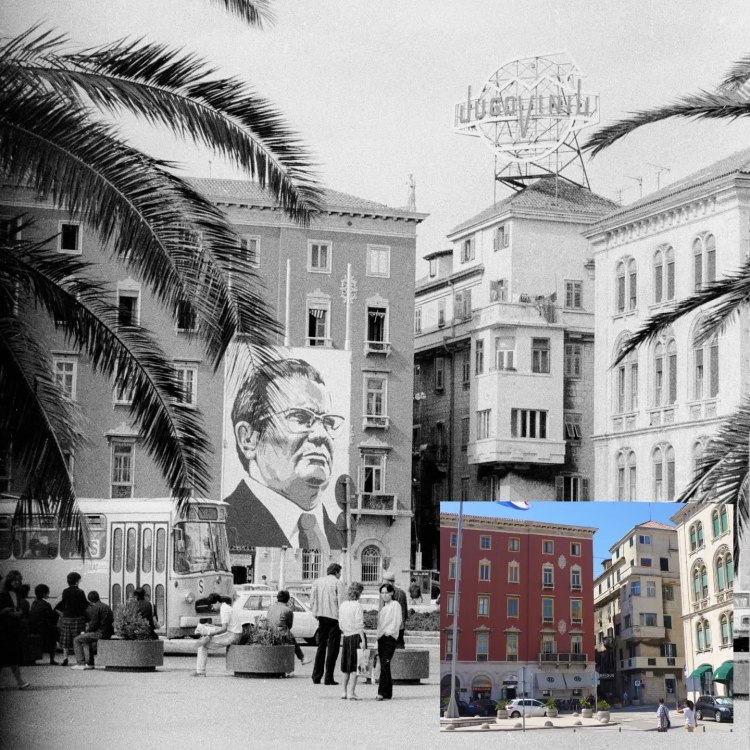
Split in 1984 and 2014 by @chadmilleretc

Miller describes a return to Split in 2014 after 40 years. On this trip Miller tried to access a version of his past self—time traveling to 1984 when he first visited and fell in love with Split where he began a life-long love of travel.  Today he reflects that, ’People like me on some technical, semantic level, are refugees. We don’t feel at home where we belong, and we don’t belong where we feel at home. We feel strangely content when we’re estranged.’ See Yugoblok Travel Quests conversation between Peter Korshak and Miller. for more on Miller’s philosophy of travel.

Miller was and is charmed by Croatia’s beauty, and its complex, often confounding history.  In Split in 2014 he felt this way, ’My beach, (Firule) my cove, my mountain, etc. stirs up a nostaglic yearning for an unchanging place of calm and peace.’ Today Miller admits, ‘Back then I was in a different frame of mind. Now my perspective has changed. I don’t want to live in Split with regular access to Firule. I do want to return to that beach, my secret beach, in the future. Meanwhile even if I can’t get back there, it’s kept safe as the beach of my dreams.’

Firule Beach, Split 2021 one of Croatia’s rare sandy beaches
photo-by-ivett

Following a grueling UN stint in post-genocidal Rwanda, Bradbury sips a gin and tonic in Somaliland while watching CNN. An advert for Croatia: The Mediterranean as it Once Was appears and he impulsively decides to buy a stone house with no heating, no sewerage or gas connection, or address on the island of Hvar.  Upon arrival many of his questions to locals were met with derisive, incredulous laughter. When Bradbury learns that the internet cafe he depends on for his livelihood closes from October to May, along with most business on the island, he is confronted with the realities of living in a tourist-based economy. As a journalist, ‘spotty’ internet connection on Hvar was an obstacle Bradbury not only overcame, but triumphed over when he founded the online news source, Total Croatia News. Bradbury’s assertion that the experience of travel has been dulled by the many online resources is somewhat ironic considering his livelihood and success is built on the technology he names as the culprit. In the past five years, Bradury has followed, written about and endorsed Zagreb as a digital nomad destination, recently issuing digital nomad visas.  In another ironic memory after the 2008 global economic crash, Bradbury notes that British and Irish buyers ‘were going crazy for coastal property in Croatia.’ In the same period Bradbury’s adventures in real estate contradicts stories about thorny relationships between Croatians and Albanians. See How to Walk Out of Life and Start Again http://www.youtube.com/watch?v=XodJZrToZLMhttp://www.youtube.com/watch?v=XodJZrToZLM at 33 | Paul Bradbury | TEDxVirovitica Library, 2024

Around the World in 80 Disasters works as a parody of French author Jules Verne’s 1873 adventure novel.  Bradbury’s reminiscences are fresh and funny, beginning in the late 1990s with  ‘No plan, no agenda except to travel.’  Serendipitously obtaining NGO and government positions because of his language skills (mostly Russian fluency), a willingness to accept posts others might not, and ability to drink large amounts liquor, Bradbury’s disasters/escapades are blessings in disguise partly because he survives them. If he had been a woman I’m not sure if that would have been the outcome. Thankfully, in 2025 there have been changes.

Drinking liquor—beer, vodka, rakija—plays an important role in Bradbury’s life. Often associated with Croatian ways of doing business and expressing hospitality, his fondness and capacity opened doors and allowed him to gain local trust in Russia, Croatia and across Eastern Europe. Gaining trust came to Miller over coffee. Miller has an epiphany while in Ethiopia partaking in ‘shaibunna, the Ethiopian tradition of a long morning break with coffee, tea, snacks and chatting with friends, colleagues, and anyone else who happens to be sharing the same physical space.’  I imagine Bradbury had a revelation or two while Ćakula na kavi/talking over coffee–a mainstay of Croatian life. Because embracing local culture is central to both authors view of travel, I wonder what they would make of the new conceptual traveling exhibition/Fjaka Museum.

If Miller and Bradbury sat down over a coffee or pint what might we learn about Croatia over the past thirty years?  Imagining a dialog between these two accomplished storytellers would likely show a lot of overlap. Their memories are sentimental, self-aware, with not a lot of talk about climate change but with implications that travel today needs to be purposeful and of benefit to the places visited. A core eco-tourism question— If your impact on a place is not beneficial to the place can it be beneficial to you?—is one that might come up. Miller first visited Dubrovnik in 1979, only five years after UNESCO designated its Old Town a World Heritage Site, and before the collapse of Yugoslavia in the 1990s. Today his view is that ‘Dubrovnik like the rest of Croatia, is on a tourism sugar high and bound to crash eventually.’ In spite of a self-guided Sweet Tooth Map of Dubrovnik that he and his wife Jen happily enjoyed, Miller cautions, ‘too much tourism is eating the heart out of Dubrovnik.’ Anti-tourism protests in EU cities validate his concern.

Like all memoirs, Bradbury’s and Miller’s look back at how the past shapes present realities. Their travel memories reminded me of historian Eric Zuelow’s thoughts on travel and identity, “The lens through which we see our age are as much a product of our time as a our ancestor’s where a product of theirs. Looking at the story of tourism as it played out over hundreds of years illustrates this point very nicely. It makes it possible for us to see things we take for granted—that beaches and mountains are beautiful for example—are the outcome of many factors that are contingent. This is not simply a question of what tourists do or what they see….Studying the past obviously teaches us about the past—but it can also tell us a tremendous amount about ourselves—if we learn the lessons of context.” Whether in Croatia or elsewhere, Bradbury’s and Miller’s travel stories are told with wit, self-effacing humor and enough reflective insights to create thoughtful, engaging armchair travel.

Jelsa, Hvar. Kindergarten on the Riva. https://www.fieldschoolhvar.org/kinder-guide Reggio Emilia-inspired, place-based, nature-based
Wikipedia
  1. Miller and his wife were deeply affected by their time in Ethiopia. A hallmark of Miller’s experience is grappling with the imagined and the real. ‘A local place name (Makaraka) not actually attached to any one place and not having an identifiable, marked place on a map symbolizes places ‘burn on in my unconscious until the end of my days precisely because I could never reach them, could never touch them, could never walk upon them. Inaccessibility was the very essence of their allure, and indeed indefinability was at the core of their very nature…’ Time Being: Essays, Narratives and Vignettes. ↩︎
žive uspomene

Every act of perception, is to some degree an act of creation, and every act of memory is to some degree an act of imagination.

Oliver Sacks, Musicophilia: La musique, le cerveau et nous/Tales of Music and the Brain
Memorial Bridge, Rijeka
February 2019

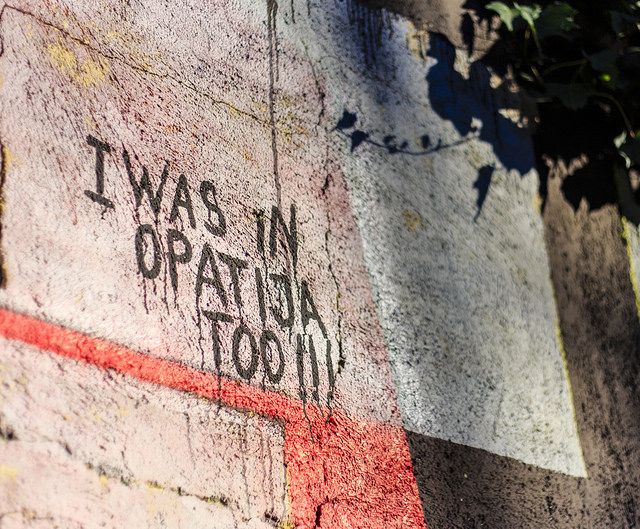
When I began this blog in 2019 I had ideas about the purposes and impacts of tourism, and was naively motivated to ‘get family history straight.’ As added value I would see if fifty year old memories of traveling to Europe would hold up under scrutiny. But most of all I wanted to understand what I missed out on by not visiting what was then Yugoslavia in 1976. Through research and writing this blog I learned a lot about places that only lived in my imagination. Those memories of past travel, like most memories, proved slippery.

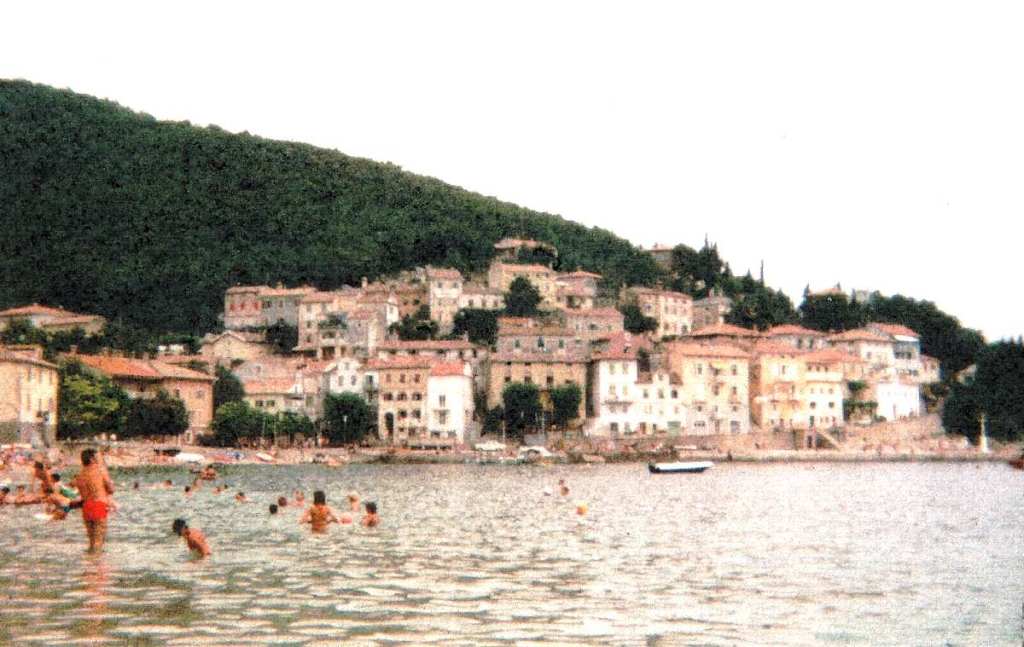
View of the Harbor District, Mošćenička Draga, 1976
Photo: Wilhelm Rothe

In the mid 1970s I thought that visiting the ‘old country’ as my American-Italian father called it, would catapult me into some new way of living. Wrong. The high school friend I was traveling with had negative zero interest in going to Italy, so Yugoslavia was completely out of the question. Most of that summer trip was spent touring France, staying in London briefly because we had access to a free flat, and meeting with other high school friends on the steps of the Paris Opera House which felt miraculous in the days before cell phones and the internet. I thought this trip would be the first of many, but Croatia remained an elusive destination for thirty years. When everyday life got tiresome, I sometimes wondered what might have happened if I have traveled there then.

https://total-croatia-news.com/news/travel/opatija-25-things-to-know-about-the-old-dame-of-kvarner
Photo: Bernhard Wintersperger on Flicker

In spite of a university degree in Modern European history and over a decade working at a historical museum, it took me a long time to become aware of how underlying myths about the place my grandparents called home informed my understanding of what they knew as Yugoslavia. My initial visit to Croatia felt both weirdly familiar and a completely new. But from this visit I began to sense what this part of the world meant to my grandparents and Croatian-American relatives. But not likely how my Croatian ancestors perceived it.

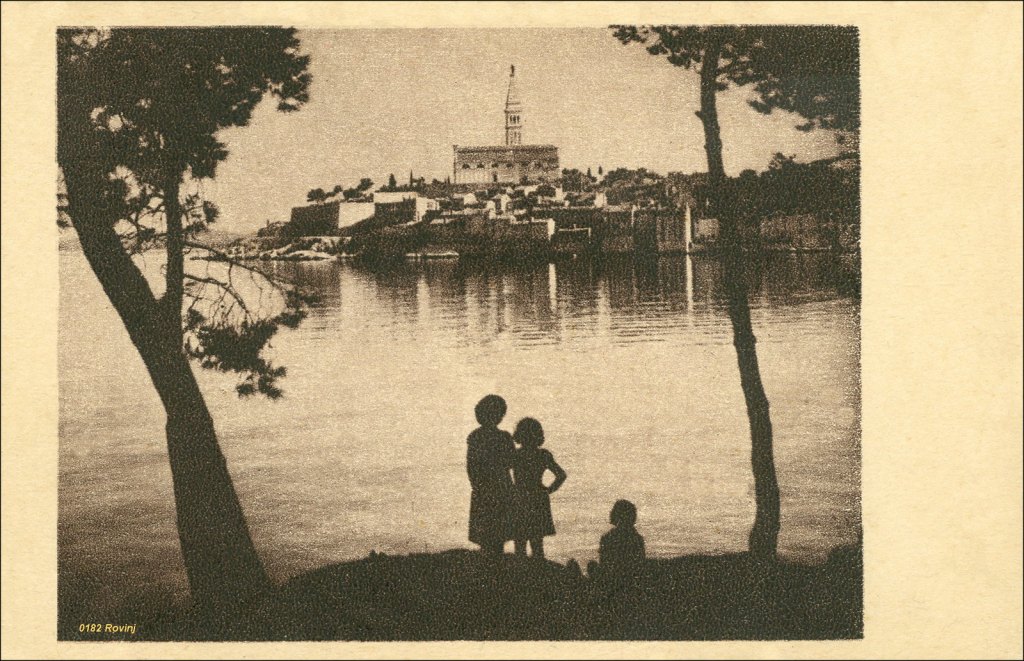
Rovinj 1950

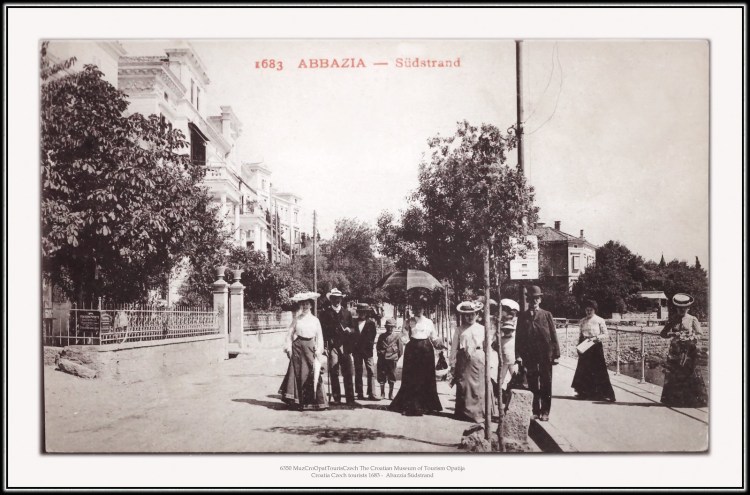
By most people’s standards the Croatia is a place of eye-popping beauty. 250 days of sunshine a year and a microclimate where the coasts are shielded by mountain ranges make it an idyllic tourism destination. A tradition of health tourism flourished in Opatija (then Abbazia) by the mid 19c. Humid air created by the wind (actually four winds; bura, jugo, tramonata, maestral) contacting the sea is saturated with particles of sea salt and oils from aromatic plants–lavender, sage, rosemary, holm oak and maritime pine. This air is said to be a tonic for the lungs and overall health. But for my grandparents and great-grandparents this place was not about diversion, health and leisure. It was home, but a home where making a living, especially in the wakes of world wars, was difficult.

Abbazia, Austria-Hungary c. 1890. Today Opatija, Croatia, is located on the Istrian peninsula and part of Kvarner county. It was a favorite vacation spot of elite European society by the mid-1800s. Railroad access from continental Europe added to the Adriatic coast’s desirability.
Marica Ivanić Martinčić and her mother, my great-grandmother Marica Kasić Ivanić, b.1881, d.1966.
Marica Kasić Ivanić lived in Poljane, halfway up Ućka and a ten minute drive down to The Museum of Tourism in Opatija, which opened in 2007.

My first visit to my grandparent’s home was as a tourist hoping to discover a little more about how family heritage shaped my own identity. I suspect this reason is shared by many travelers visiting unknown, ancestral homes and is why they are reluctant to call themselves tourists. But curiosity about why tourism put Croatia’s Adriatic coast on the map 150 years before I showed up propels my research. So the following definitions are cobbled together from UNTWO (now UN Tourism), WWF(World Wildlife Fund), The Journal of Sustainable Tourism and other academic and commercial sources.

— tourism is a business that sells what it doesn’t own; scenic views, cultural traditions, a vibe

— tourism rejuvenates

–tourism educates

—tourism creates meaningful experiences

–tourism accelerates ecosystem collapse

—tourism brings people together to bridge differences

–tourism flattens local culture to accommodate global markets

—tourism’s real purpose is to make memories

–tourism creates opportunities that can lift people out of poverty

—tourism exploits people, cultures and nature

–tourism promotes and improves local economies

–tourism and travel are not the same?

In recent years, especially post-covid, tourism studies center on ‘over-tourism,’ a term coined to describe the negative impacts of mass tourism on local environments. Over-tourism implies a need for visitors to consider their impact on built and natural environments. Does over-tourism apply to all visitors? Religious pilgrims, performing athletes, and volunteers doing service work are not usually called tourists, neither are people attending work-related conferences or remote workers.

Today’s digital nomads take business/work travel aka ‘workations’ to the next level.
https://www.adriagate.com/blog/en/tips-ideas/digital-nomads-croatia-ideal-destination

Sustainability applied to tourism has been cited as an antidote to over-tourism well before over-tourism became a catch word. Zoran Pejović, an expert whose thoughtful analyses about sustainable tourism blurs the difference between travel and tourism, makes a philosophical argument that responsibility is at the heart of sustainability.

Plitvice Lakes December 2023
Photo: Erilyn Wedd for Medium Globetrotters

Croatia is a small country that ticks off similar tourist destination attributes to New Zealand—stunningly beautiful land and sea scapes which helped to create tourist booms precipitated by popular culture media phenomena, Game of Thrones (2011-2019) and Lord of the Rings (2001-2003). These booms may have contributed to stronger ties between the two countries. According to New Zealand’s 2023 census there are over 3,500 Croatian nationals and over 100,000 people of Croatian ancestry living there. In the past 10-15 years 10,000  younger, educated Croatian diaspora have immigrated there. Typically economic opportunities drive immigration, but I wonder what role New Zealand’s commitment to protecting their ecosystems and cultures play in attracting Croatians.

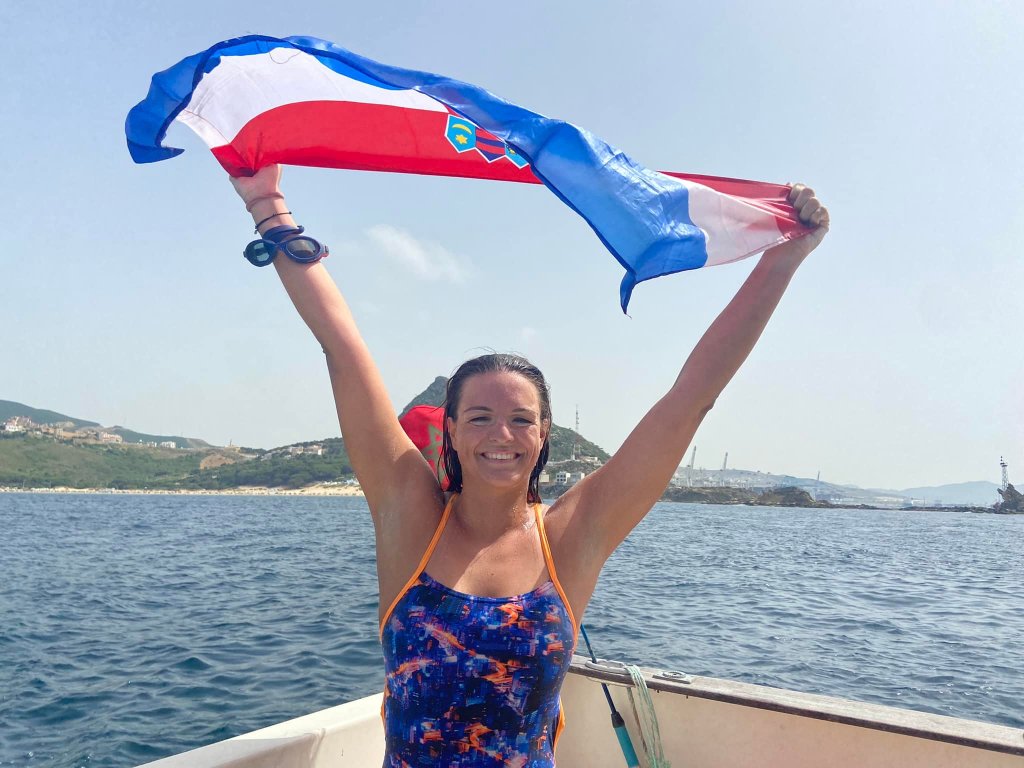
Open Water Marathon Swimmer Dina Levačić before her May, 2024 Cook Strait swim between New Zealand’s North and South Islands. Levačić became the first Croatian to complete swimming Oceans Seven, the 7 largest and most difficult channels in the world. https://www.openwaterswimming.com/interview-with-dina-levacic-from-croatian-shores-to-the-2025-imshof-inductee/
Photo: Dina Levačić/Facebook

In 2018 New Zealand launched its Tiaki Promise. This is a set of guiding principles visitors are asked to follow; to tread lightly, show care and consideration for all, to preserve New Zealand now and for future generations. Imagine the memories a promise like that can make.

Connecting to Cres

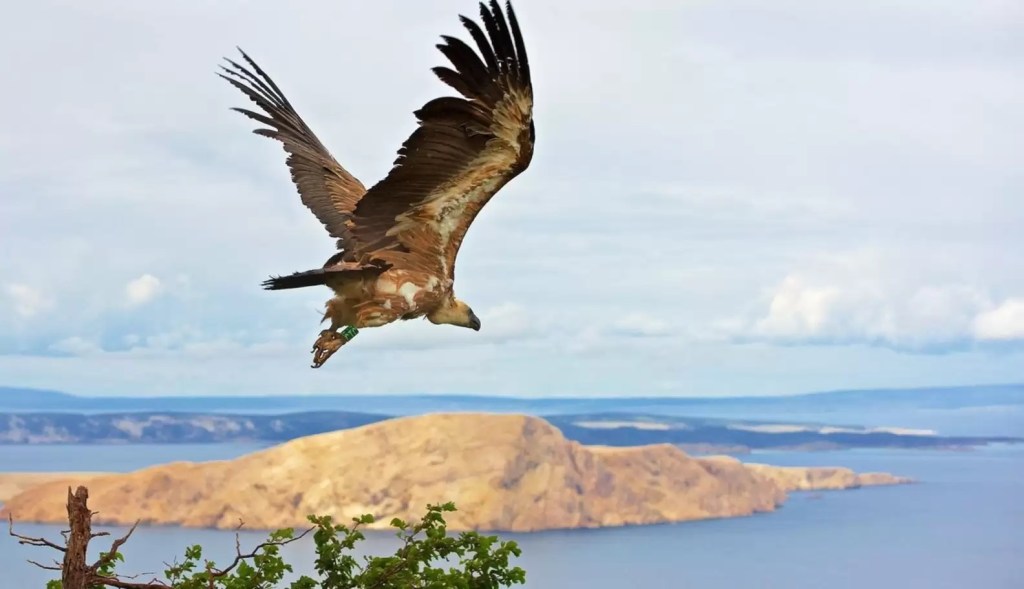
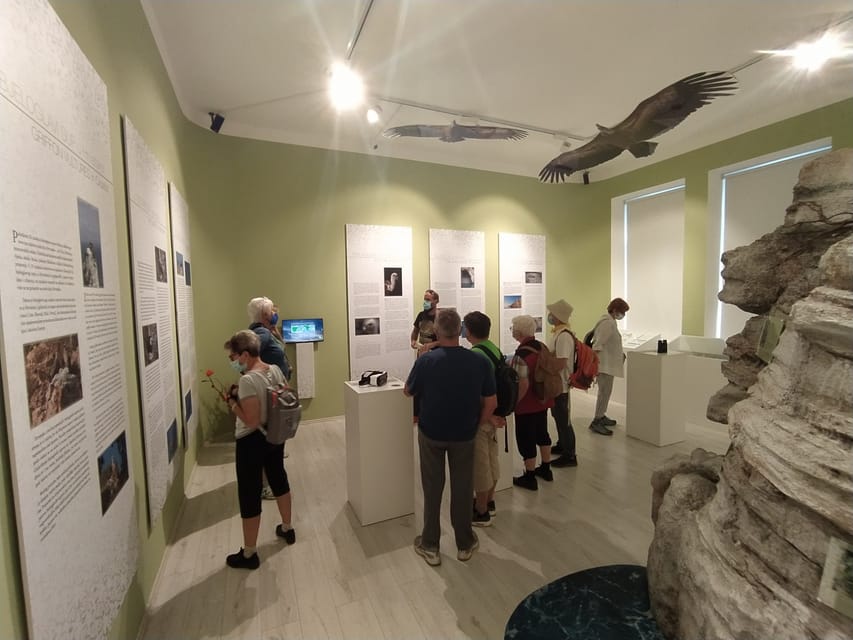
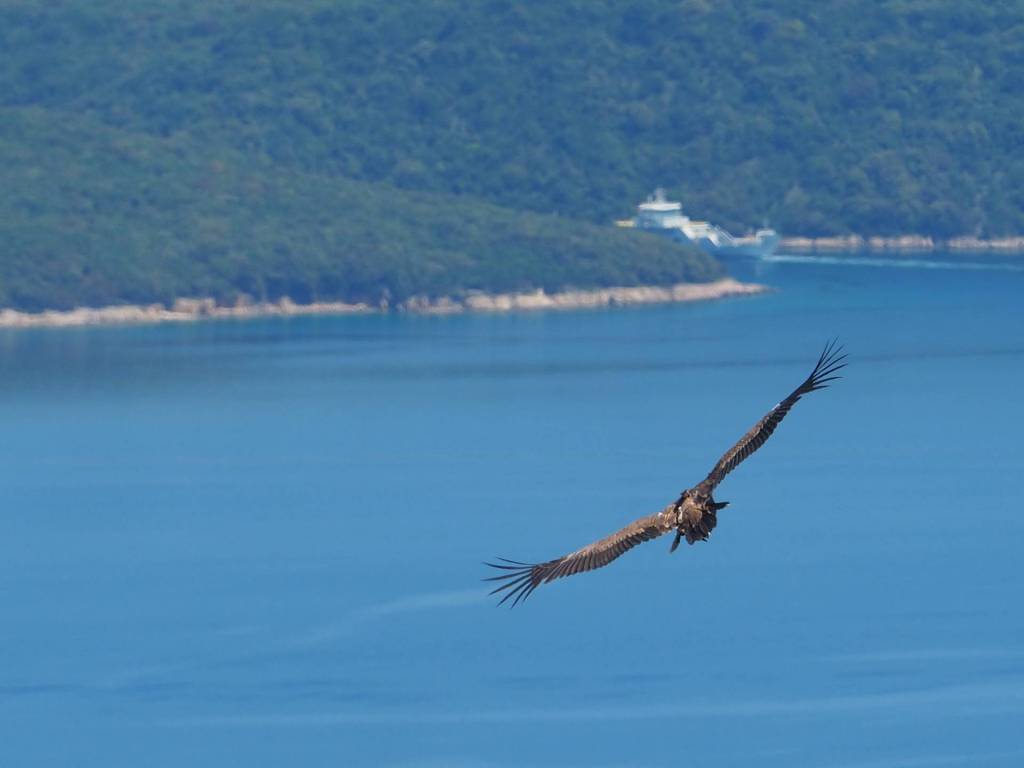
Eurasian Griffon Vulture aka Gyps fulvus aka bjeloglavi sup

Soaring high above islands and sea, the protected Eurasian Griffon Vultures make their nests on rocky cliffs that are almost inaccessible humans.  Griffon Vultures have inhabited Cres for centuries. Their nesting colonies are one way Cres is distinct from the more well known large Kvarner Bay ‘sibling’ islands—Krk, Lošinj, Pag and Rab—whose year round populations are about 8,000 each. The Brijuni Islands, once Josef Broz Tito’s personal estate is now a National Park, and Susak, a car-free island with its own dialect and about 200 residents are the other well-known Kvarner Bay islands. (Numerous  ecologically, econonomically and culturally important smaller islands and islets are part of the Kvarner Archipelago.)Tourism is less developed on Cres than on the other islands. Developed or not, islands are especially vulnerable to the often profound impacts of tourism. Since the 1970s tourism has been the most important economic activity on the Croatian islands and Adriatic Croatia is the most important Croatian tourism region. (Impact of COVID-19 on Croatian Island Tourism: A Study of Residents’ Perceptions. Economic Research-Ekonomska Istraživanja,Volume 36, 2023, Issue 2 DOI: https://doi.org/10.1080/1331677X.2022.2142631,Published Online: 2022-11-12, Published Print: 2023-07-10)

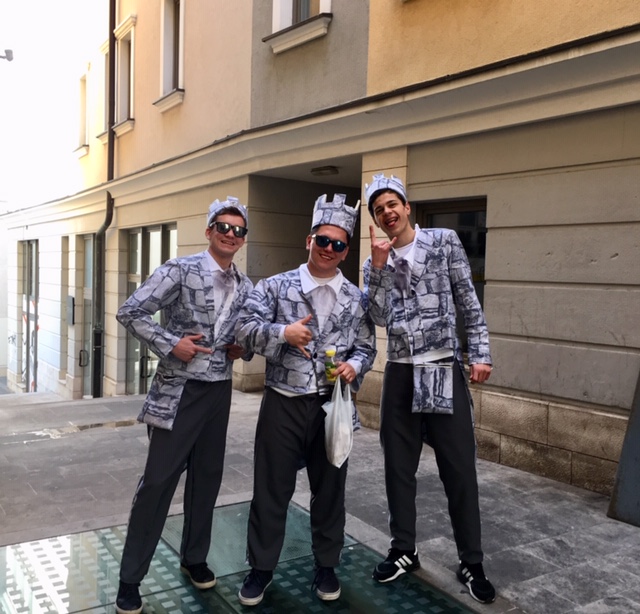
I was first introduced to Cres (pronounced tsres) at Rijeka’s karneval/Maškare in February, 2017. While walking to a parade route I met three young men in costume who eagerly posed for me. They embodied the  Croatian Tourism Board’s tagline, ’Croatia, Full of Life.’ I understood they were high school students (srednjoškolci)  participating in a history-themed group from Cres who performed in Riječki karneval’s 8 hour parade finale.  Their costumes represented the defensive stone walls that once surrounding Cres Town built to protect Cres millenia ago, mostly from pirates and imperial invaders. 

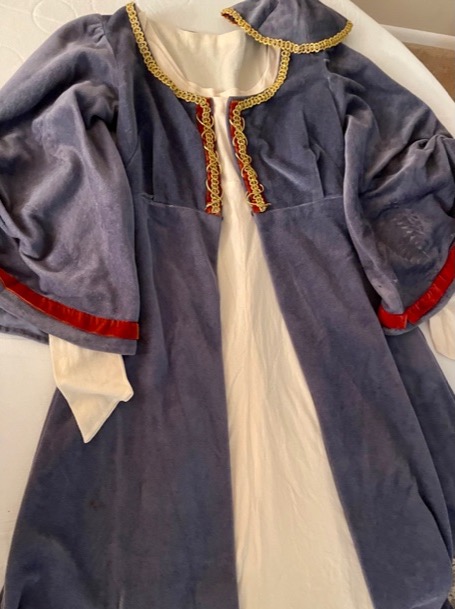
The student’s pride in their history was infectious and welcoming. I felt an unexpected kinship with the karneval participants I met serendipitously and at scheduled events. I wondered why my Croatian grandparents had never mentioned karneval but there was one clear connection. My maternal grandmother, a seamstress born in a town overlooking Kvarner Bay sewed a costume for me to sing and dance at  Renaissance festivals reminiscent of Maškare. Made in 1976, it was subsequently worn by my daughter and other family members, and is still in wearable condition!

Krk and Cres are the largest of the Kvarner Bay islands. They have almost the exact same area size but nearly opposite shapes.  Krk is attached to the mainland by a mile long bridge, Cres, by ferry. Krk’s population is approximately 19,000, but Cres has only 3,000 residents who mostly live in the town of Cres. (main town on Croatian islands often share the island’s name.) Krk has lots of cultural attractions, tourist accomodations and an airport. Cres not so much. 

Cres is such a long land mass that it has Mediterranean and sub-Mediterranean climates tempered by Contintental influences. Because of these multiple climate zones, Cres is arguably the most biodiverse Croatian island.The northern part of the island is called Tramuntana. There are forests of hornbeam elm and sweet chestnut (which grow in forest stands and are cultivated in orchards) encircling rocky cliffs. In the south holm oak and pine grow in the forests of Punta Križa. (Map: Croaziatours.blog) 

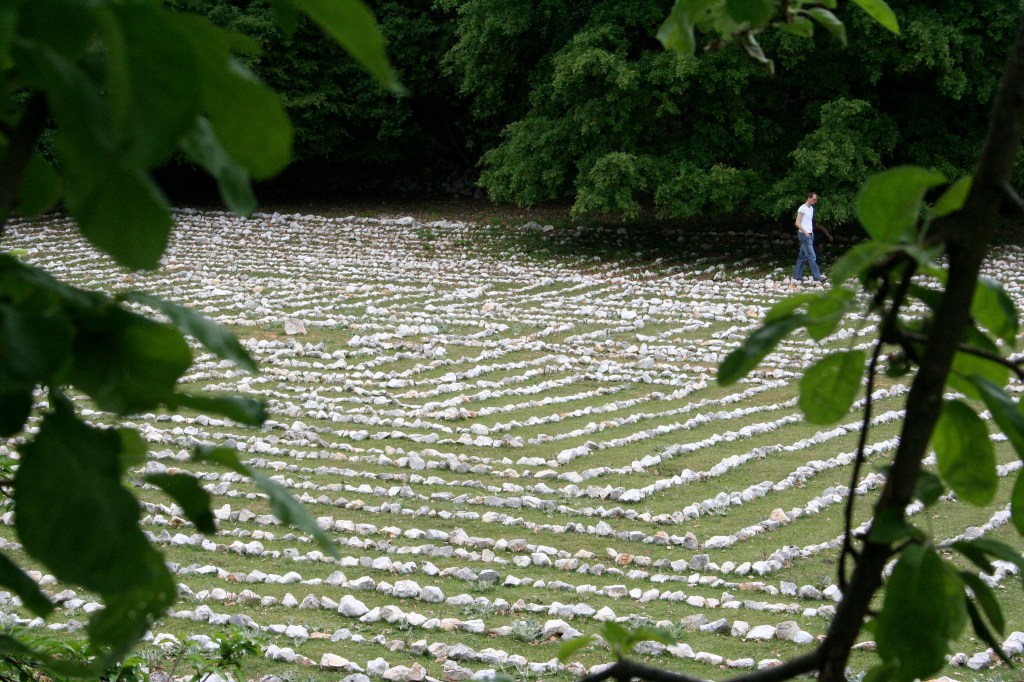
Photo by jonnybaker on flickr. Lada’s labyrinth is a replica of the ancient Roman one in Pula built by the Eco Centre under Dr. Goran Šusić. 

There are 7 eco-trails in Tramuntana which were built in the 1990s by the local Eco Centre in Beli. They meander through old roads that used to connect what are long abandoned villages in Tramuntana’s forests. Along the trails are 7 stone labrynths named Vesna, Ishtar, Tara, Osiris, Isis, Rusalka and Lada. (The number 7 is symbolic on Krk, too.  Krk was settled by Croats in the 7th century, there are 7 large tourist centers on the island…)

Lada is the Croatian goddess of beauty, love and summer. Myth has it that her companions are nymphs known as Ladarice who left the world to live in as islands in the sky in an open star cluster. Together they create the Pleiades, also known as the Seven Sisters or M45. ‘In both myth and science, the Pleiades are sibling stars. Modern astronomers say the stars were born from the same cloud of gas and dust some 100 million years ago.’ (https://earthsky.org/favorite-star-patterns/pleiades-star-cluster-enjoys-worldwide-renown

Photo by Will Kalif, Telescope Nerd 12 March, 2024
https://www.telescopenerd.com/how-to-see/pleiades.htm

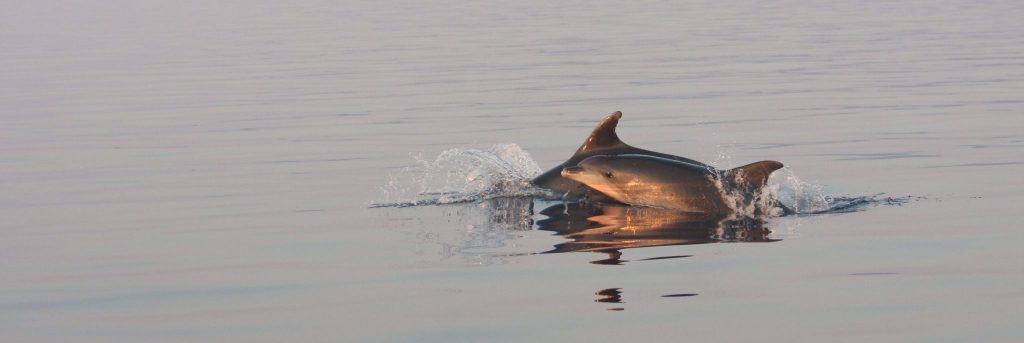
The waters around Cres and Krk are breeding grounds of the common bottlenose dolphins who swim in the Cres-Losinj Protected Marine Area. Protected by The Blue World Institute of Marine Research and Conservation on Veli Lošinj (https://www.blue-world.org/) Adriatic bottlenose dolphins seem especially fond of the playing in waters around Cres where there are lots of opportunities to watch them. 

Bottlenose dolphins at play https://www.blue-world.org/what-we-do/our-projects/683-2/

The Blue World Institute rules for low impact observation: do not get closer than 50 meters to dolphins; allow them to decide on their own if they will approach you or not; approach them slowly and sideways, never directly from the front or rear; put your boat engine to neutral and do not rush to catch up with them when they emerge; avoid sudden changes of speed or direction when close to them and follow the pod for 30 minutes at most. If you see calves or hear that the dolphins exhale loudly and bang their tail on the sea surface, change direction suddenly or dive for a long time, you should move away immediately.

Another natural, phenomena critical to the well-being of Cres and Lošinj is the highly protected Lake Vrana/Vrankso jezero. This fresh water lake located in the middle of Cres is 74 meters below sea level. It supplies drinking water for almost all the towns and villages on Cres and Lošinj.  Most of the other islands need to import their drinking water. It is illegal to swim, fish or perform other activities on Lake Vrana. (Photo Wikimedia)


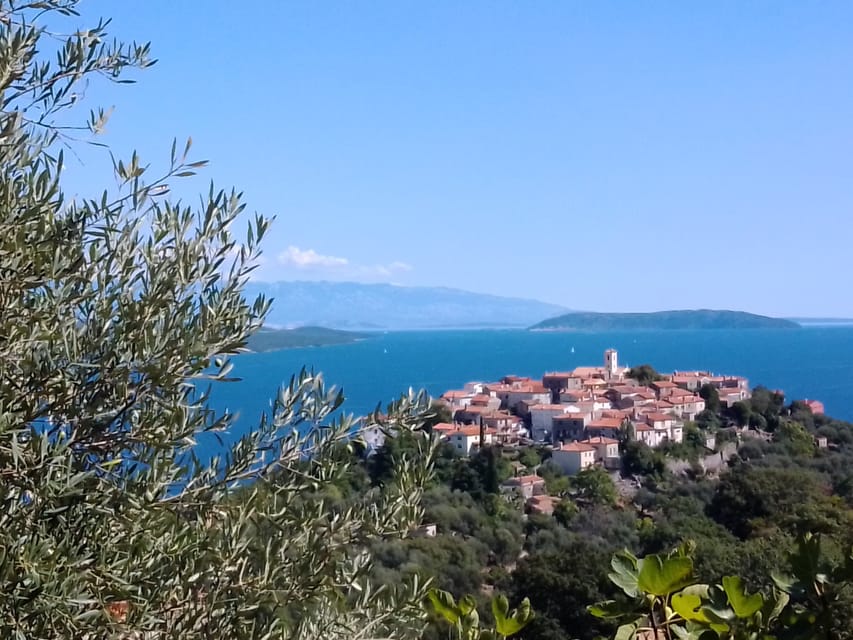
Photo of Beli https://www.getyourguide–Beli

Beli is one of the oldest places on Cres. Beli’s cliffs helped to make it an important Roman outpost 2,000 years ago, and home to the golden eagle, short-toed eagle, peregrine and kestrel and an endangered griffon vulture nesting colony. The Griffon Vulture’s approximately 8-foot wingspan allows them to fly high as high as commercial aircraft and the Himalayas. Heat from the sun gives them the thermal lift they need to glide and soar on air currents staying aloft 6-7 hours a day, circling for food which they can spot at distances of 3 or more miles.

Griffon Vultures feeding https://www.mdpi.com/2075-1729/11/10/1038

 Scavengers like the Griffon Vulture are a keystone species who keep ecosystems clean and prevent the spread of disease by providing the critical sanitation service of eating animal carcasses. (They have no sense smell) Today Griffon Vultures are having a hard time finding food, because of the decline in sheep farming which provides their main food source. (Lamb is an integral component of traditional human Croatian cuisine) Pollution, climate change, threats from tourist boats, farming and hunting practices which use toxic products and electrocution, have all contributed to Griffon Vulture decline.

Photo by Herbert Mayer

 A hero of conservation and cultural heritage is natural scientist and ornithologist Dr. Goran Šusić. He founded the Caput Insulae Center in 1993 in old schoolhouse near Beli. Dr. Šusić is devoted to the preservation and healing of injured Eurasian griffon vultures, and to Cres. When he visited the island in the 1980s there were only 25 pairs of griffon vultures. By then two native vulture species, the Bearded and Black Vulture were already extinct.

Photo of Dr. Goran Šusić by Leo Radovnovik, 2015

In 2012 Caput Insulae closed. Two years later in 2014, a government sponsored consortium led by BIOM with Public Institution PrirodaOtok Krk Agricultural CooperativeHEP – Operator distribucijskog sustava d.o.o., an energy distribution company, the Vulture Conservation Foundation and the Croatian Nature Protection Directorate (Ministry of Economy) took on Caput Insulae’s mission and opened The Beli Visitor and Rescue Centre for Griffon Vultures https://belivisitorcentre.eu/en.

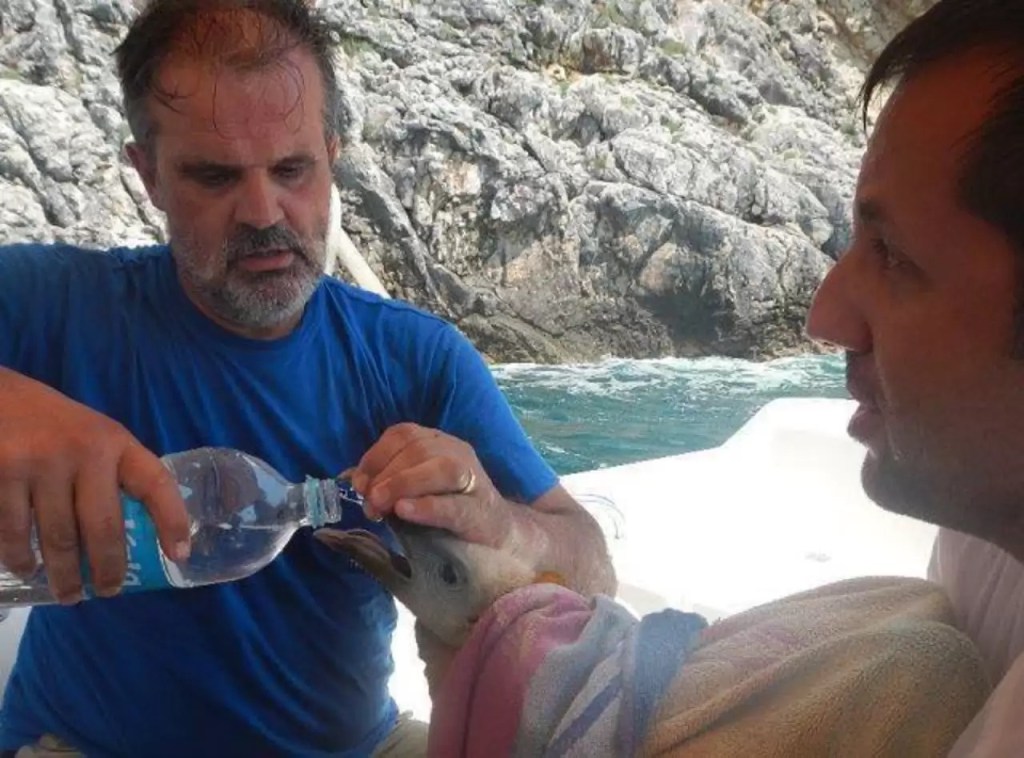
Photo of Beli Eco Center display, The Dodo https://www.thedodo.com/topics/animal-encounters

The Beli Visitor Centre for Griffon Vultures is part of a network of conservation projects under the umbrella of The NATURA 2000. Today the Centre is supported by the Croatian Ministry of Tourism, the Town of  Cres’ Tourist Board and LIFE SUPport, a 2.1 million project operating from January 2023 until December 2027. https://www.biom.hr/en/life-support-project-aims-to-create-better-conditions-for-griffon-vultures-in-croatia/BIOM Association for Nature and People https://www.biom.hr/en/. Collaborations between the conservation groups may yet help the endangered Croatian Griffon Vulture population.

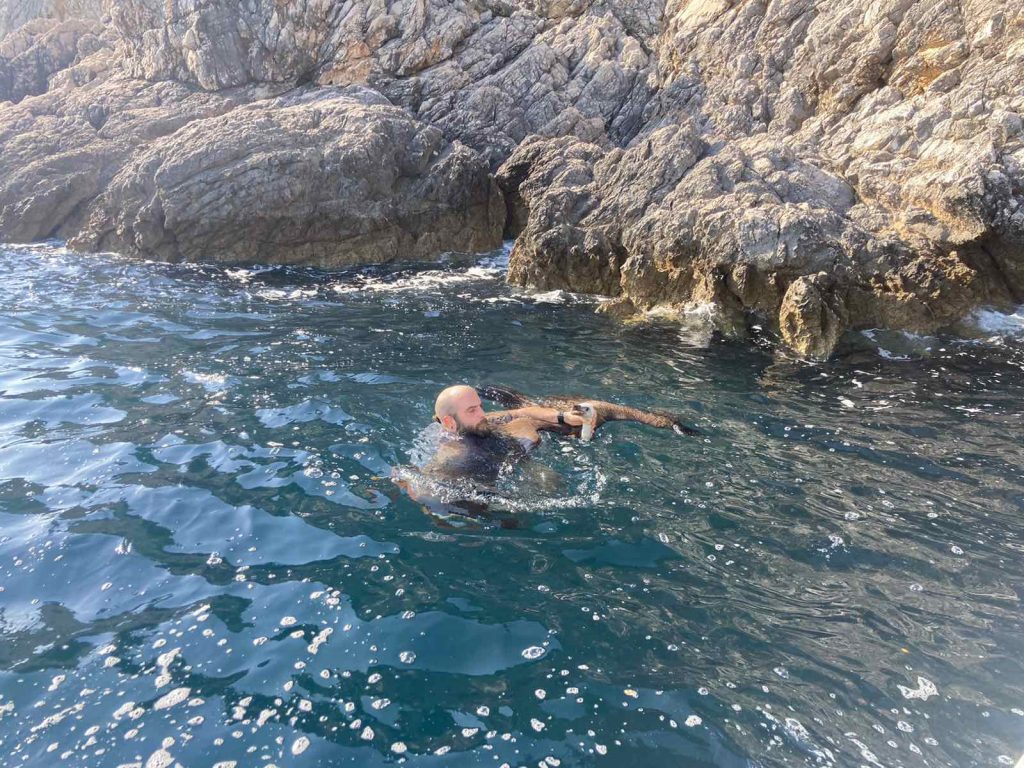
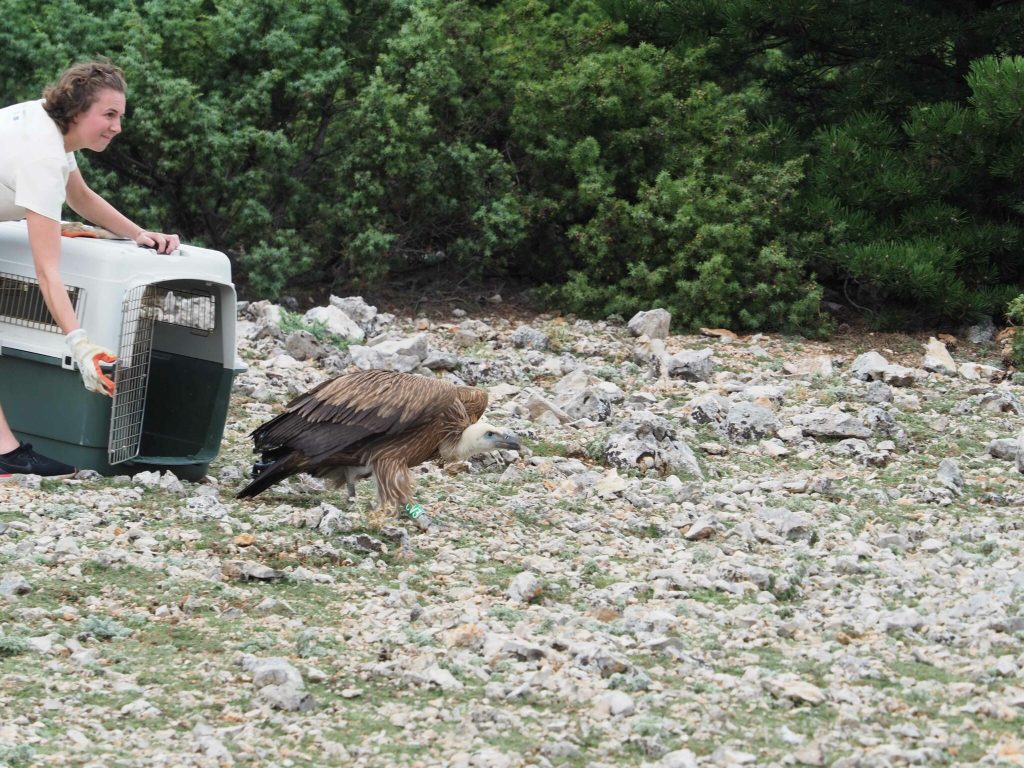
Griffon Vultures only have one chick a year who are often at risk during their long maturation period.Young Griffon Vultures named Palina, Coline, Lima and Anton were found exhausted near their cliffside nest facing the sea. Some were rescued from downing by dedicated workers at the Beli Griffon Vulture Recovery Center. On September 15, 2023 the four rehabilitated Griffon Vultures were set free on Cres by volunteers and professionals.

Beli has a permanent population of just 15. Even before Dr. Goran Šusić opened the original centre there, it attracted thousands of wildlife advocates and volunteers each year. Šusić admits “It’s hard to make a living here. The Eco Centre is already providing incomes; I hope ecotourism will be the future.”  

Articles by and about Dr. Goran Susic

The Long Term Trend, Reproductive Performance and Colony Shifting of the Eurasian Griffon Gyps fulvus in Croatia/Dugoročni trend, reprodukcijski parametri i pomicanje kolonija bjeloglavog supa Gyps fulvus u Hrvatskoj March 2022 Larus godišnjak Zavoda za ornitologiju Hrvatske akademije znanosti i umjetnosti 56:20-57 by Dr. Goran Susic Croatian Academy of Sciences and Arts DOI:10.21857/y54jofk34m

Simply Beautiful the Natural Heritage of Primorje-Gorski Kotar County (https://ju-priroda.hr/wp-content/uploads/2018/02/SimplyBeautiful-PGZ-compressed-v2.pdf) Sušić, Goran; Radek, Vesna. 2007. Bioraznolikost kroz lokve otoka Cresa. Eko-centar Caput Insulae – Beli. Rijeka.

Flight club: One man’s crusade to protect an endangered colony of griffon vultures on Cres, Frank Partridge 27 June 2009 for The Independent Saturday https://www.independent.co.uk/travel/europe/flight-club-one-man-s-crusade-to-protect-an-endangered-colony-of-griffon-vultures-on-cres-1720998.html

Stranded, Weak Birds Get A Second Chance Thanks To Fearless Rescuers, Cornelia Kruchten 30 October 2015 for The Dodo https://www.thedodo.com/topics/animal-encounters

Resources for Griffon Vulture Rescue and Recovery

Učka Nature Park to Host Feeding Ground for Griffon Vultures Total Croatia News  January 2, 2018

Vulture Conservation Foundation https://4vultures.org/blog/a-new-life-for-four-griffon-vultures-in-croatia-life-support/#:~:text=The last vulture species in Krk, Plavnki and Prvić

The Protection of Nature in Primorje-Gorski Kotar County https: //ju-priroda.hr/en/

stari i novi

Commune of Mošćenička Draga, Images of Memory and Life,
Edited by Town Mayor, Poet, and Musician Riccardo Staraj, Novi Vinodolski. 2012

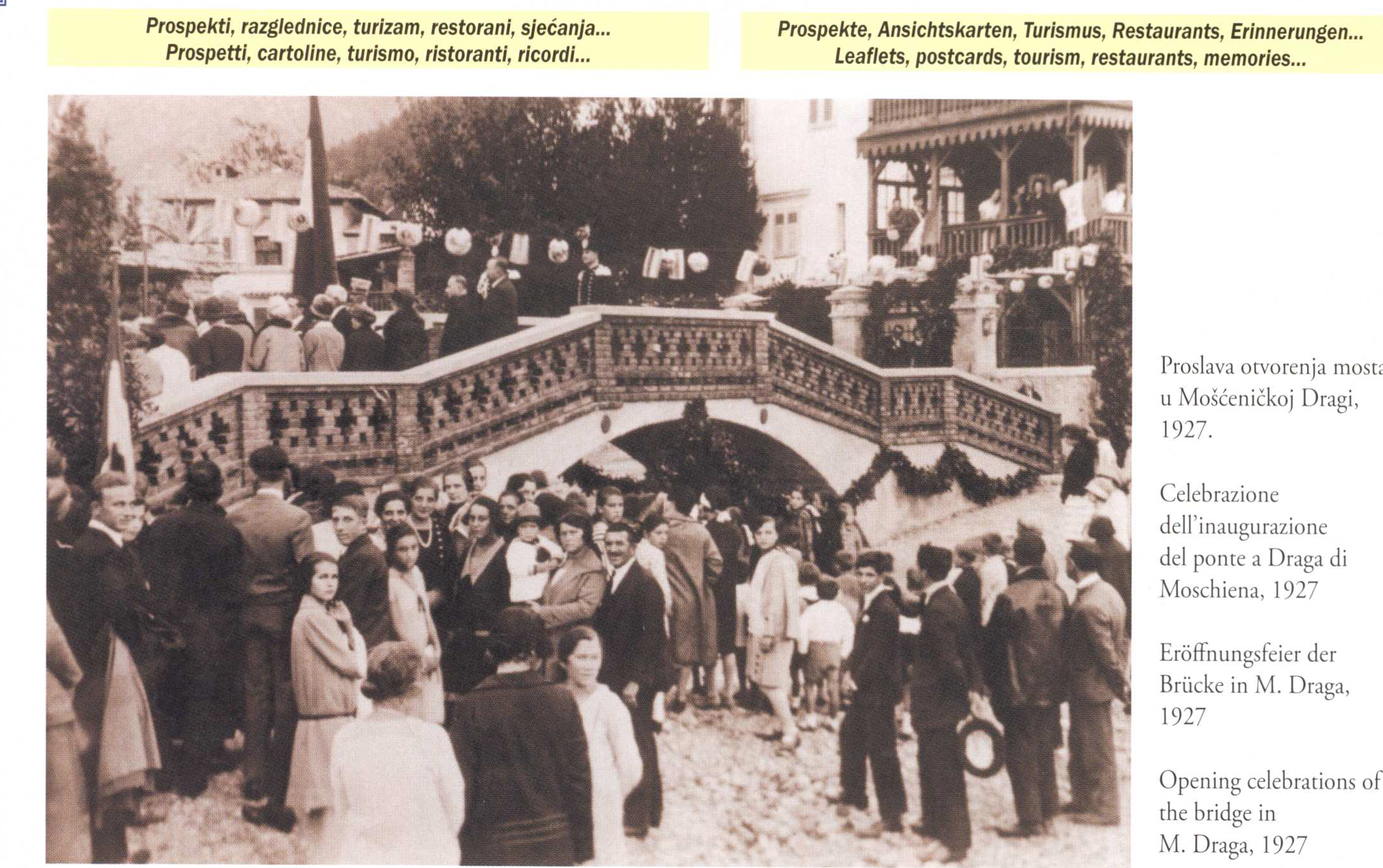
The photograph seen above was taken almost 100 years ago. In 1945 JNA/Yugoslav People’s Army units disembarked on the waterfront of Mošćenikča Draga. Heavy military equipment may have run into this now phantom bridge which like Yugoslavia, doesn’t exist today. However an intriguing linguistic connection to Mošćenikča Draga and Moščeniče is possible. In his 2012 essay, Cultural Historical Heritage of the Community of Mošćenićka Draga, journalist Goran Moravček writes, ‘Some people derive the name of the settlement Moščeniče from the Croatian word ‘most’ meaning bridge.’ The bridge’s arch and architectural detail suggest diverse cultural influences, and the 1927 photo shows it was popular with the locals.

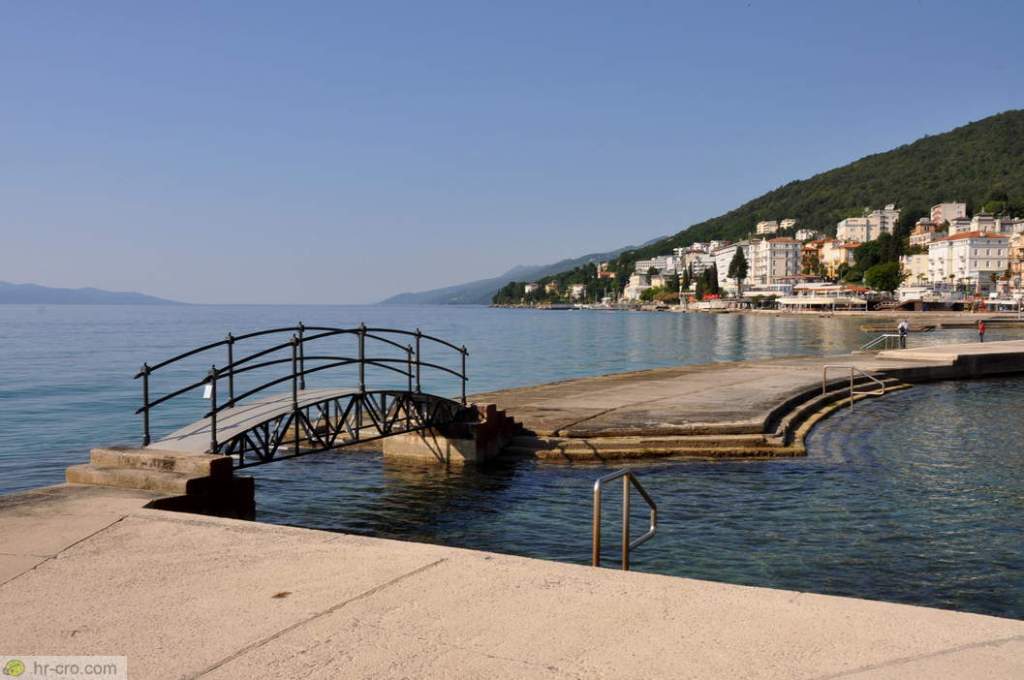
The little Bridge in Opatija connects a concrete pavilion to the lungomare. Opatija’s first bathing pavilion was built in 1896 and was an instant attraction for tourists and locals.
https://hr-cro.com/croatia/opatija_plaza_slatina/eng

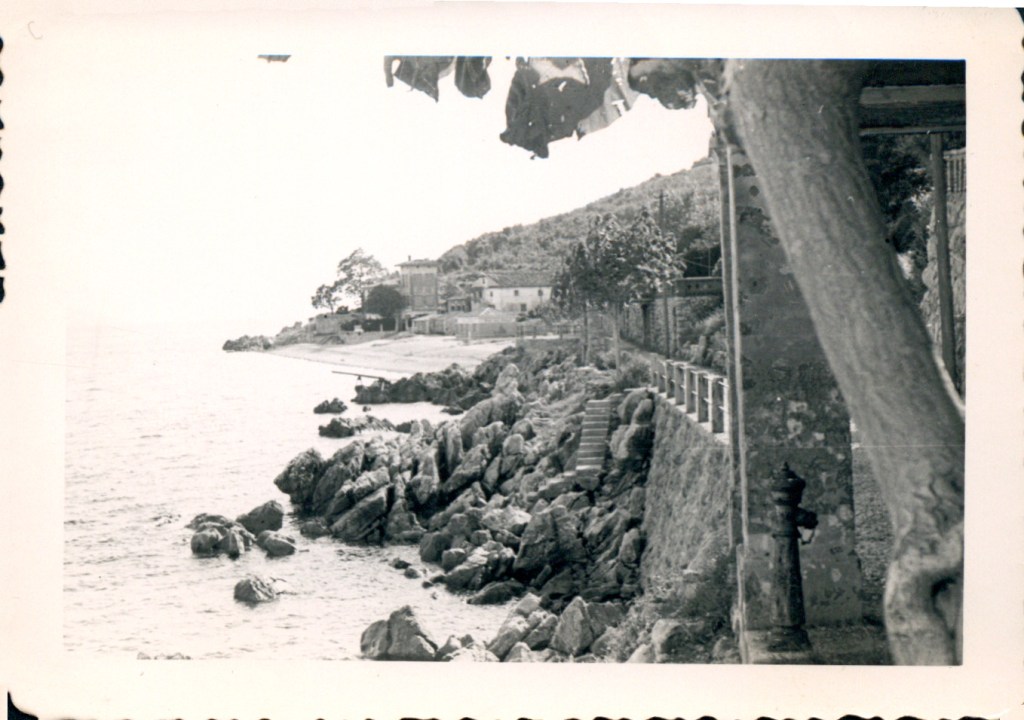
Footpath between the beaches of Moscenicka Draga.
Photo, Mary Martincic Scatena, 1952

Not exactly a bridge, but this short, scenic walk bridges Mošćenička Draga’s two heavily touristed beaches, Sipar and Sveti Ivan.

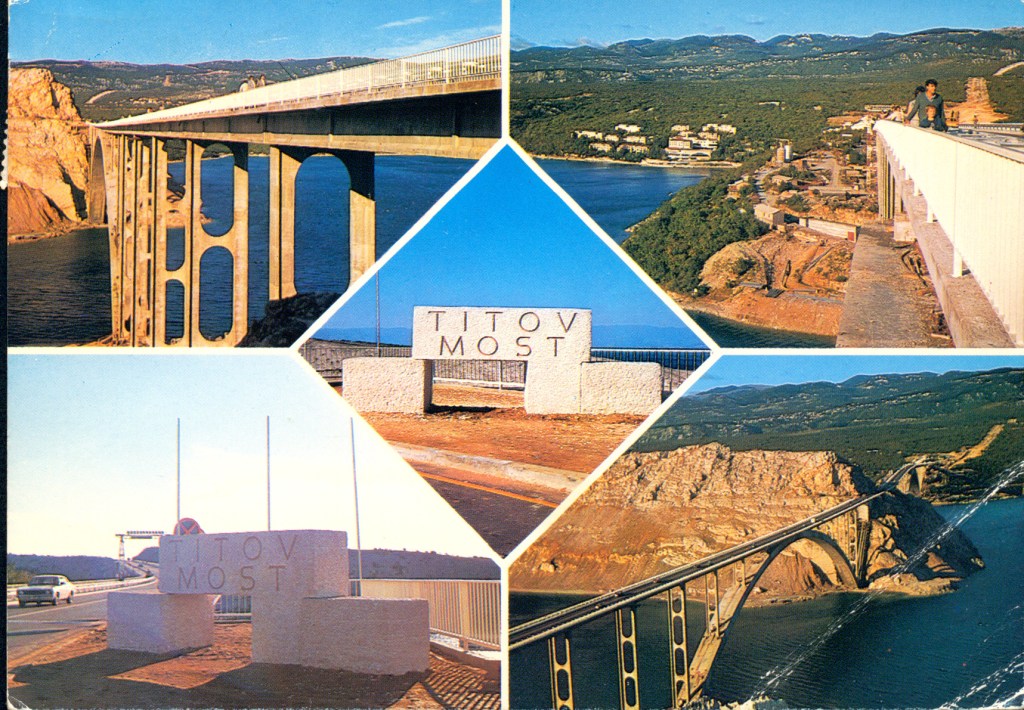
Postcard, Mary Martincic Scatena

This 1980s postcard proudly displays TITOV MOST. The bridge is now called Krk Bridge and connects Krk to mainland Croatia. Since his death in 1980 debates about the consequences of Josef Broz Tito’s policies in the former Yugoslavia likely contributed to the name change. Krk is approximately the same size as nearby Cres. They are Croatia’s largest islands with very different physical shapes and distinct ecosystems and cultural identities.

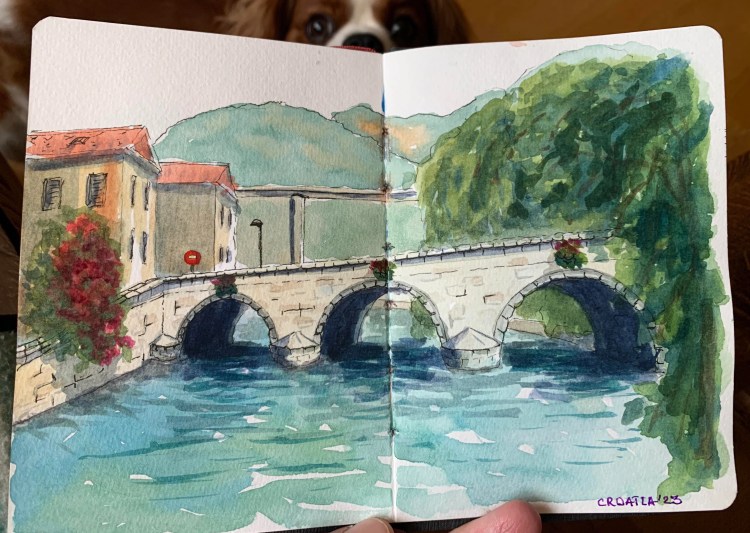
Old Bridge, Crikvenica
Watercolor by Redditor u/qatya, Redditor

Stari Kameni Most (Old Stone Bridge) over the Dubračina river is in the center of Crikvenica, a popular resort on the Kvarner Riviera. Crikvenica is 34km south of Rijeka.

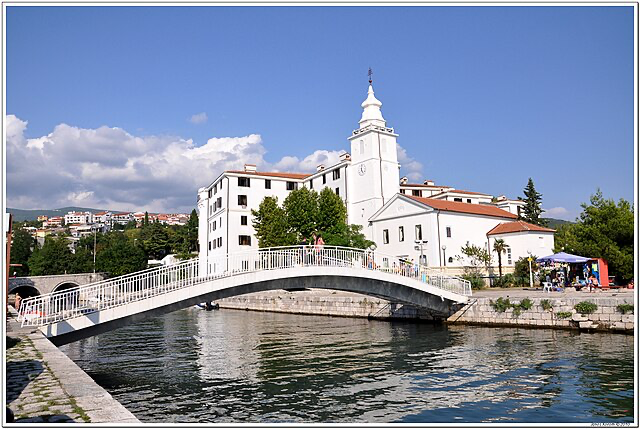
Crikvenica’s White Bridge is near Crkva Uznesenja Blažene Djevice Marije, (Church of the Assumption of Blessed Virgin Mary). It gracefully arches over the Dubračina River. Crikvenica has a similarly arched red bridge over the Dubračina that’s also pedestrian only.

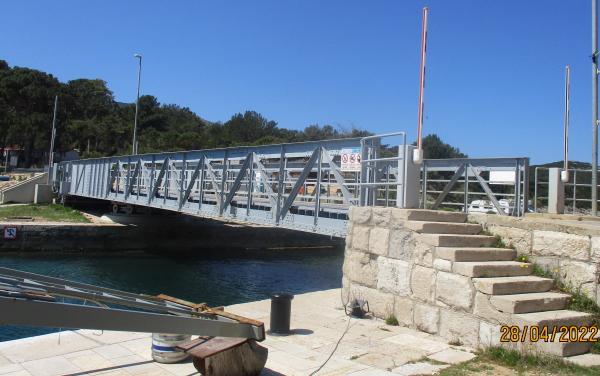
The islands of Lošinj and Cres were once one island called Apsyrtides. Empire building Romans dug a narrow channel to shorten travel times to the south. Today these islands are connected by a swing bridge that opens over a strait that spans 12m/39ft. Since there is no road connecting the islands to the mainland, visitors and locals must take ferries or other water craft.

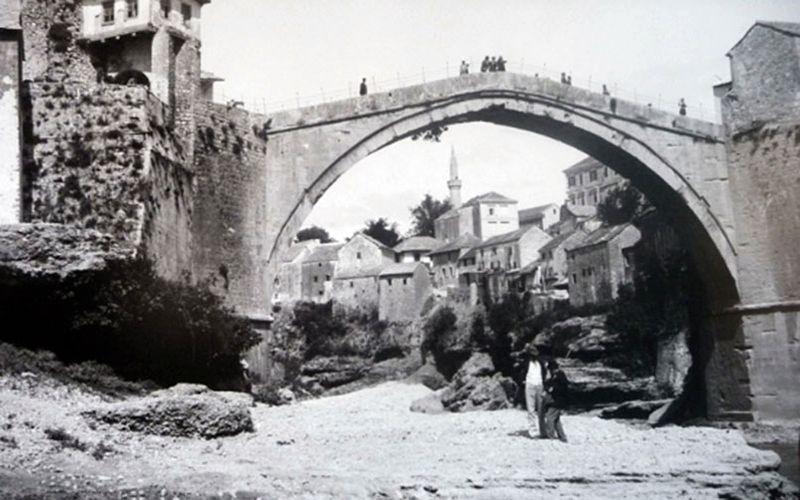
Stari Most captured journalist Rebecca West’s imagination as she traveled in the former Yugoslavia during the 1930s while researching her 1,181 page epic Black Lamb and Grey Falcon. West saw Stari Most as a motif for transcending barriers and connecting cultures. It was built from 1557 to 1566 by architect Mimar Hajrudin. For centuries it functioned as a crossroads between the city of Mostar’s Muslim Ottoman and Christian Slavic worlds. Not unlike Sarajevo, the city of Mostar was composed of different neighborhoods with well-defined ethnic groups who lived harmoniously. The bridge facilitated all kinds of exchanges, from merchant trading to lover’s trysts.

Historical photo from 1896 of the old bridge of MostarAuthor : Inconnu/https://www.le-flamant-rose.org/europe(2)/villes_phares/mostar.htm

Stari Most survived WWII’s heavy tank and artillery traffic, but on November 9, 1993, during the 1990s war, Stari Most capitulated to Croatian shelling and fell into the Neretva River. Four months after its destruction there were calls for Stari Most to be rebuilt. The 12.5 million euro reconstruction of Mostar’s Bridge was funded by the World Bank, local government, Italy, the Netherlands, Croatia and The Council of Europe Development Bank. UNESCO oversaw the project. Stari Most was rebuilt identically to the original, using the same building materials and techniques as were used in 1566. Stones were pulled from the Neretva, local quarries were contracted and traditional stone-cutting schools were brought in. Opening celebrations took place on July 23, 2004 with foreign leaders touting the bridge as a symbol of reconciliation. Today the bridge is a major tourist attraction, and for some it signifies peaceful co-existence. But mass tourism does not necessarily promote cultural understanding, and is not usually compatible with serenity.

So, when you walk upon the stone

do not take for granted

Something new to you

is something deeply enchanted

excerpt from The Secret Gem by Katarina Bučić

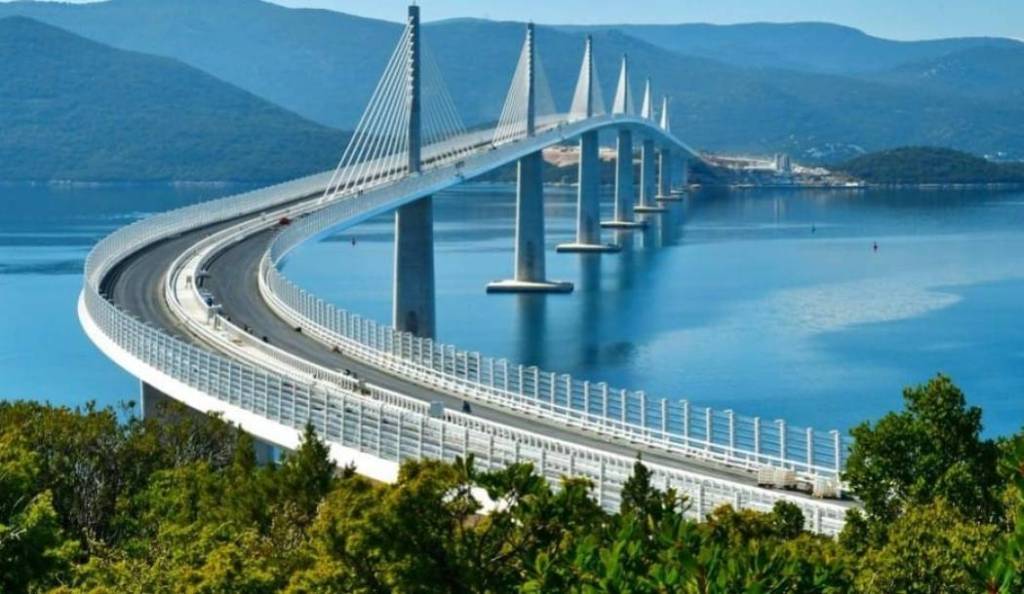
On July 26, 2022 Croatia officially opened the Peljesac Bridge/Pelječki Most. One of the largest EU funded infrastructure projects in Europe, the Peljesac Bridge connects two parts of Croatia’s Adriatic coast across 9km of Bosnian territory. It makes access from Split to Dubrovnik — thanks to its UNESCO World Heritage Site designation and Game of Thrones, Croatia’s biggest tourist attraction today — much quicker and eliminates border crossings. During the summer tourist season, more than 12,000 vehicles each day drive across the bridge and local residents indicate that it has a significant impact on the one-day visitors’ and weekend demand. The strikingly designed cable-stayed bridge is 2.4km long. It was built by a Chinese firm which completed the project on schedule in four years despite complicated engineering, controversies with Bosnia-Herzegovina and covid restrictions.

https://www.livecamcroatia.com/en/news/the-grand-opening-of-peljesac-bridge/


Pelječki Most is good for Croatian trade and tourism, but what is its impact on the marine conservation area it spans? In 2015 the independent research institute OIKON Ltd, Institute of Applied Ecology, presented data showing the bridge would not have a negative effect on the protected mussel and oyster beds in the Bay of Mali Ston. This area is habitat for a total of 89 species of shellfish which thrive in the bay’s mix of salty Adriatic and fresh Neretva and submarine spring waters. Exporting shellfish (only mussels and oysters are farmed) is big business. Marija Radić, President of the Shellfish Farmer’s Association in Ston agrees Pelječki Most will make transporting produce from the sea much easier. In 1927 Marija’s grandfather, Luko Maškarić built infrastructure to cultivate and harvest shellfish in Mali Ston Bay that is in still in use.

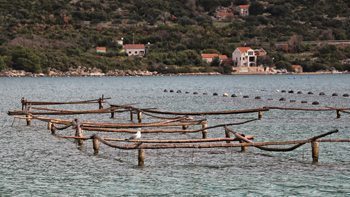
Ostrea Edulis/ European Flat Oysters have been cultivated around the Pelješac Pennisula before the time of the Roman Empire. Cultivation flourished under the Republic of Ragusa which produced the first written accounts of shellfish farming. Today some Mali Ston family farms use traditional wooden racks. Oysters take 18-24 months to mature and like mussels, are best eaten fresh from the water.

Sadly Mali Ston oyster and mussel production has not yet recovered from the drop in tourism due to Covid-19 travel restrictions. Because cooler water temperatures produce the most sought after oysters, the ‘season’–is months with the letter ‘r’–November through April. Held mid-March on Saint Joseph/Sveti Josip Day, Ston and Mali Ston’s Oyster Festival returned from a pandemic hiatus this year.

Beli, Cres https://www.visitcres.hr/croatia-island-cres/kulturni-spomenici-cres/rimski-most-beli-cres.aspx

The Roman Bridge built of stone it is located at the entrance to the town of Beli on Cres. It is said to be 2000 years old. In Roman times Beli was known as Caput Insulae. An inscription in Beli indicates it was founded during the reign of Emperor Tiberius, AD 14 until 37. Evidence of an important Roman settlement include, the bridge, and the remains of a temple and a forum. The Roman Bridge is actually part of an ancient stone road that helped transport goods from the port inland. If bridges are markers of conquest and rule, this one has a durable pedigree.

Noni se smiješi

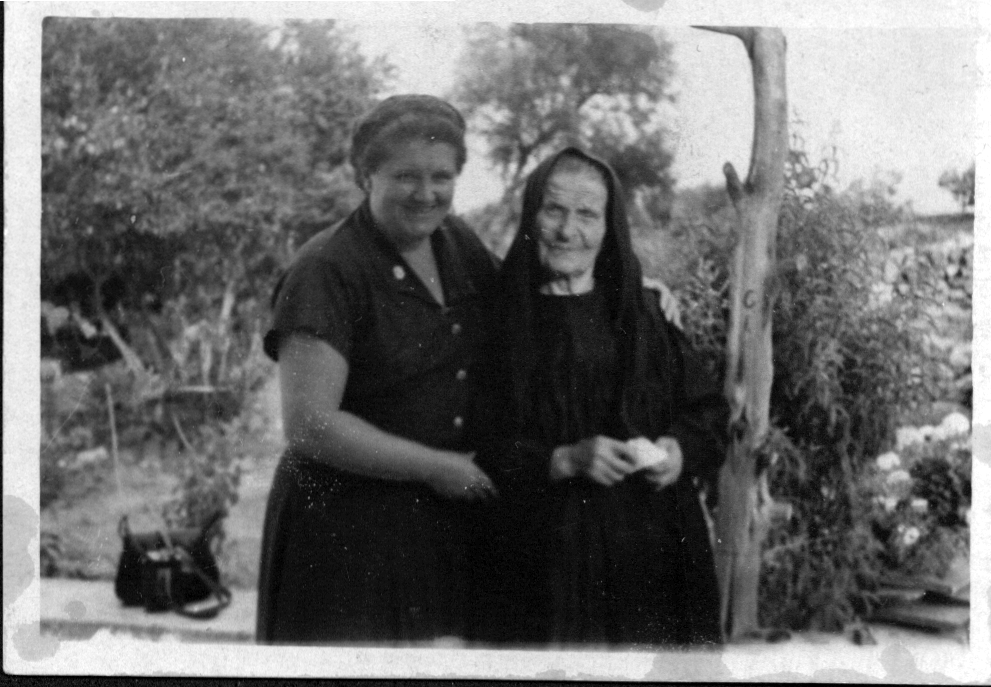
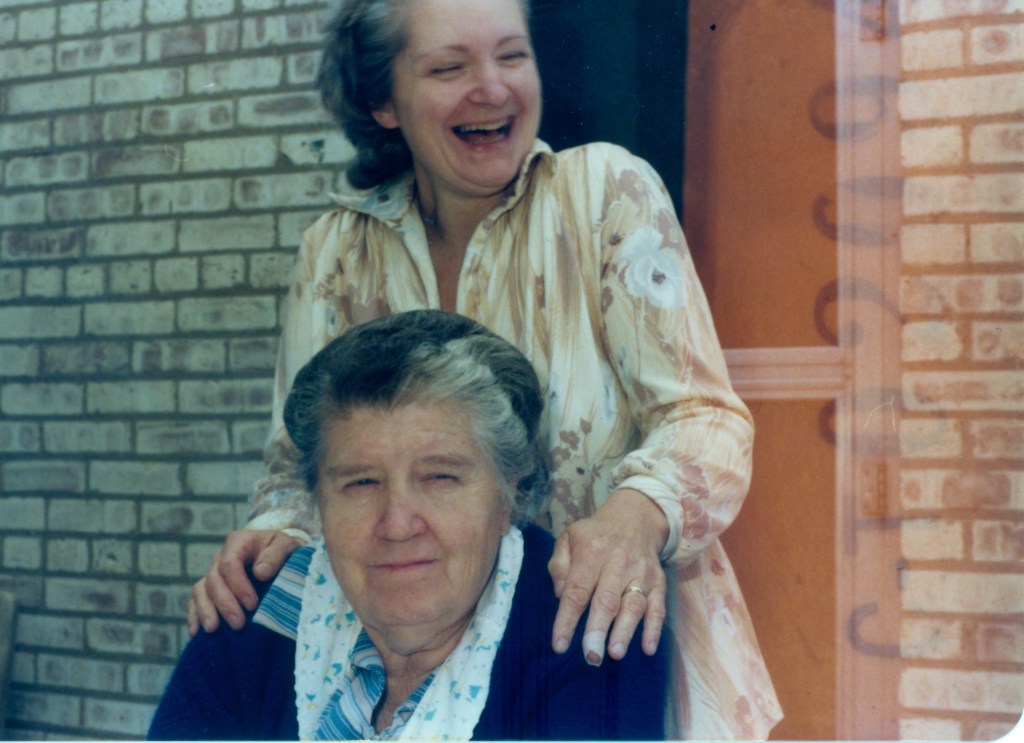
Mariča/Noni and Mary, c. 1970

Grandmothers are important for so many reasons. Their place in our memories is steeped in family dynamics and the stories we tell about our childhoods. They are anchors to the past. People lucky enough to have a Croatian or Croatian-American grandma often say their baka or Nonna was the best cook in the world, but our Noni really was. She was born Mariča Ivanić in 1908 in a place called Poljane, a village of 534 residents perched above Kvarner Bay. In travel guides Poljane is sometimes referred to as a suburb of Opatija. Noni lived there with her parents, her brother Andrea and sister Dika. She must have learned how to cook when she was young. I’m guessing her talent was a combination of nature and nurture. I recall my mother telling me how her grandma (also named Mariča) smoked meats inside her small stone house causing the interior walls to be blackened with smoke. I also recall hearing that although Noni’s mother was quite poor, she always shared food with her neighbors and they with her. For some Croatians small, tightly knit communities helped people survive during the turbulent 20c.

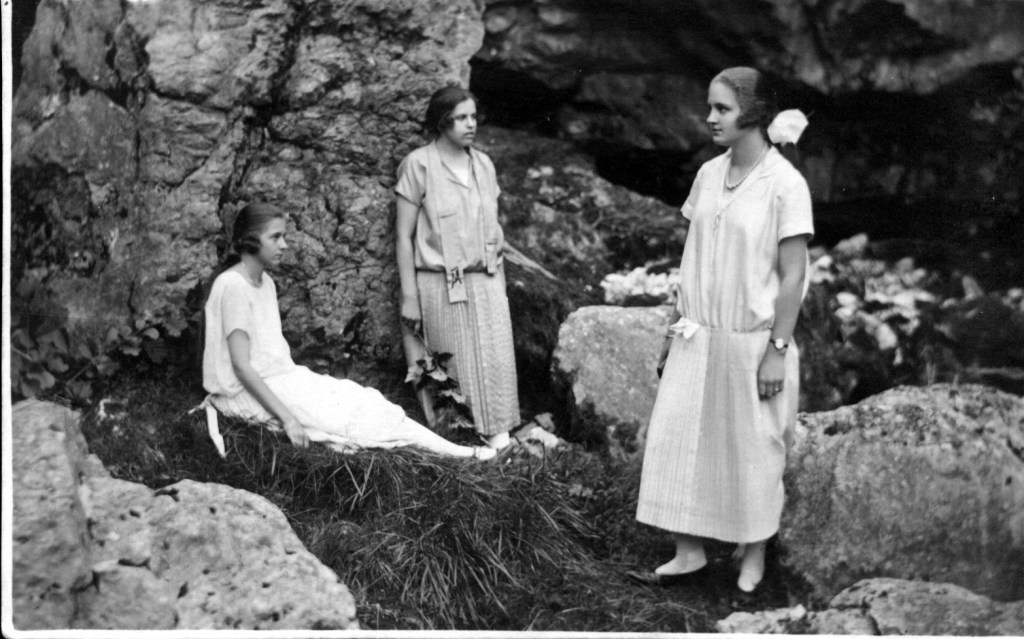
Noni is standing in the foreground, c 1920s

On Noni’s everyday table potatoes, polenta, sauerkraut, turnips, and sausage were staples. Even though she grew up near the sea, middle European cuisine showed up in Noni’s cooking alongside Italian(naturally), and some Greek and Turkish influenced dishes. Spectacular feasts, especially for Christmas and St. Anthony’s Day (17 January, our Papa, Anton’s namesake day and the first day of karneval) were miraculously cranked out in her small kitchen. For us Noni’s kitchen was an Aladdin’s lamp. Instead of rubbing the lamp, all you had to do was to say that you had a taste for…palačinka (with her winey Italian plum jam), bread (with whipped butter), sarma (with cabbage fermenting in her basement konobiča), gnocchi (sliva with cinnamon or savory with a cacciatore type sauce)…but first soup.

Noni standing is supervising dinner at her table in Evergreen Park. Papa is in the foreground to the right

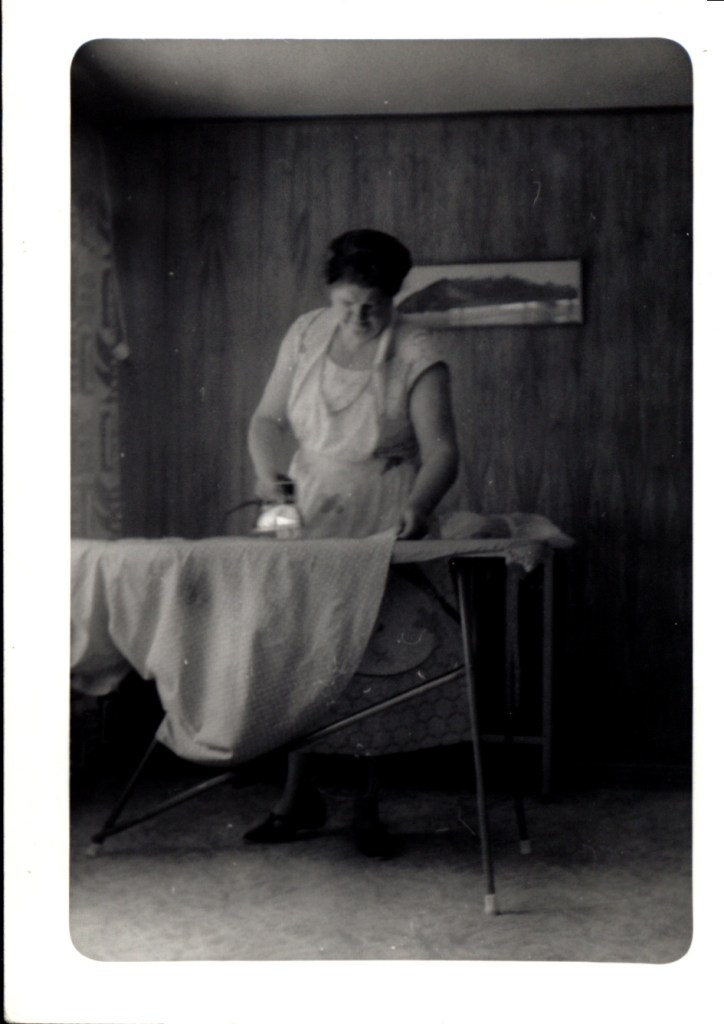
Her beef soup (goveđa juha) was eaten at lunch even on the hottest summer day. If we were lucky there would be thin, handcut homemade noodles in clear broth which Noni would pour back and forth in bowls to cool so we wouldn’t burn our tender little mouths. Her kitchen typically smelled enticing except maybe when she cooked bakalar. Noni painted her kitchen walls a buttery yellow, reminiscent of Easter bread we called pogača (to some Croatians, pinca) slathered with butter, of course. The rhythm of her life was different from ours. Monday was for washing, Tuesday for ironing, Wednesday for gardening, Thursday and Friday for shopping and housework, and everyday for cooking. We were busy, but Noni got things done.

Mary’s birthday party in Noni’s backyard in Evergreen Park
Noni at work in her home in Evergreen Park

Noni could speak, read and write in four languages. During her life in the former Austria-Hungary, Kingdom of the Slovenes, Croats, and Serbs, Kingdom of Yugoslavia and sometimes Italy, changes in government dictated that Noni learn Italian and German in elementary and high school, depending on who was in charge. Croatian (Istarska dialect) was spoken at home. Noni learned English mostly from going to the movies with her daughter Mary. During the late 1930’s and 1940s Noni and Mary were regulars at the Southtown theater, Chicago’s last Balaban and Katz movie palace, in the Englewood neighborhood where they lived until the early 1950s. They would walk a few blocks from their home to see whatever was playing (double features) after Papa had his dinner and was working at his second job which he turned into successful tool and die business. I was shocked to learn that Noni’s English was heavily accented when I proudly introduced her to a friend who asked me how I could understand her. I was fourteen.

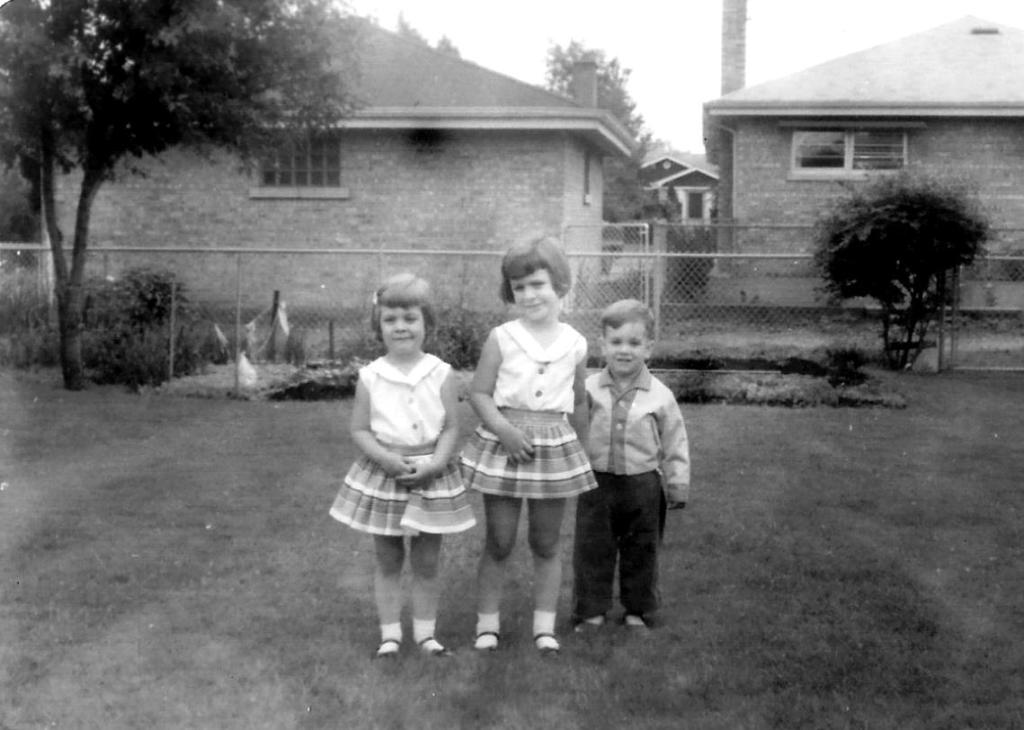
Noni’s cooking and language expertise was matched by her skill as a seamstress. As a child she learned to sew to help clothe and support her family. Before the age of mass produced clothing Noni sewed for well-off Croatian ladies. She became adept at beading and embroidering gowns. Those skills traveled with her when, in 1929 a pregnant Marcia Ivanić Martinčić traveled alone by ship across the Atlantic to meet her husband who established himself in the US years earlier. Noni embroidered relentlessly, sometimes in the evenings by herself, and sometimes with her Croatian lady friends, yet I never saw her wear traditional Croatian dress. She could and did sew just about anything from shirts and coats, to slipcovers for furniture and drapery, to clothing for me and my sister Lisa. We pranced around in appliquéd matching smocks and skirts.

Me, my sister Lisa and brother Lou in Noni’s backyard, early 1960s

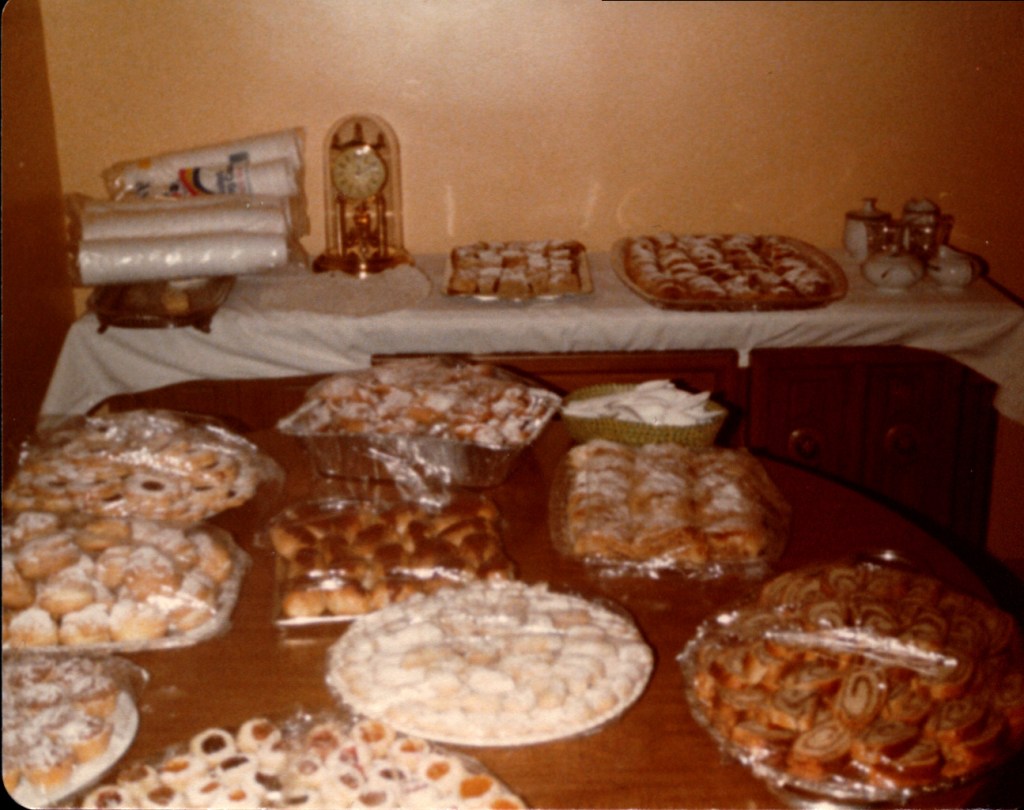
Noni cared a lot about her garden. We all did. It was a peaceful, manicured place where flowers, vegetables and fruit trees flourished. ‘Snowball’ bushes, daisies and oleander framed the backyard while cascading roses claimed the front porch. Baby lettuces and flat Italian beans in June, sweet, juicy tomatoes in July and August, and apples in September. The fruit from our Papa’s cherry was too tart to eat but everything else in the garden was harvested or preserved. Noni’s apple strudel (sometimes with golden raisins and pine nuts) was a masterpiece of flaky deliciousness. She turned out large spreads for special parties.

Noni’s slatki stol sa štrudlom od jabuka i orahnjača

Noni did not smile all that often. Her way was to work tirelessly with skill and accuracy. In her younger days she made cooking, embroidering, sewing and writing letters to friends and relatives in three languages seem like effortless tasks. She was kind of a super woman to me, but because of her reticent nature she was also a bit of a mystery. I’m not sure why this was so. Maybe expressing herself in English was challenging. When she tried to subdue our ebullient Papa from swearing in front of us (in Croatian which we did not understand) as he read his copy of Matica, we knew that outside of their cozy haven another place claimed their affection.

Although Noni attended Mass regularly, I felt she took Roman Catholicism with a grain of salt. But prayer was non-negotiable. If Noni was at our house at bedtime she would tuck us in by blessing us with the sign of the cross, ‘U ime oca i sina i svetoga duḫa. Amen.’ It made me feel protected, safe and loved. Keeping family close was a big part of Noni’s purpose. It is a particularly lovely aspect of Croatian culture that I am grateful for. Noni lived most of her life far from her beautiful, often beleaguered homeland. She died in 1982, nine years before Croatia’s independence. Because of her we could feel, hear and taste a time and place she cared about and missed. Noni remains a constant, reassuring presence in my life. Her frequent response to complaints, cynical observations or distressing situations was, ‘You’ll be fine, everything will be fine.’

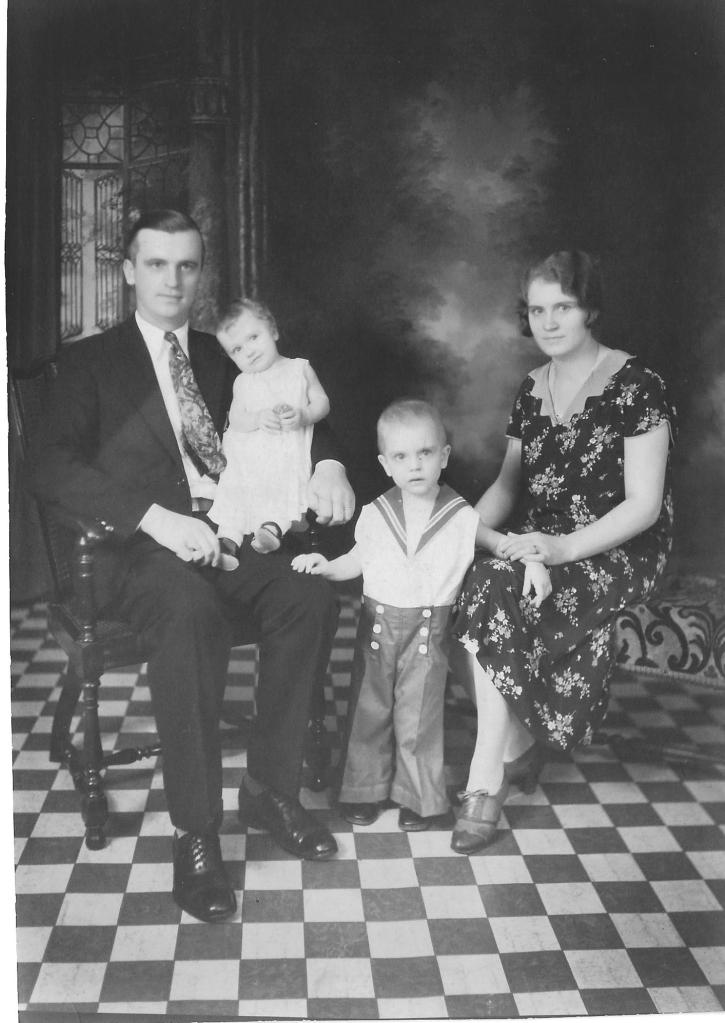
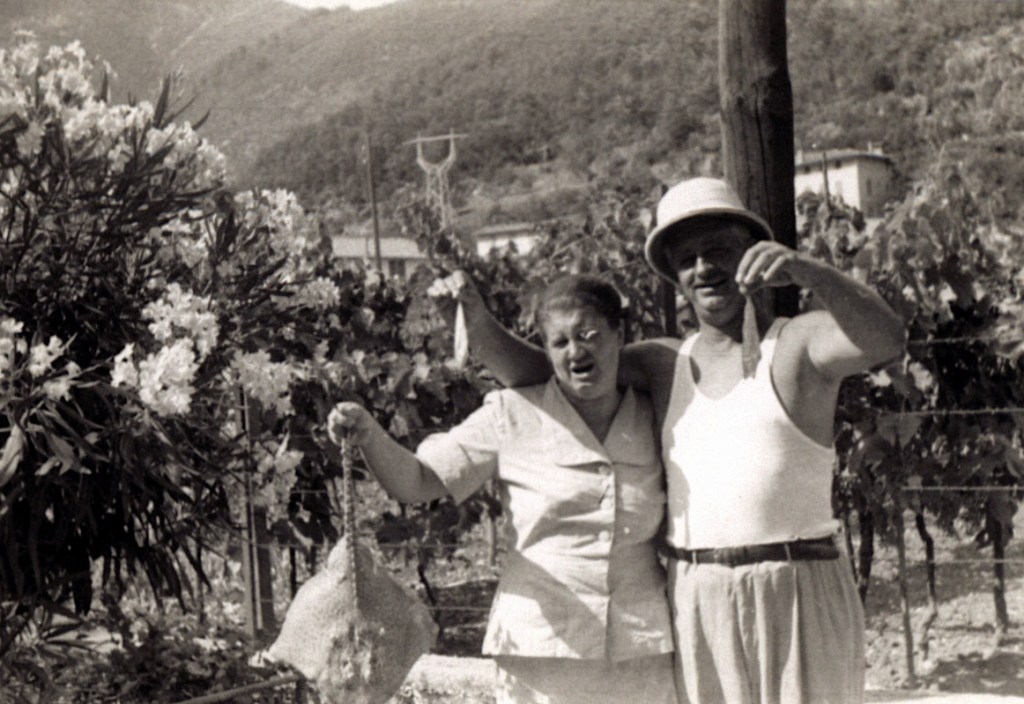
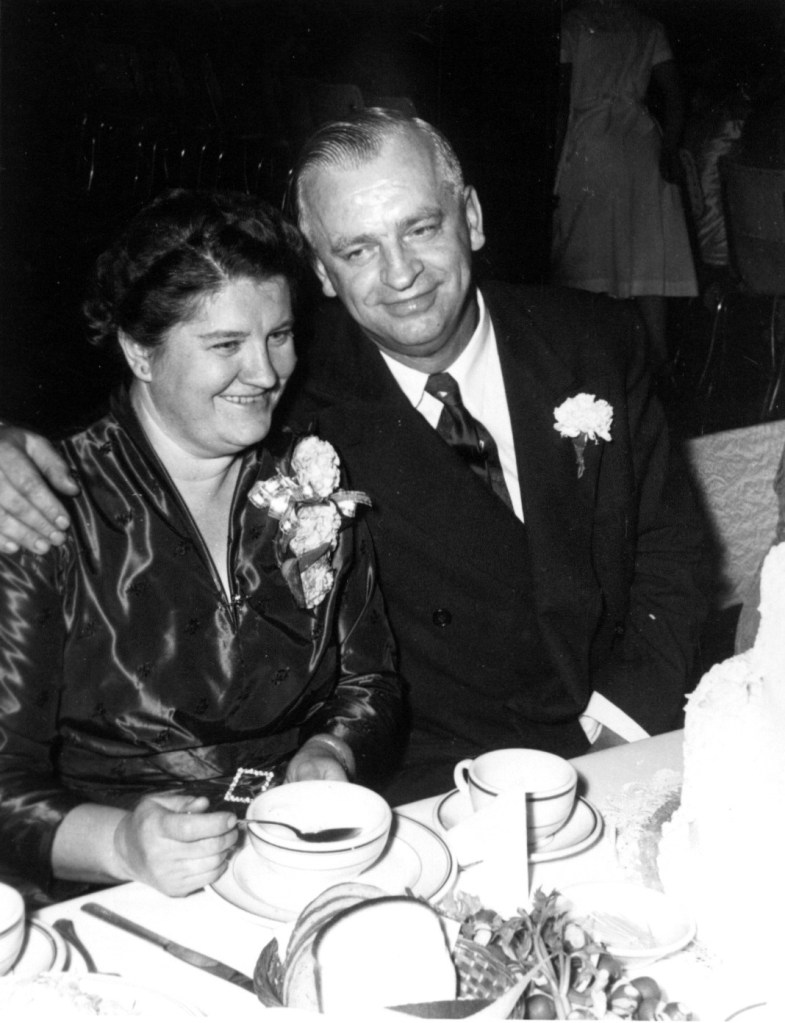
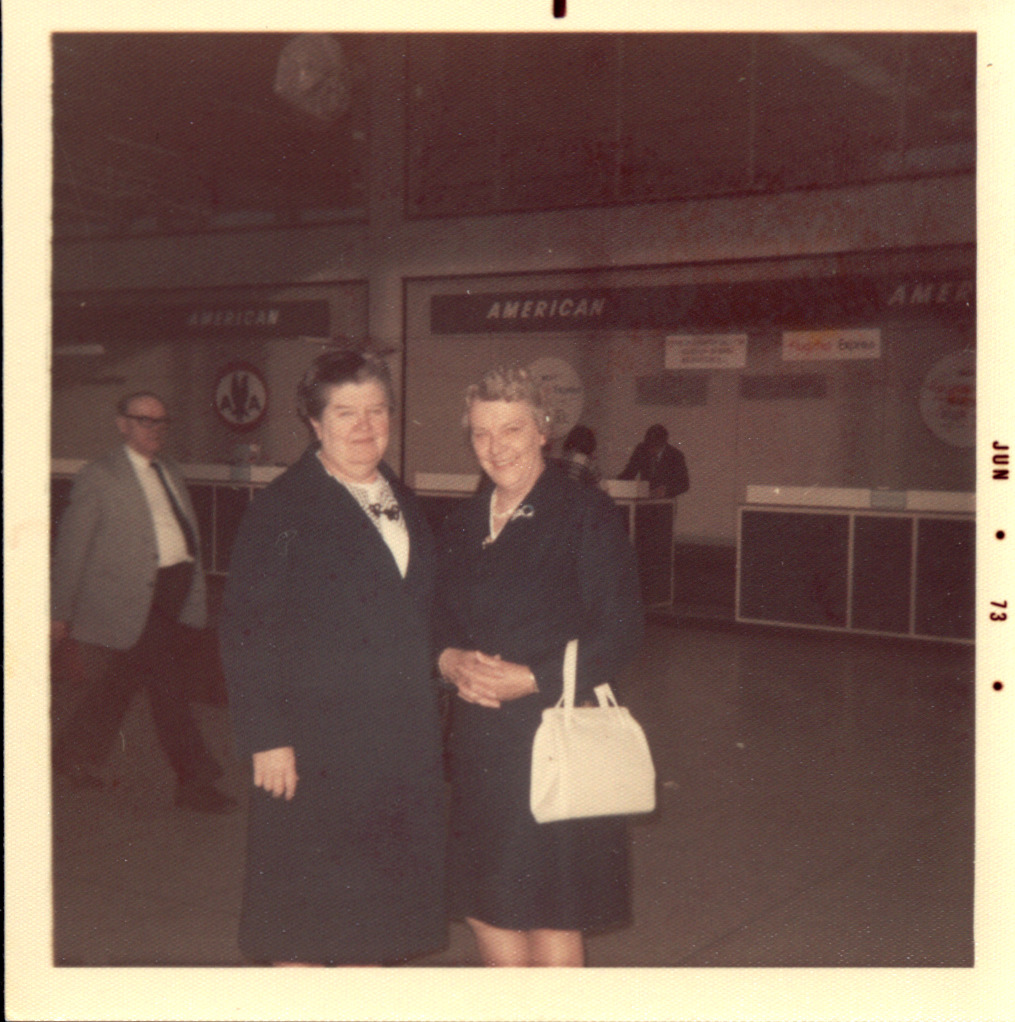
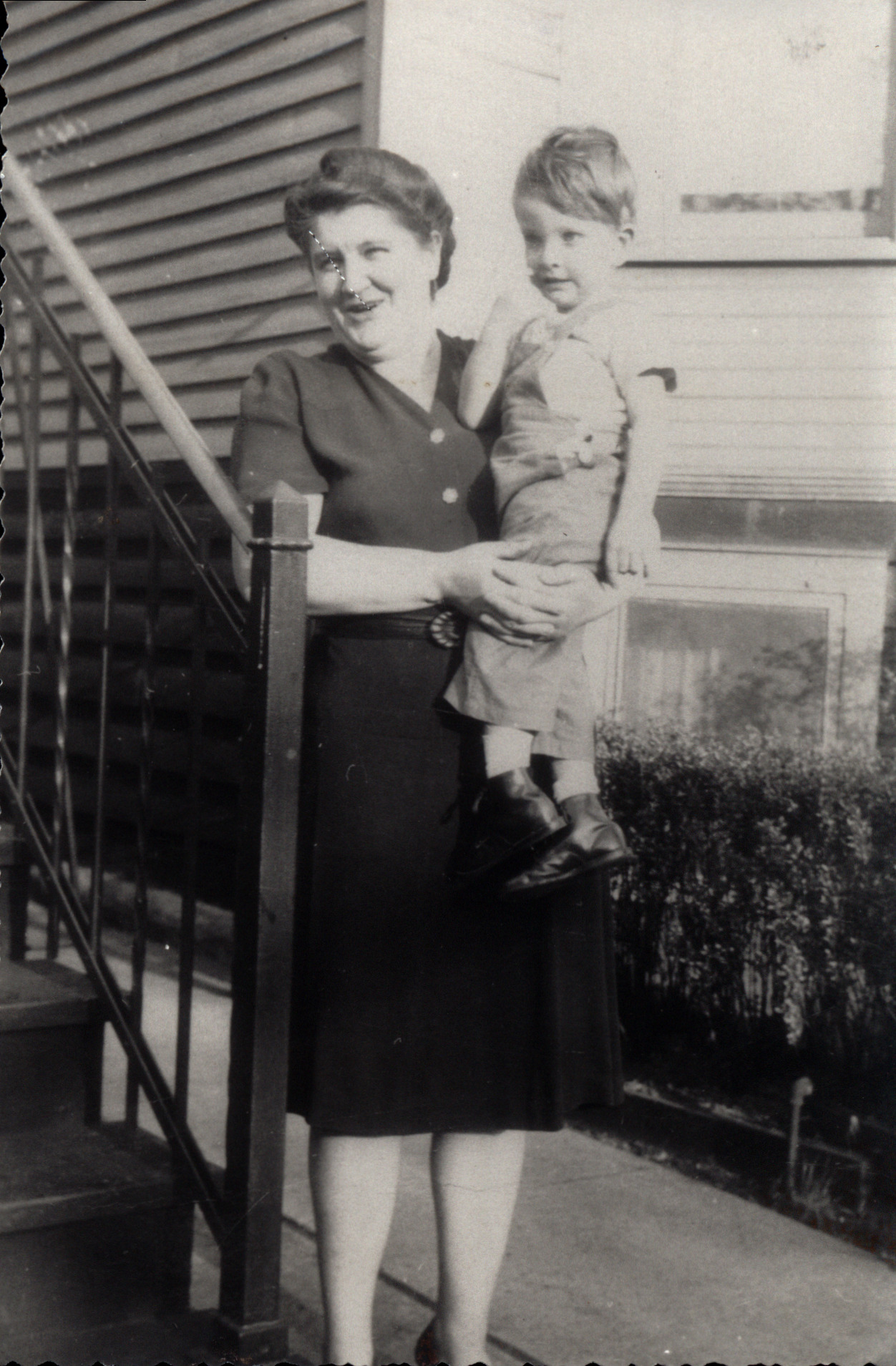
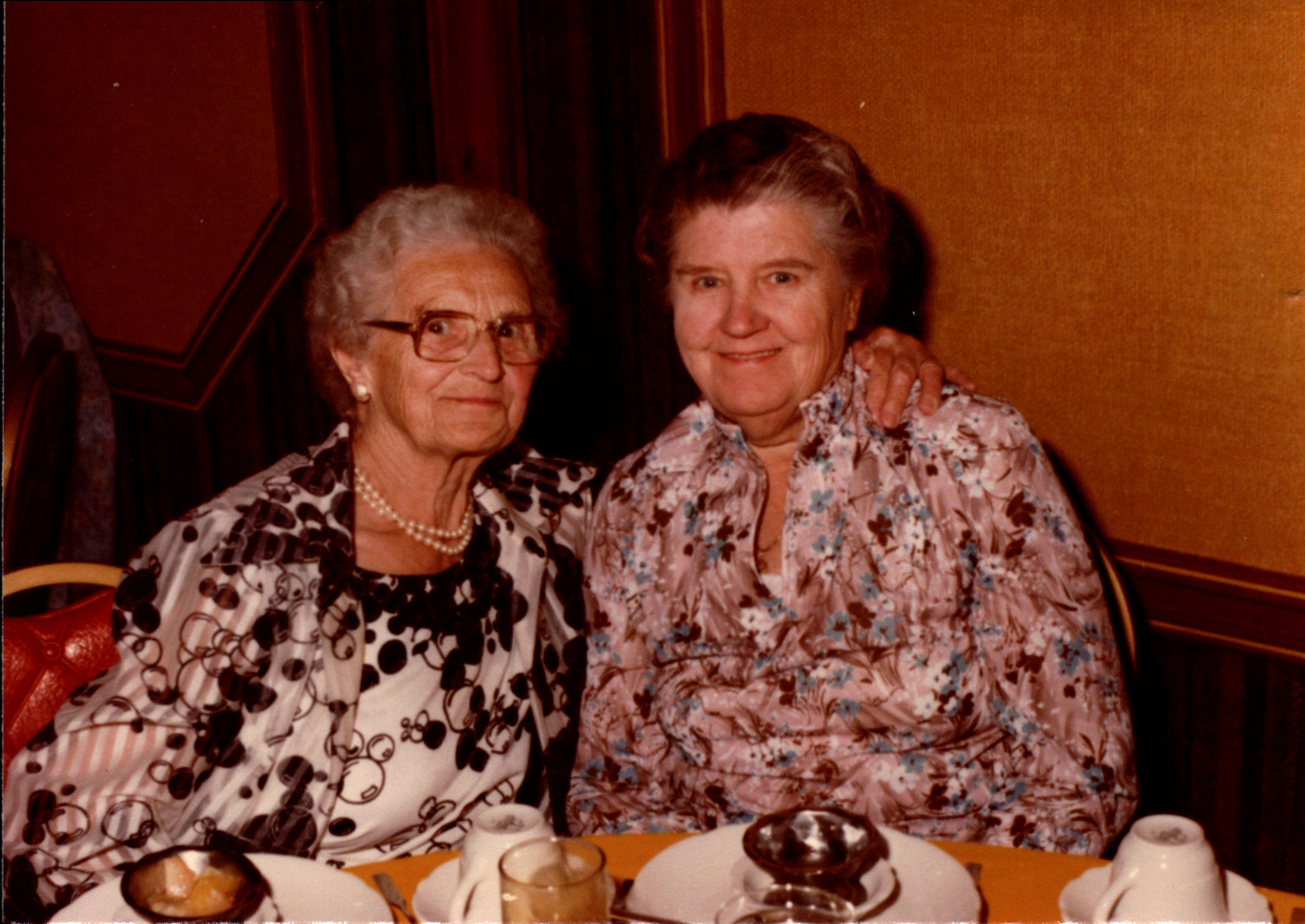
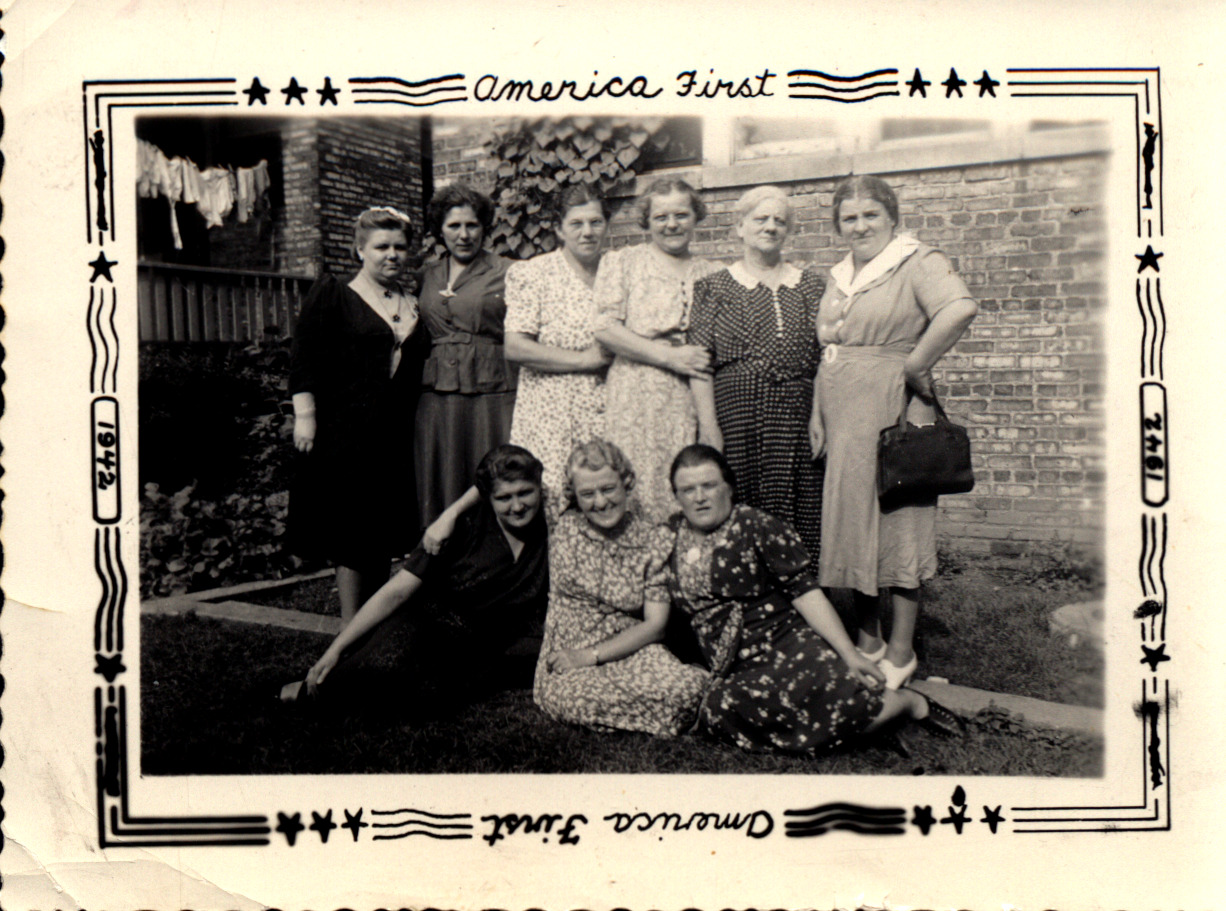
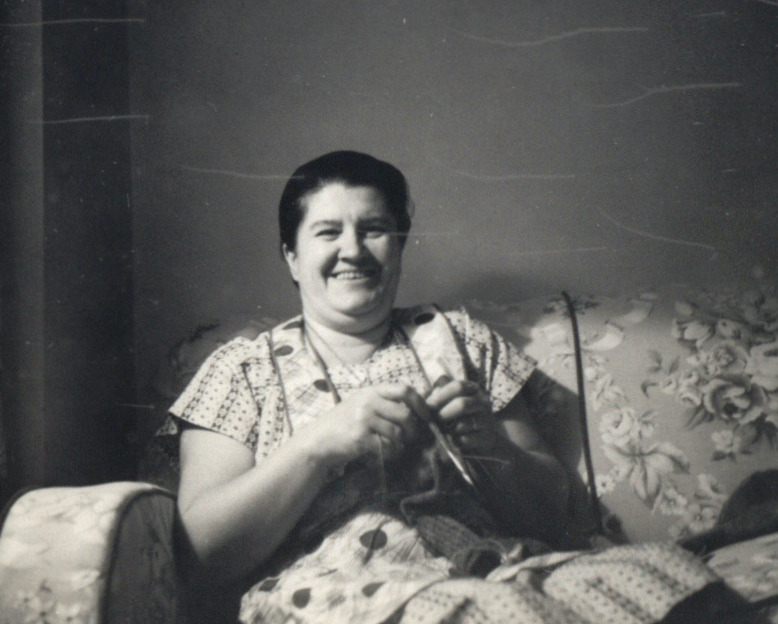
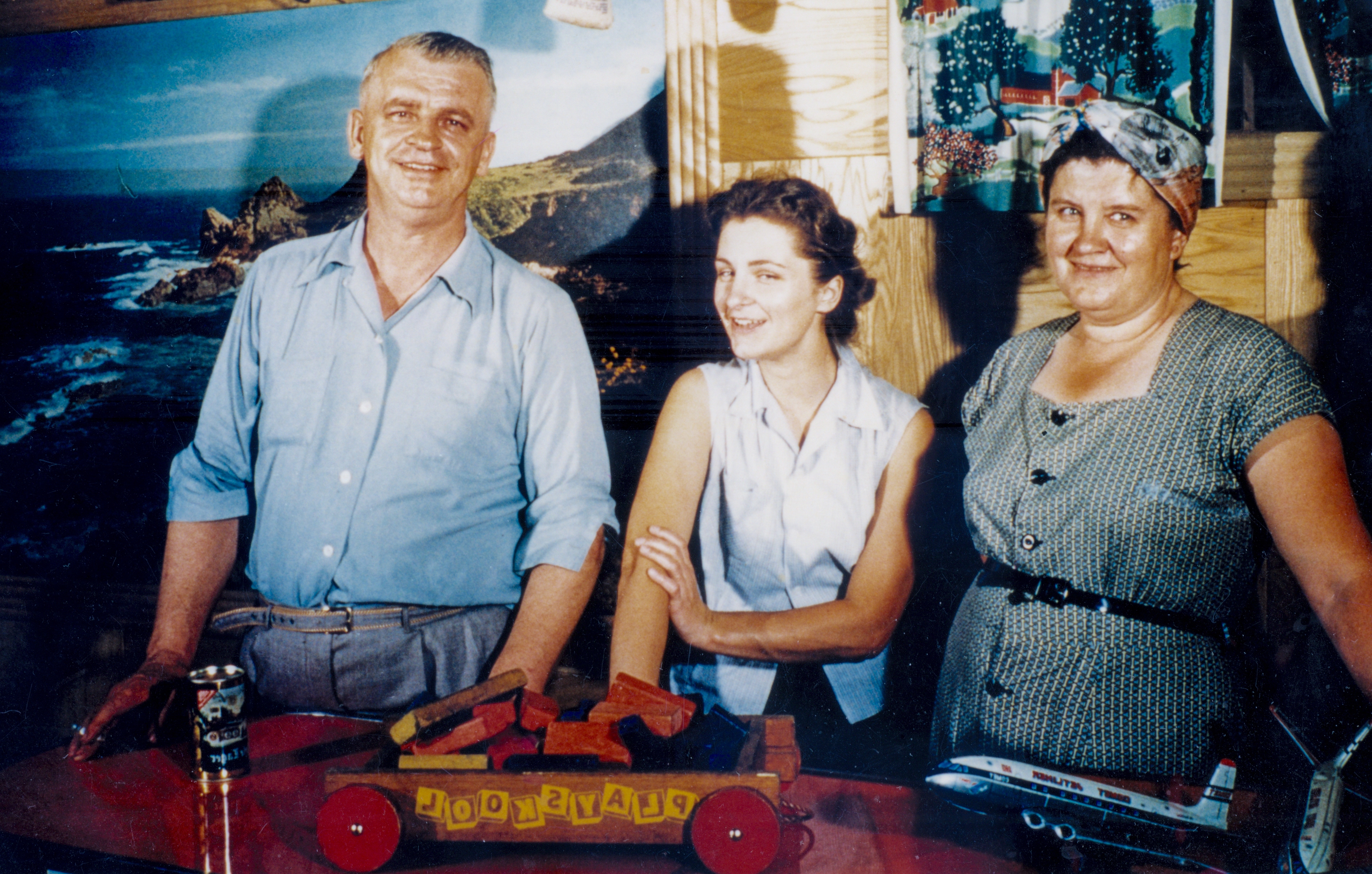
All photos in this post were saved by Mary Martinčić Scatena. Below in descending order right to left they are; Noni and Papa at their wedding anniversary celebration, Noni and her sister-in-law (our Teta) Jelica traveling together, Noni and her youngest son Jim, Noni and her friend Mrs. Ziganto, Noni (seated, far left) and her Birthday Club friends, Noni crocheting in her home in Chicago, Noni, Papa and Mary in their home in Evergreen Park.

Vital Signs: Lošinj, Lastovo, Lokrum

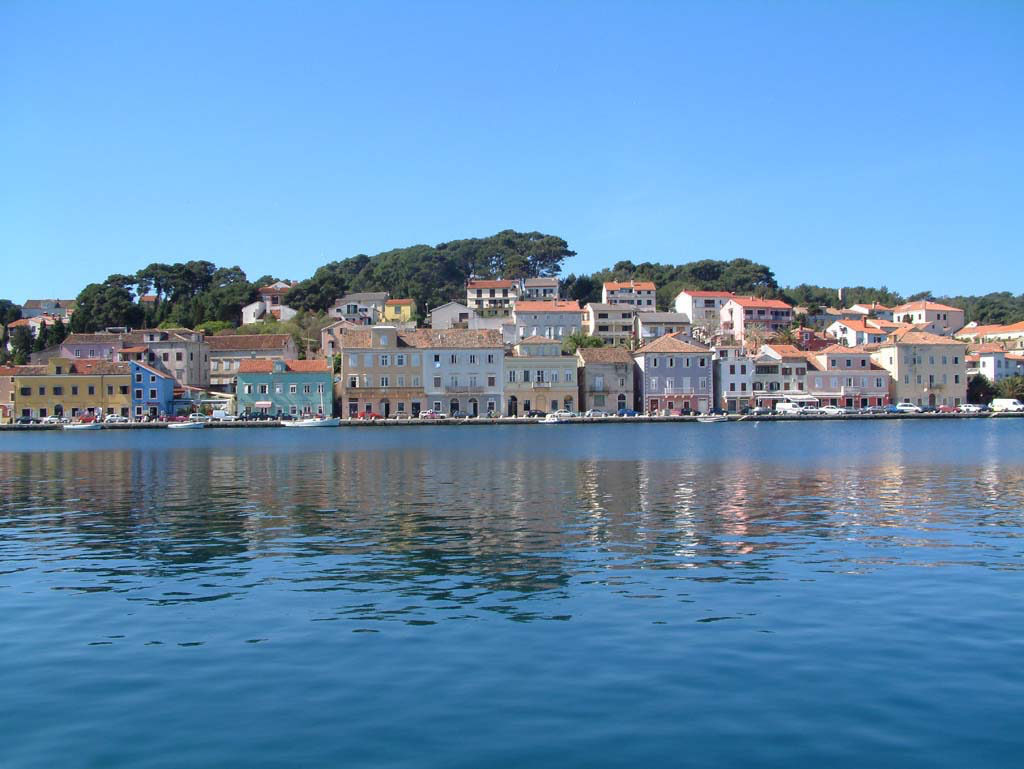
Mali Lošinj also named Lussinpiccolo but Venetians is located on the protected part of a bay on Lošinj’s eastern side.

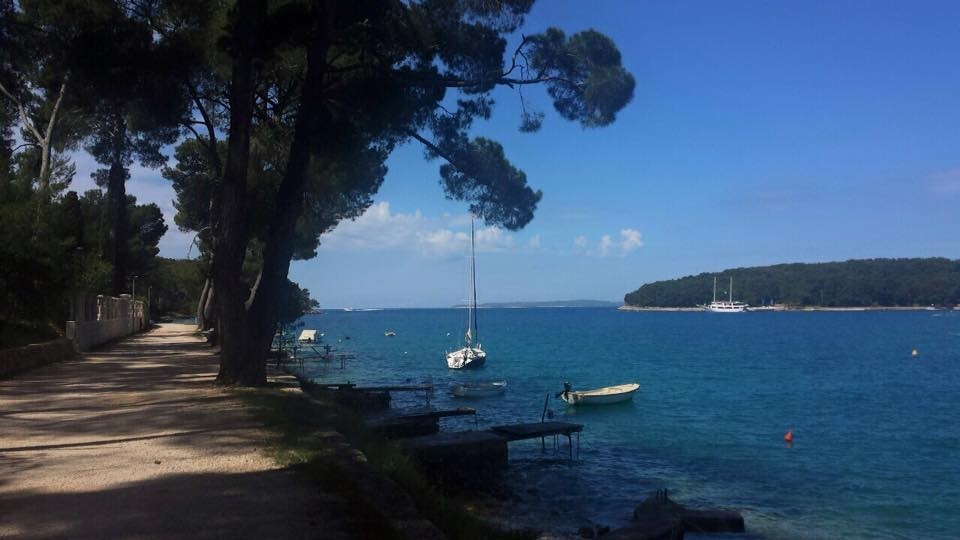
Lošinj, Lastovo, Lokrum. From their distinctive geographies and climates to their relaxed atmospheres islands are historically known as restorative places where nothing much changes except the seasons. Many years ago Lošinj was dubbed ‘Island of Vitality’ for the healing properties of its pine, sea and herbal scented air. Located 2 kilometers from the port town of Mali Lošinj, Čikat bay can be reached by ferry from Pula in a little over 2 hours. Čikat has green, no trace camping facilities. It is surround by an Aleppo pine forest planted in the late 19th and early 20th centuries as part of a reforestation project. The island is also home to diverse and fragrant mastic tree, common myrtle, strawberry tree, tangled honeysuckle, heath tree, prickly juniper, olive tree, deodar cedar, cypress, stone pine and other Mediterranean basin plant species. Together they function as the island’s the ‘green lung’s, Nature’s spa. At Lošinj’s The Garden of Fine Scents medicinal herbs cultivated there are used in products and experiences catering to tourists and locals.

Čikat Bay has calm water surrounded by forest. Čres and Losinj were once one island, and you will find similar flora there.

For hikers there is a 3 kilometer (10,000 step) forest footpath between Mali Lošinj and Veli Lošinj. Educational panels along the path encourage ‘proper posture, movement and breathing.’ For history buffs a 2,000 year old Greek statue The Croatian Apoxyomenos depicts a young athlete. This bronze was preserved in the Adriatic and is on display in a museum dedicated to the statue’s story. For the almost 10,000 residents of Lošinj increased access brings visitors with unexpected benefits and consequences.

Dolphins playing near Veli Lošinj, Blue World Institute

Islands are places where the relationship between land and sea defines everyday life. Island’s isolating geography and endemic ecosystems are both weaknesses and strengths. Islander’s are known for their independence and self-sufficiency because if you don’t have what you need when the sea and weather are rough, well… practical survival skills are needed. On Lošinj collaborations between islanders and mainlanders have created solutions to environmental concerns. A conservation effort that is an exemplar of sustainability writ large is Lošinj’s Blue World Institute. This research and public education initiative opened it’s doors in 2003 with the support of the Croatian government. The Blue World Institute studies and cares for Adriatic sea turtles and bottlenose dolphins supported and helped by participants in it’s Eco-Volunteering Program. Eco tourism’s growing popularity is a hopeful sign that humans are learning new ways to live on and with our earth.

https://theabundanttraveler.com/best-islands-in-croatia-lastovo-island/

Because Lastovo (like Viš) was a Yugoslav military site it was not open to tourists until 1988. The island maintains unique visual signatures that include 15c and 16c fumari or chimneys which dot the skyline, and the claim that Lastovo has the starriest sky in Europe. Recently old public lights were replaced with 235 ecologically responsible ones that reduce light pollution, make the island a haven for astronomers, astrophotographers and stargazers and a candidate for an International Dark Sky Park designation.


Foto: Snježana Bukvić

At about 9 miles south of Korčula and 48 miles from Brač, Lastovo is one of the most remote Croatian islands. It can only be reached by catamaran or ferry. In myth and story islands are described as blank canvases where people come to rejuvenate, restart and sometimes rewrite their life story. Lastovo qualifies as one of those places. It is the largest and most forested island of the Lastovo Archipelago Nature Park with about 70% of the island covered in Holm oak and Aleppo pine forests. Designated by the Croatian government in 2006, the park’s mission is to preserve the biodiversity of the Mediterranean basin. If an island had a voice, Lastovo’s might be a bellringers for preservation of its natural beauty and environmental justice. Between 2001 and 2006 Lastovo’s 836 inhabitants petitioned and won protection from rampant nautical tourism. Small places can have big voices. Lastovo archipelago in Croatia declared Nature Park opposing uncontrolled development of nautical tourism by the effort of local inhabitants, the Sunce association, the WWF for Nature, and Ministry of Culture.

Lokrum jetty by Greg Bennett for Travel.Art.Coffee

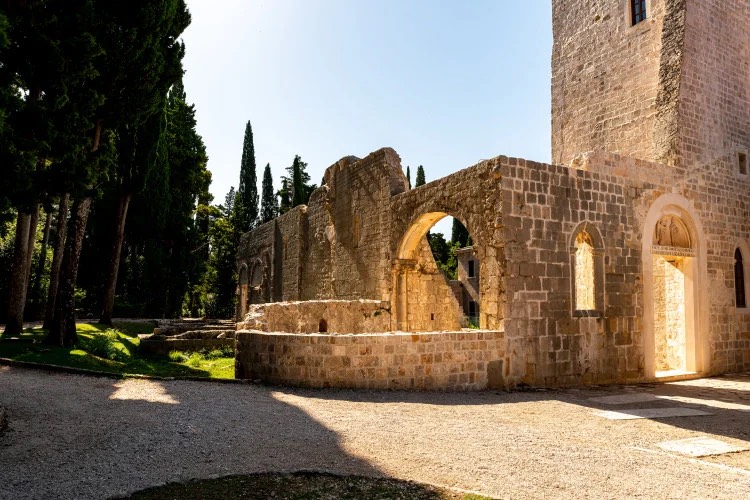
Located 600 meters (10 minutes by ferry) from Dubrovnik’s harbor, Lokrum is an uninhabited nature reserve with haunting cultural attractions surrounded by relatively unspoiled natural beauty. It’s ‘island-ness’ is preserved by a strict regulation–no one can stay overnight. Since overnight stays are the measure of tourist industry success, Lokrum is an anomaly. It has a sacred, magic place identity seen and felt in the ruins of the Benedictine monastery of St. Mary. Dating from the 9th c, the monastery was built in stages and had many residents including Hapsburg Archduke Maximilian Ferdinand I, who built a castle on the island and later Dubrovnik Dominicans. It is the source of a legendary curse placed on subsequent owners by Benedictine monks who were evicted by Pope Pius VI in 1800 after the monastery and whole island were sold.

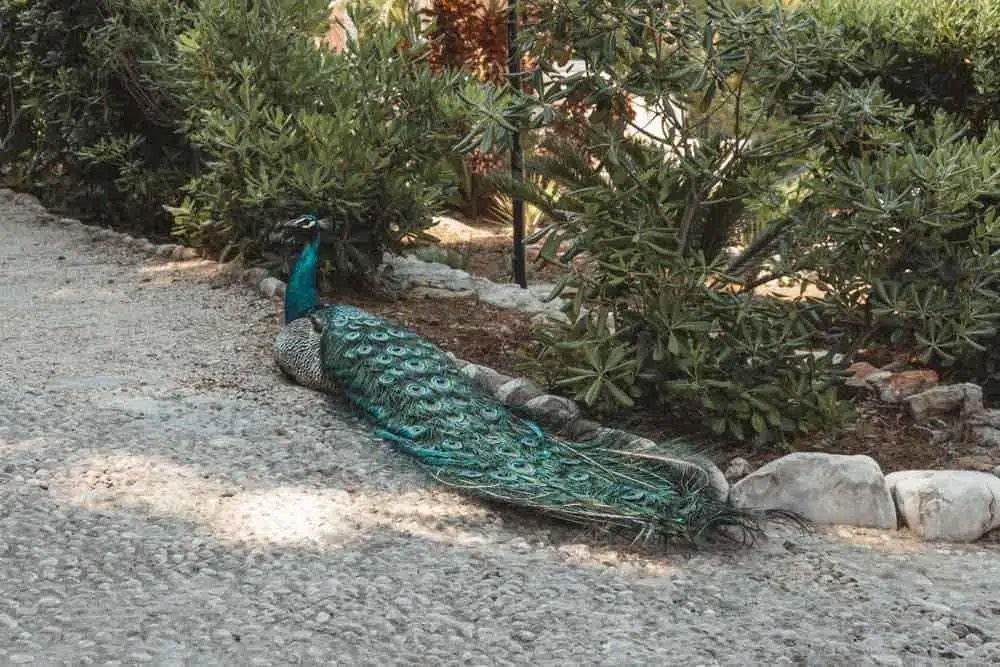
Lokrum’s Botanical Gardens are home to peacocks imported by Hapsburg Archduke Maximillian I. The cultural phenomenon Game of Thrones was filmed in the gardens, at the former Benedictine Monastery and continues to attract crowds of tourists on GOT tours who can view GOT’s Iron Throne on display at the Botanical Gardens.

Display of Iron Throne used in Game of Thrones, HappyToVisit.com

Lokrum’s lazaretto, like Dubrovnik’s, was designed to quarantine sailors, merchants travelers and their animals to prevent the spread of black plague approximately from 1300-1600. However Lokrum’s lazaretto was never finished. Some of the lazaretto’s stone construction was repurposed to fortify Dubrovnik’s walls and structures on the island. Today paths lined by majestic evergreen oaks skirt monastery ruins.

Benedictine Monastery ruins, Historyhit.com

The vulnerabilities of Croatia’s islands are made more pronounced by the scale of their landscapes, climate change and mass tourism. In the 10 May 2023 Tourism Review an article ‘Croatian Tourism Faces New Challenges in the New Summer Season’ Theodore Slate writes, ‘In Croatia seasonal tourism is hugely distorting. On Croatian islands this distortion can be debilitating as visitors flood the vulnerable island ecosystems.’ Slate goes on to quote Hrvoje Radovanovic, the head of the nature protection program of Green Action/Zelena Akcija, ‘The post-pandemic tourism resurgence will undoubtedly have a negative impact on the environment and wildlife in the form of increased demand.’ How is the presence of, and damage caused by ‘people from away’ best managed? Regenerative travel is a healing solution any tourist can adopt. New Zealand’s Tiaki Promise is a code of ethical behavior based on stewardship and responsibility to all life on earth. This type of commitment and lifestyle is appreciated but typically not embraced by visitors and tourism in general.

https://happytovisit.com/Dubrovnik/Game-of-Thrones-and-Lokrum-Island—3-Hour-Tour-from-Dubrovnik/tour-t7382-c41

This year the City of Dubrovnik and the Dubrovnik Tourist Board sponsored an animated short film titled Respect the City. Created by Stjepan Mila, this film informs tourists about restrictions in Dubrovnik’s old town by illustrating how respectful behaviors help to preserve the city’s fragile cultural heritage sites. It will be shown on Croatia Air flights and is also slated to be screened on cruise ships this season.

Green Belts Shelter

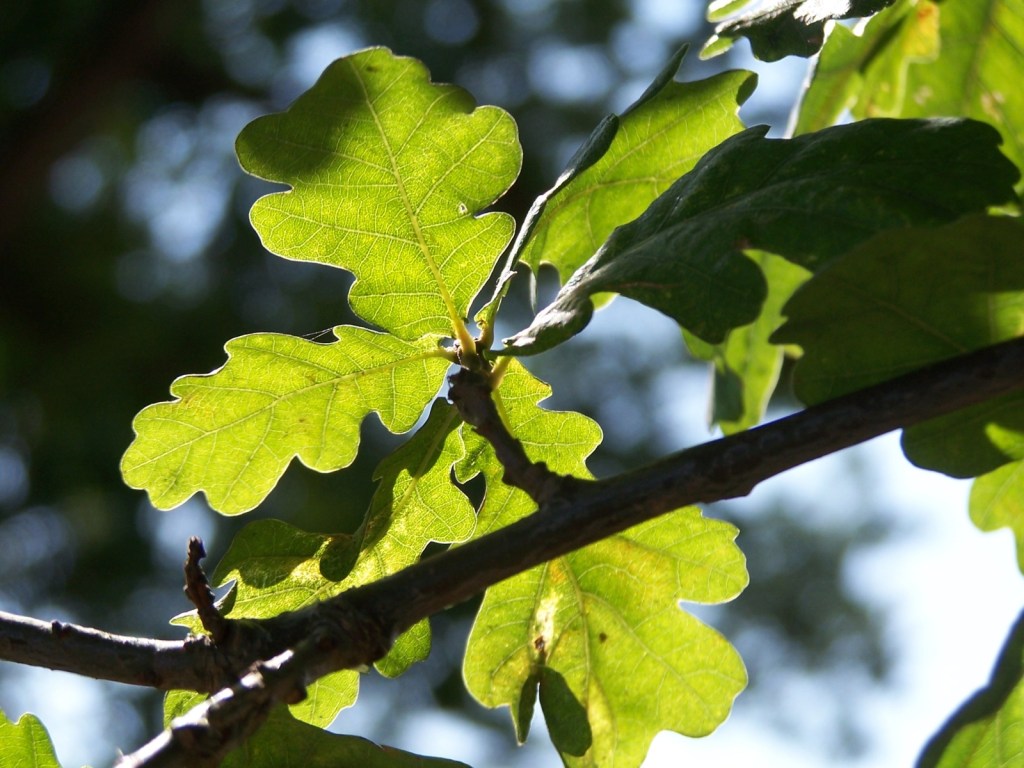
A mature oak tree has from 100,000 to 250,000 leaves in any given year. During their lives leaves diligently convert sunlight into sugars, filter carbon and oxygenate air while sending  nutrients to branches and trunks down into the earth—which is then made cooler and stronger.  At the end of their lifespan they enrich and create new earth. This is all done efficiently as each leaf responds to signals from their tree and the forest community—without a single word spoken. Since trees inspire so many words it is a wonder they are not more appreciated and protected for the everyday miracles they perform. 

On March 21 winners of the European Tree of the Year competition will be announced. This competition generates appreciation for the cultural, environmental and social benefits of trees. Winners are selected by public voting taking place online in February.

Croatia’s 2023 entry is a many centuries old oak. Though most trees nominated for the competition have a name this one doesn’t. It is one of the many oaks that grow in the Drežnica karst field near Ogulin. This field becomes a lake in the spring and fall so that water rises to cover significant portions of tree trunks. Forested areas around villages, towns and cities create green belts that shelter stressed out species.

March 21 is the UN International Day of Forests and first day of Spring.

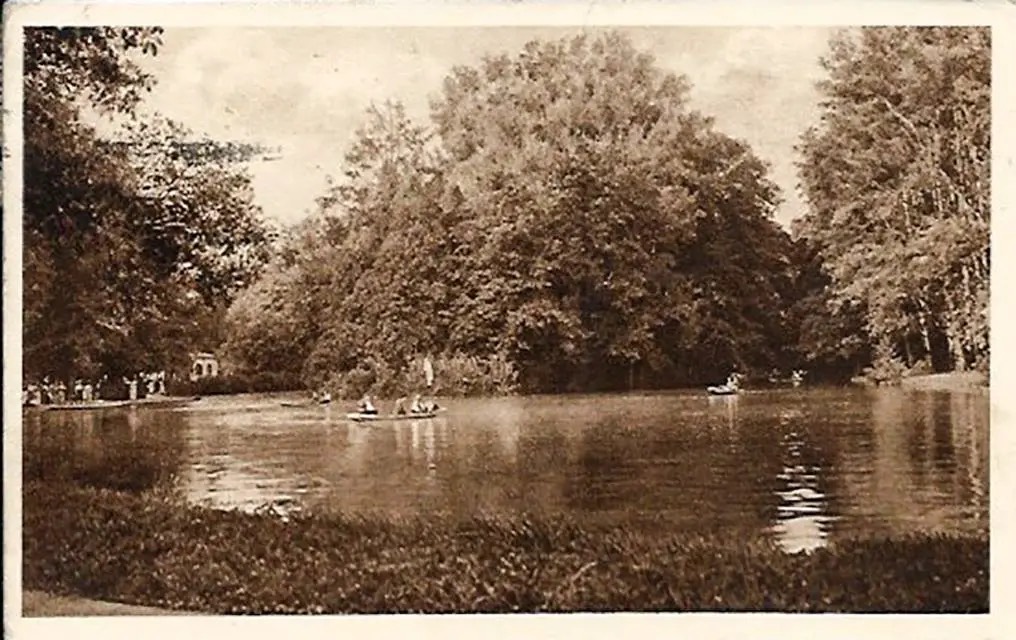
Maksimir Forest Park is one of EU’s oldest public parks.  Prior to the park’s opening in 1798 the area was a dense forest of hornbeam and oak. This forest was felled to create the 1,005 acre park located about 20 minutes north of Zagreb’s city center. Maksimir’s impressive green canopy shades peaceful walking and hiking paths, a promenade, gardens, zoo, pavilions and five man-made lakes. In recent years Maksimir has become a tourist attraction for visitors to Zagreb. Trails have been upgraded with markers to help Croatian and foreign tourists wayfind. The International Scientific Journal Turizam published research in 2012 using SWOT (strengths, weakness, opportunities, threats) surveys to analyze the value of Makismir’s resources. Researchers supported by the faculty of Tourism and Hospitality Management in Opatija surveyed 120 park visitors.

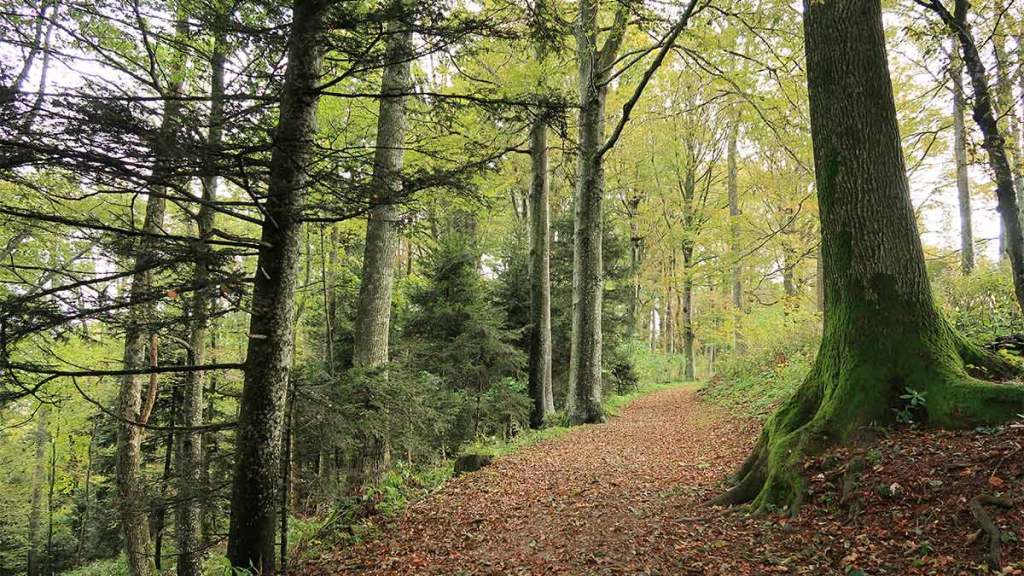
Nearby Maksimir is Medvednica Nature Park, sited on Zagreb’s north border. The park’s most striking feature is Medvednica Mountain which is in plain view from Zagreb’s upper town. Also called ‘Bear mountain (Medved means bear), the name refers to the area’s former brown bear inhabitants/residents. Forested trails leading up to Slijeme—the peak of Medvednica Mountain have been popular with hikers for over a century. Beech trees are the hallmark of this forest. In the 1980s extreme winters damaged Medvednica’s beech forests.  To mediate the impact of climate change today Medvednica is one of Croatia’s 400 areas designated to protect bio-diversity. Forest Park Tuškanac is a another peaceful forest park tucked into the foothills of Mount Medvednica. Nestled among trees are historic summer villas and an open-air stage.  Anthropologist and award winning author Andra Pisac’s 2023 insider piece shows ways to enjoy Medvednica’s many pleasures.

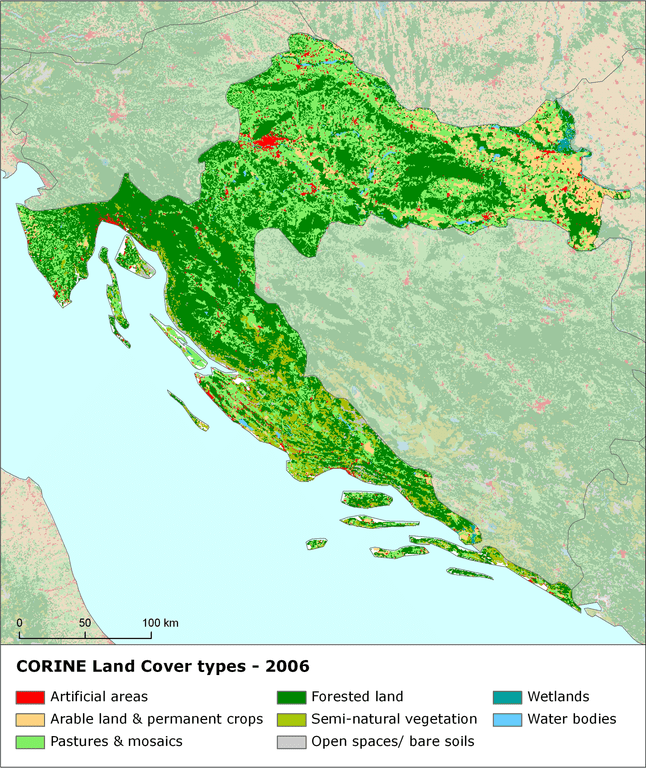
According to countless sources (UN, World Bank, FISE – Forest Information System for Europe, Global Forest Watch) about 35% of Croatia is forested. (In March 2022 Croatia’s Ministry of Agriculture reported that forests and forest land cover 2.76 million hectares or 48.7% of Croatia’s land area.) Complex forest ecosystems cover about third of the earth’s surface

To assess the health of forests, Croatian ecologists and forest researchers have been using satellite captures and ground data collection. Recent studies promote philosophies of harmonious, right relationships between humans and forests. A 3 year study of Zagreb’s green canopy cites restorative aspects of mutual dependencies echoed in Forest Management and Ecology research coming done by Croatian and Slovenian Universities. 

Monitoring and restoration efforts are more effective when they combine technology to create positive interactions between people and the earth. The BORANKA project was developed and implemented with the Scouts under the supervision of Dan Spičer help address drought induced forest fires that devastated the area around Split in the 2000s.  Seed scattering drones help replant trees, but hands-on field work especially with youth makes these projects work.

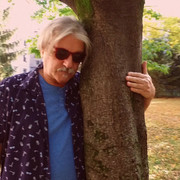
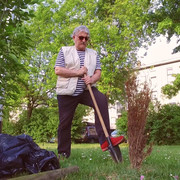
Epiphanies are defined as a moment in a person’s life when their path becomes clear. Filmmaker Dalibor Platenik A Man and a Tree document’s Vladimir Joda’s epiphany in 1985  when he was inspired to plant trees in Zagreb’s city parks—without permission from the local authorities. He mostly plants, waters and tends trees in the dark or very early in the morning. In recent years Vladimir wears city service workers uniforms to maintain his invisiblity. He visits his trees regularly and is proud of his actions, taking his authority from a higher power.

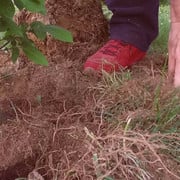
Vladimir Joda lives in an apartment that overlooks a park. Birdsong is his summer 4:30am morning wake up alarm.  Vladimir moves about the city with 5  to 10 gallon plastic containers he uses to water drought affected trees. Vladimir connects caring for trees to caring for all life forms—he began planting trees when his own children were young. For many years Vladimir worked in a raliroad shunting yard where, after hours he planted 146 trees. He purchases young trees selected specifically for each site at one of several local garden centers, budgeting $30 -$40 per seedling and some type soil enrichment out of his own pocket. As of 2019 Vladimir planted 450 trees.

How can humans better fit into landscapes? Create healthy relationships with trees, forests and more than human life? Hrvatske Šume was founded in 1991 to help protect bio-diversity of Croatian forests and forested land along with networked European Institutes including the Croatian Forest Institute which seeks to integrate sometimes competing agendas and interests.
https://www.hrsume.hr/ and https://www.sumins.hr/en/

A series of interviews with Vladimir’s long-time friends reveals the strength of his beliefs. He organizes planting parties but does not elaborate—maybe to protect those involved. He isn’t interested in being an influencer, his purpose is to fulfill his responsibility to the earth. At nearly 70 years old the work is becoming more difficult for him but Vladimir is determined to continue and to spread his philosophy. Vladimir’s work improves the lives of many, but can his solo endeavors compensate for careless public behavior and negligence?

 CO2MPENSATING BY PLANTING is a new program specifically designed to compensate for CO2 emissions by planting trees. Organised with the Croatian Scouts Association, Croatian Forests HEARTH  and the new high school Šumoborci (Forest Fighters) these are innovative responses to the consequences of climate change. CO2MPENSATING is the first program of its kind in Croatia, but also in the entire  EU region. It promotes intergenerational engagement and follows in the footsteps of the BORANKA project’s success. Many of the initiatives and right actions are supported under the umbrella of Natura 2000, a network of 27,800 sites in 28 countries. Natura 2000’s purpose is to protect valuable, threatened species and habitats. It is the largest coordinated network of protected areas in the world. 

INSPO

This post is inspired youth volunteers, Vladimir Joda’s story and research done by Andrija Krtalić (University of Zagreb, Geodesy) , Dario Linardić (Geodetic Institute, Rijeka) and Renata Pernar  (University of Zagreb, Forestry) ‘Framework for Spatial and Temporal Monitoring of Urban Forest and Vegetation Conditions: Case Study Zagreb, Croatia,’ published 27 May 2021 in Sustainabilty Journal, and ‘Evaluation of Forest Edge Structure and Stability in Peri-Urban Forests’ by David Hladnik, Andrej Kobler and Janez Pirnat, Forests, 18 March 2020 Slovenian Forestry Institute, 1000 Ljubljana, Slovenia.

SOURCES, INFO and IMAGES

‘Croatia’s seed-scattering drones replant forests hurt by fire,’ Reuters, 11/21 https://www.reuters.com/business/environment/croatias-seed-scattering-drones-replant-forests-hurt-by-fire-2021-11-17/

CO2MPENSATING BY PLANTING https://project-o2.org

Natura 2000 https://ec.europa.eu/environment/nature/natura2000/awards/news/archives/2014/01/news_20140203_02_en.htm

Douglas W. Tallamy, Nature’s Best Hope, a New Approach to Conservation that Starts in Your Yard, 2020 Timber Press, Portland, OR

Quercus Rober Oak leaf, Wikimedia

250 year old Oak Tree in Drženica Polje near Ogulin, the birthplace of the Croatian fairytale author Ivana Brlić-Mažuranić and partisan stronghold during WW2. https://www.treeoftheyear.org/vote/the-oak-from-dreznica-field  

Maksimir Forest Park in 1920, Total Croatia News https://www.total-croatia-news.com/zagreb-blog/18848-zagreb-in-history-maksimir-park-at-the-turn-of-the-century

Medvednica Nature Park, Andrea Pisac https://travelhonestly.com/zagreb-parks-medvednica/

Corine Map, European Environment Agency https://www.eea.europa.eu/help/faq/what-is-corine-land-cover

Vladimir Dimić Joda, A Man and A Tree by filmmaker Dalibor Platenik https://havc.hr/eng/croatian-film/croatian-film-catalogue/a-man-and-a-tree

Family

Vera and Paola Eledda oko božićnog drvca

This photograph of twins Vera and Paolo Eledda was taken in 1956. They are my first cousins once removed–the children of my great aunt, Darinka Martinčić Eledda. Since shortly after World War II they lived in Sardinia. I never met them but we recently corresponded. Relatives who are from the same branch of the Martinčić family on my maternal grandparents ancestral line influenced me in so many ways. Family and Christmas are foundations of Croatian culture. Familial roles and and religious traditions (mostly Roman Catholic) are well-defined if not always similarly practiced. In a country of 3.9 million it can seem like everyone is related to everyone else. Families are close-knit and spend a lot of time together especially during the Christmas holidays.

Map of the Croatians around the world. Darker areas show where there is a significant Croatian population.
Wikimedia Commons August 2022

Diaspora is a hallmark of our time. The largest Croatian disaspora is in the United States. Dr. Tado Jurić at Catholic University of Croatia writes passionately about reasons that more people with Croatian heritage reside outside of the Republic of Croatia–between 7 and 8 million scattered worldwide. The number of Croatians emigrating has steadily increased in the past 50 years. Even after gaining EU membership in 2013 Croatians continue to seek jobs and and build lives far from home. Last year in an attempt to draw people to live and stay in Croatia, the town of Legrad near the Hungarian border was offering to subsidize homes that cost 16 cents in return for buyers 15 year commitment to live there.

Family poses in ancestral home in Moščenićka Draga, c. 1950s. Mary Martinčić Scatena

Far flung family. Decreasing population. Increasing secularism. Mass tourism displacing locals. What does that mean for Croatia? Croatia’s diverse, beautiful biomes–mountains, sea, waterways, high meadows, wetlands and islands includes karst formations. Throughout Europe karst regions are protected by national governments. In a study of the Krka National Park and surroundings funded by Eötvös Loránd University in Budapest, geographers Telbisz, Radeljak Kauffman and Bočić ask, How do natural settings influence population dynamics? Using a variety of methods they explore how karst formations impact demographics. Telbisz, Radeljak Kauffman and Bočić determine that elevation and proximity to water are two prominent factors linking karst, demographics and depopulation. Unlike historians such as Jurić who cite political corruption and the after effects of the war decade (1991-2001) as primary reasons for de-population, scientific research sheds light on the dynamics between inland and coastal areas as prime tourist destinations, and how National Park management may help stimulate economic and population growth while preserving delicate ecosystems.

 Bol, island of Brac (Dieter_G, Pixabay)

Islands are particularly vulnerable to economic downturns. An academic who lives and works in Chicago and Zagreb sums up the dilemma, ‘Those islands are under so much pressure to preserve heritage and to preserve nature. But also to be open to building up the economy. They’re talking about opening an airport on Hvar or Brač. It’s so horrible for the ecology. And do you really want more people? But there’s nothing else much there so do you let it happen? Gosh, that’s such a stressful thing for them. I guess they have to balance development with the reason people come, which is lack of development.’

For the past thirty years economic support, cross-cultural education, and environmental concerns have been the focus of Snažniji Zajedno-Stronger Together, an embassy-to- embassy program that coordinates efforts between the United States and Croatian. The diaspora has undoubtably contributed to the success of Snažniji-Zajedno and the leadership development programs though the U.S. Croatia Forum Initiative.

Last year in November 2021 Vukovar Water Tower became a member of the World Federation of Great Towers–a prestigious group of iconic towers including the Eiffel Tower and Empire State building. As ‘A symbol of Croatian unity’ the renovated Vukovar Water Tower retains bullet holes that tell the history of the turbulent 1990s. In 1988 historian Peter Alter visited the former Yugoslavia as a college undergraduate. Alter reminisced,  ‘Tito was definitely on the mind as a history major at the time. So I definitely remember that…It was definitely top-level consciousness.  But at the same time I had no inkling that there would be a multi-sided war.’ Peter went on to become a professional historian whose specialities are US cities and southeast Europe.

So the first time I went to Croatia I was five years old and it was 1996. So this was right after the war. We always went in the summer and my birthday is in September, so I was almost six years old. We flew into Germany and drove from Germany into Croatia—me, my dad, my mom and my brother who is five and a half years older. I have such vivid memories of that trip, specifically of us driving into Zagreb first. You know, this is a year after the war.  The war was still very fresh. As a young kid you don’t understand what’s going on, but I remember that in the hotel we stayed at in Zagreb I couldn’t sleep because I thought there was a dead soldier in the closet of the hotel room. 

Daniela Rogulj

In the area of sports, it has been said many times that Croatia ‘punches above its’ weight class.’ For such a small country to consistently produce sports superstars points to cohesiveness and sense of purpose that Croatian sportsmen and women, their coaches and families embody. During the World Cup in Qatar in November journalist Daniela Rogulj reported for several global news outlets. The excitement in Daniela’s voice reflects her background as a soccer player growing up in California and her love of Croatia. In the past ten years Daniela and her parents have returned to live in Dalmatia. Daniela’s behind the scenes insights gave examples of how supportive networks fuel success.

A sense of belonging is what binds us together–through birth families, communities we live in, national and global affiliations, relationships with animals and plants–our earth family. My wish for 2023 is that we recognize and appreciate our family wherever they may be in a rapidly changing world.

Selected Citations

Telbisz T, Radeljak Kaufmann P, Bočić N (2022) Inland-coastal demographic transformations in a karst area: a case study of the surroundings of Krka National Park (Croatia). Journal of Mountain Science 19(2). https://doi.org/10.1007/s11629-021-7032-8

Vukovar Water Tower: From Functionless Facility to World Class Attraction 13 November 2021 Croatia Week https://www.croatiaweek.com/vukovar-water-tower-from-functionless-facility-to-world-class-attraction/

Interviews with Peter Alter 25 October 2022 and Daniela Rogulj 1 August 2022 and Anonymous Academic 24 June 2022, Marie Scatena interviewer

Architectural Digest Jessica Cherner 15 July 2021 This Beautiful Croatian Town is Selling Homes for 16 cents Each https://www.architecturaldigest.com/story/beautiful-croatian-town-selling-homes-16-cents-each

Colonization of Croatia and EU Member States? Visegrad Post 11 May 2020 Dr. Tado Jurić https://visegradpost.com/en/2020/05/11/colonization-of-croatia-and-new-eu-member-states/