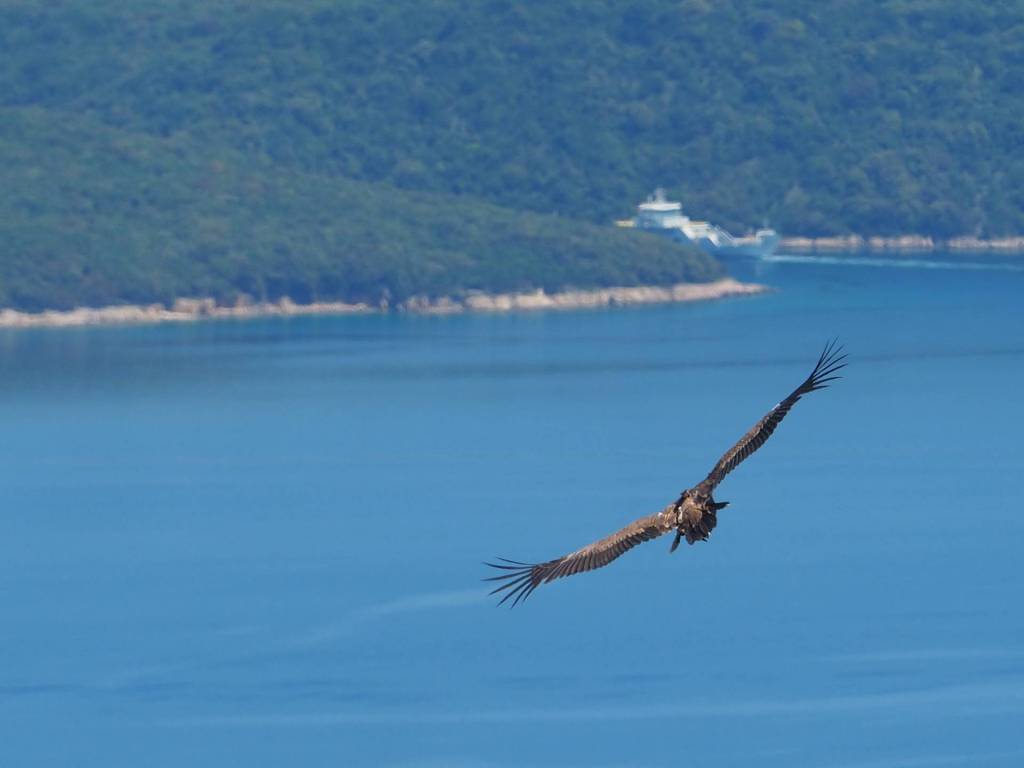
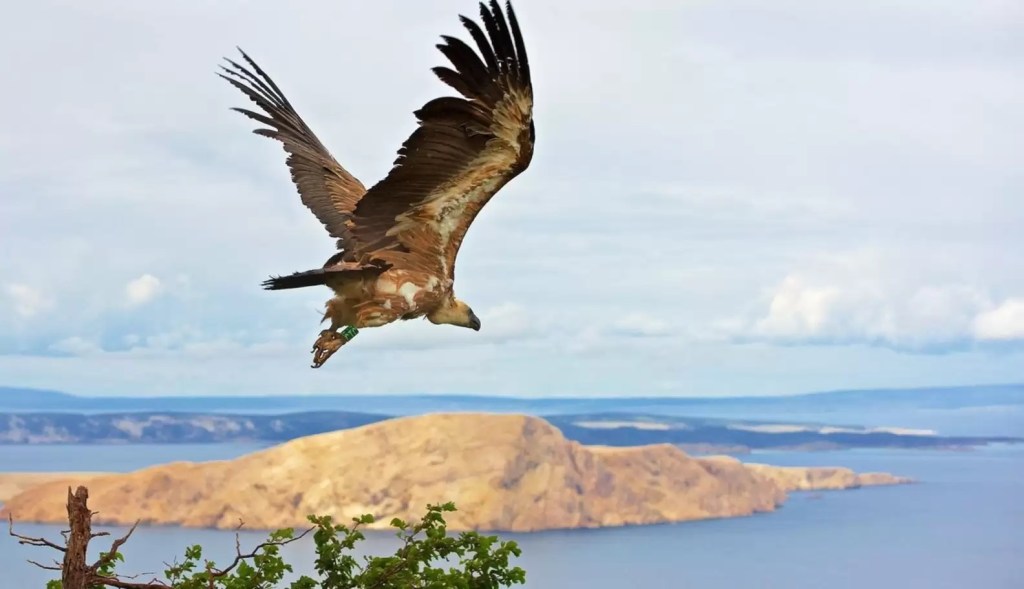
Soaring high above islands and sea, the protected Eurasian Griffon Vultures make their nests on rocky cliffs that are almost inaccessible humans. Griffon Vultures have inhabited Cres for centuries. Their nesting colonies are one way Cres is distinct from the more well known large Kvarner Bay ‘sibling’ islands—Krk, Lošinj, Pag and Rab—whose year round populations are about 8,000 each. The Brijuni Islands, once Josef Broz Tito’s personal estate is now a National Park, and Susak, a car-free island with its own dialect and about 200 residents are the other well-known Kvarner Bay islands. (Numerous ecologically, econonomically and culturally important smaller islands and islets are part of the Kvarner Archipelago.)Tourism is less developed on Cres than on the other islands. Developed or not, islands are especially vulnerable to the often profound impacts of tourism. Since the 1970s tourism has been the most important economic activity on the Croatian islands and Adriatic Croatia is the most important Croatian tourism region. (Impact of COVID-19 on Croatian Island Tourism: A Study of Residents’ Perceptions. Economic Research-Ekonomska Istraživanja,Volume 36, 2023, Issue 2 DOI: https://doi.org/10.1080/1331677X.2022.2142631,Published Online: 2022-11-12, Published Print: 2023-07-10)
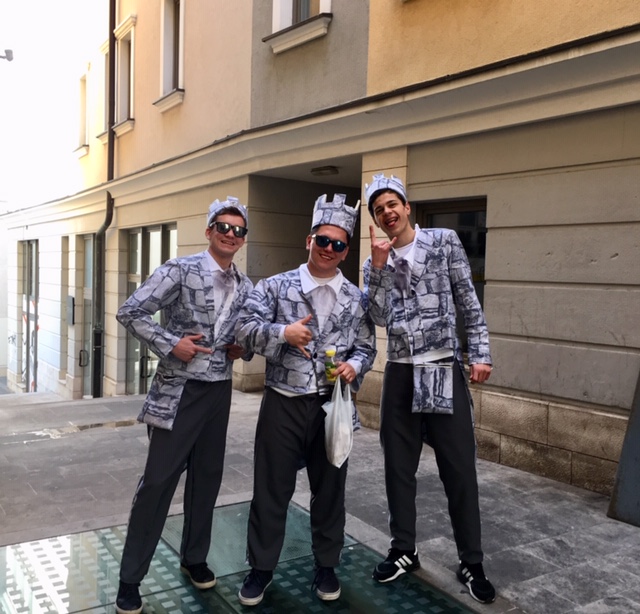
I was first introduced to Cres (pronounced tsres) at Rijeka’s karneval/Maškare in February, 2017. While walking to a parade route I met three young men in costume who eagerly posed for me. They embodied the Croatian Tourism Board’s tagline, ’Croatia, Full of Life.’ I understood they were high school students (srednjoškolci) participating in a history-themed group from Cres who performed in Riječki karneval’s 8 hour parade finale. Their costumes represented the defensive stone walls that once surrounding Cres Town built to protect Cres millenia ago, mostly from pirates and imperial invaders.
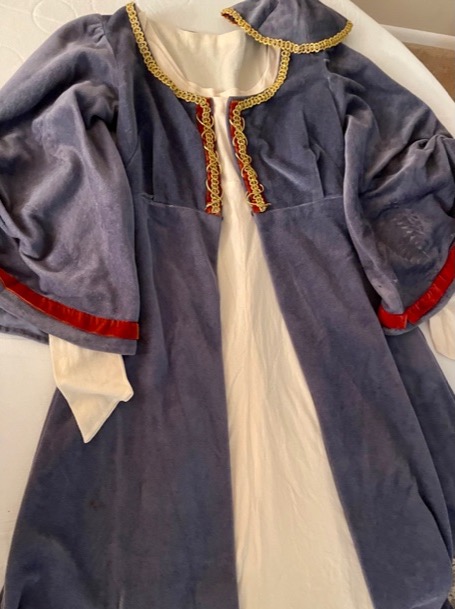
The student’s pride in their history was infectious and welcoming. I felt an unexpected kinship with the karneval participants I met serendipitously and at scheduled events. I wondered why my Croatian grandparents had never mentioned karneval but there was one clear connection. My maternal grandmother, a seamstress born in a town overlooking Kvarner Bay sewed a costume for me to sing and dance at Renaissance festivals reminiscent of Maškare. Made in 1976, it was subsequently worn by my daughter and other family members, and is still in wearable condition!
Krk and Cres are the largest of the Kvarner Bay islands. They have almost the exact same area size but nearly opposite shapes. Krk is attached to the mainland by a mile long bridge, Cres, by ferry. Krk’s population is approximately 19,000, but Cres has only 3,000 residents who mostly live in the town of Cres. (main town on Croatian islands often share the island’s name.) Krk has lots of cultural attractions, tourist accomodations and an airport. Cres not so much.
Cres is such a long land mass that it has Mediterranean and sub-Mediterranean climates tempered by Contintental influences. Because of these multiple climate zones, Cres is arguably the most biodiverse Croatian island.The northern part of the island is called Tramuntana. There are forests of hornbeam elm and sweet chestnut (which grow in forest stands and are cultivated in orchards) encircling rocky cliffs. In the south holm oak and pine grow in the forests of Punta Križa. (Map: Croaziatours.blog)

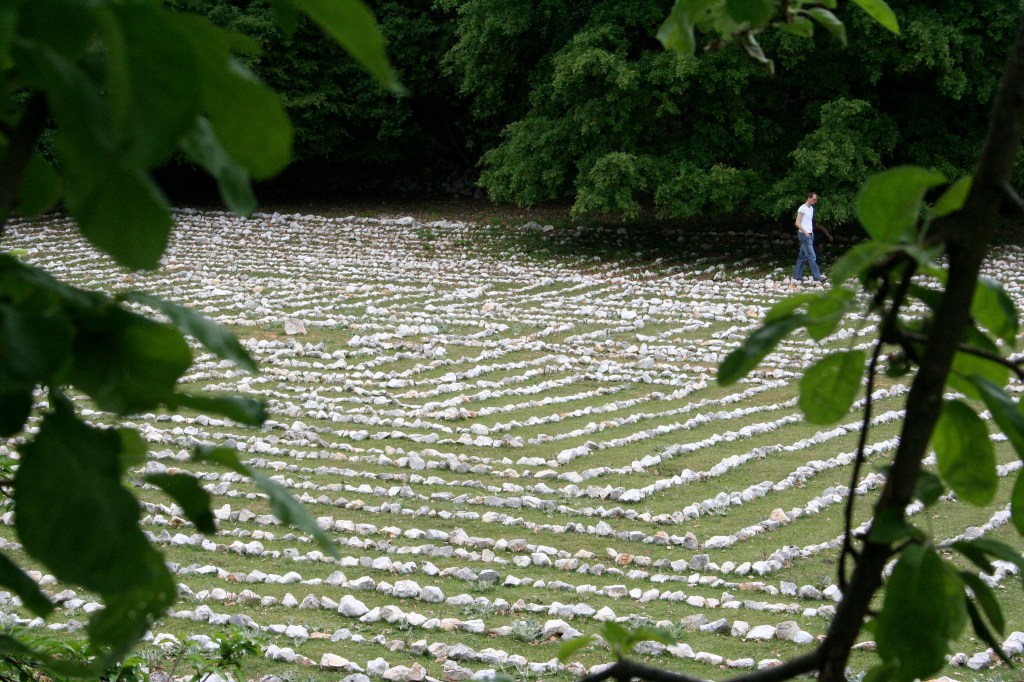
There are 7 eco-trails in Tramuntana which were built in the 1990s by the local Eco Centre in Beli. They meander through old roads that used to connect what are long abandoned villages in Tramuntana’s forests. Along the trails are 7 stone labrynths named Vesna, Ishtar, Tara, Osiris, Isis, Rusalka and Lada. (The number 7 is symbolic on Krk, too. Krk was settled by Croats in the 7th century, there are 7 large tourist centers on the island…)
Lada is the Croatian goddess of beauty, love and summer. Myth has it that her companions are nymphs known as Ladarice who left the world to live in as islands in the sky in an open star cluster. Together they create the Pleiades, also known as the Seven Sisters or M45. ‘In both myth and science, the Pleiades are sibling stars. Modern astronomers say the stars were born from the same cloud of gas and dust some 100 million years ago.’ (https://earthsky.org/favorite-star-patterns/pleiades-star-cluster-enjoys-worldwide-renown)

https://www.telescopenerd.com/how-to-see/pleiades.htm
The waters around Cres and Krk are breeding grounds of the common bottlenose dolphins who swim in the Cres-Losinj Protected Marine Area. Protected by The Blue World Institute of Marine Research and Conservation on Veli Lošinj (https://www.blue-world.org/) Adriatic bottlenose dolphins seem especially fond of the playing in waters around Cres where there are lots of opportunities to watch them.
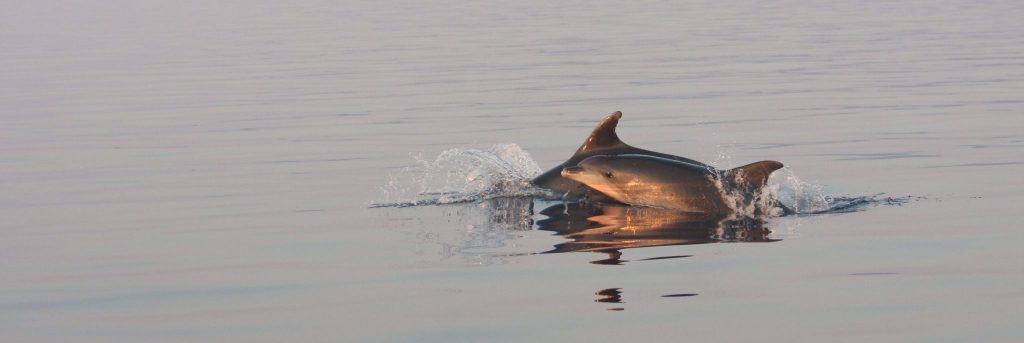
The Blue World Institute rules for low impact observation: do not get closer than 50 meters to dolphins; allow them to decide on their own if they will approach you or not; approach them slowly and sideways, never directly from the front or rear; put your boat engine to neutral and do not rush to catch up with them when they emerge; avoid sudden changes of speed or direction when close to them and follow the pod for 30 minutes at most. If you see calves or hear that the dolphins exhale loudly and bang their tail on the sea surface, change direction suddenly or dive for a long time, you should move away immediately.
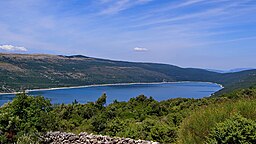
Another natural, phenomena critical to the well-being of Cres and Lošinj is the highly protected Lake Vrana/Vrankso jezero. This fresh water lake located in the middle of Cres is 74 meters below sea level. It supplies drinking water for almost all the towns and villages on Cres and Lošinj. Most of the other islands need to import their drinking water. It is illegal to swim, fish or perform other activities on Lake Vrana. (Photo Wikimedia)
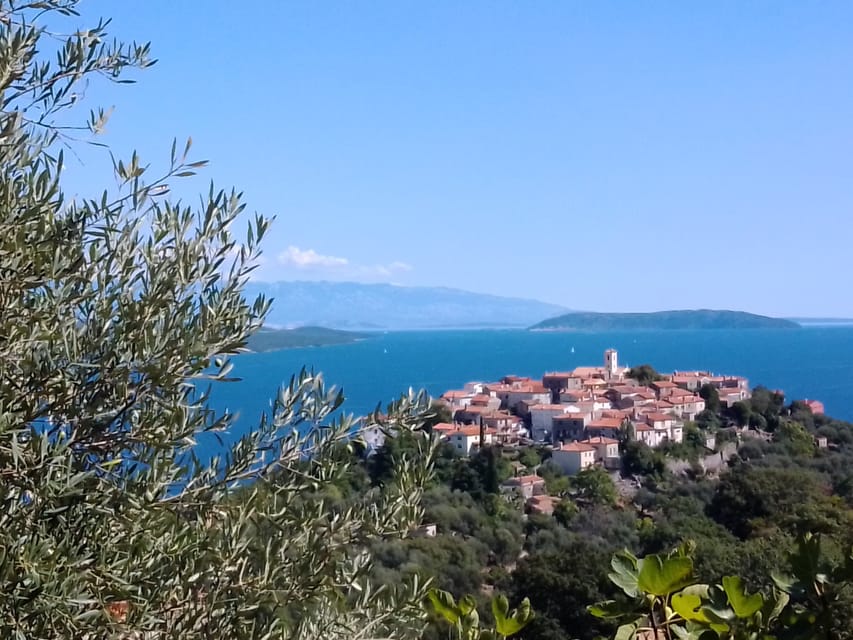
Beli is one of the oldest places on Cres. Beli’s cliffs helped to make it an important Roman outpost 2,000 years ago, and home to the golden eagle, short-toed eagle, peregrine and kestrel and an endangered griffon vulture nesting colony. The Griffon Vulture’s approximately 8-foot wingspan allows them to fly high as high as commercial aircraft and the Himalayas. Heat from the sun gives them the thermal lift they need to glide and soar on air currents staying aloft 6-7 hours a day, circling for food which they can spot at distances of 3 or more miles.

Scavengers like the Griffon Vulture are a keystone species who keep ecosystems clean and prevent the spread of disease by providing the critical sanitation service of eating animal carcasses. (They have no sense smell) Today Griffon Vultures are having a hard time finding food, because of the decline in sheep farming which provides their main food source. (Lamb is an integral component of traditional human Croatian cuisine) Pollution, climate change, threats from tourist boats, farming and hunting practices which use toxic products and electrocution, have all contributed to Griffon Vulture decline.
A hero of conservation and cultural heritage is natural scientist and ornithologist Dr. Goran Šusić. He founded the Caput Insulae Center in 1993 in old schoolhouse near Beli. Dr. Šusić is devoted to the preservation and healing of injured Eurasian griffon vultures, and to Cres. When he visited the island in the 1980s there were only 25 pairs of griffon vultures. By then two native vulture species, the Bearded and Black Vulture were already extinct.
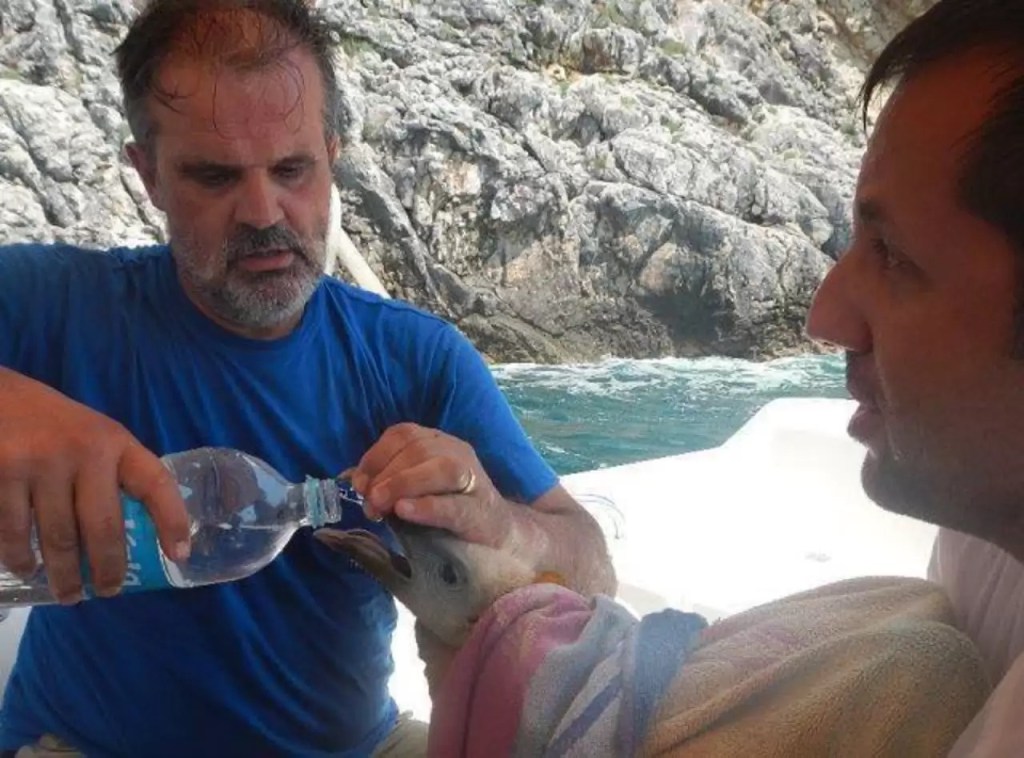
In 2012 Caput Insulae closed. Two years later in 2014, a government sponsored consortium led by BIOM with Public Institution Priroda, Otok Krk Agricultural Cooperative, HEP – Operator distribucijskog sustava d.o.o., an energy distribution company, the Vulture Conservation Foundation and the Croatian Nature Protection Directorate (Ministry of Economy) took on Caput Insulae’s mission and opened The Beli Visitor and Rescue Centre for Griffon Vultures https://belivisitorcentre.eu/en.
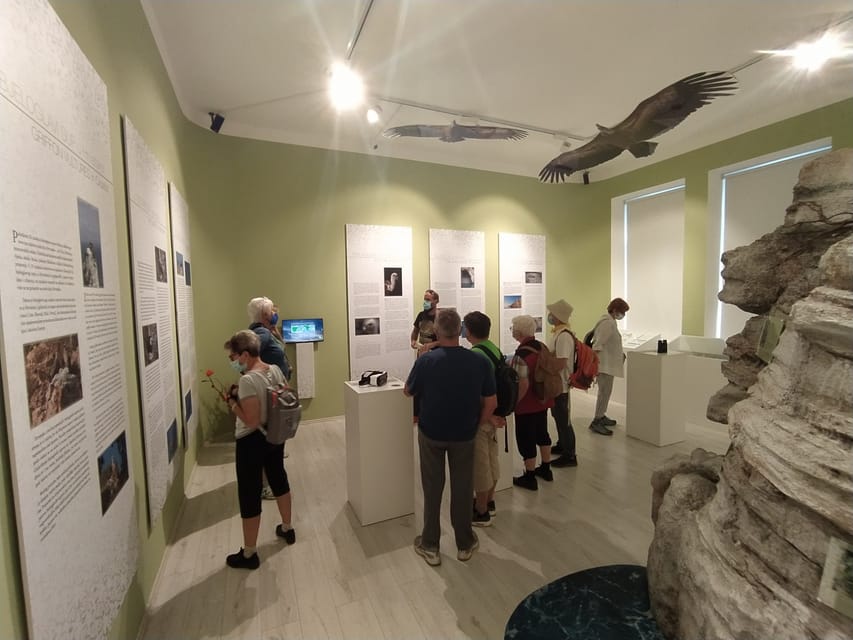
The Beli Visitor Centre for Griffon Vultures is part of a network of conservation projects under the umbrella of The NATURA 2000. Today the Centre is supported by the Croatian Ministry of Tourism, the Town of Cres’ Tourist Board and LIFE SUPport, a 2.1 million project operating from January 2023 until December 2027. https://www.biom.hr/en/life-support-project-aims-to-create-better-conditions-for-griffon-vultures-in-croatia/BIOM Association for Nature and People https://www.biom.hr/en/. Collaborations between the conservation groups may yet help the endangered Croatian Griffon Vulture population.
Griffon Vultures only have one chick a year who are often at risk during their long maturation period.Young Griffon Vultures named Palina, Coline, Lima and Anton were found exhausted near their cliffside nest facing the sea. Some were rescued from downing by dedicated workers at the Beli Griffon Vulture Recovery Center. On September 15, 2023 the four rehabilitated Griffon Vultures were set free on Cres by volunteers and professionals.
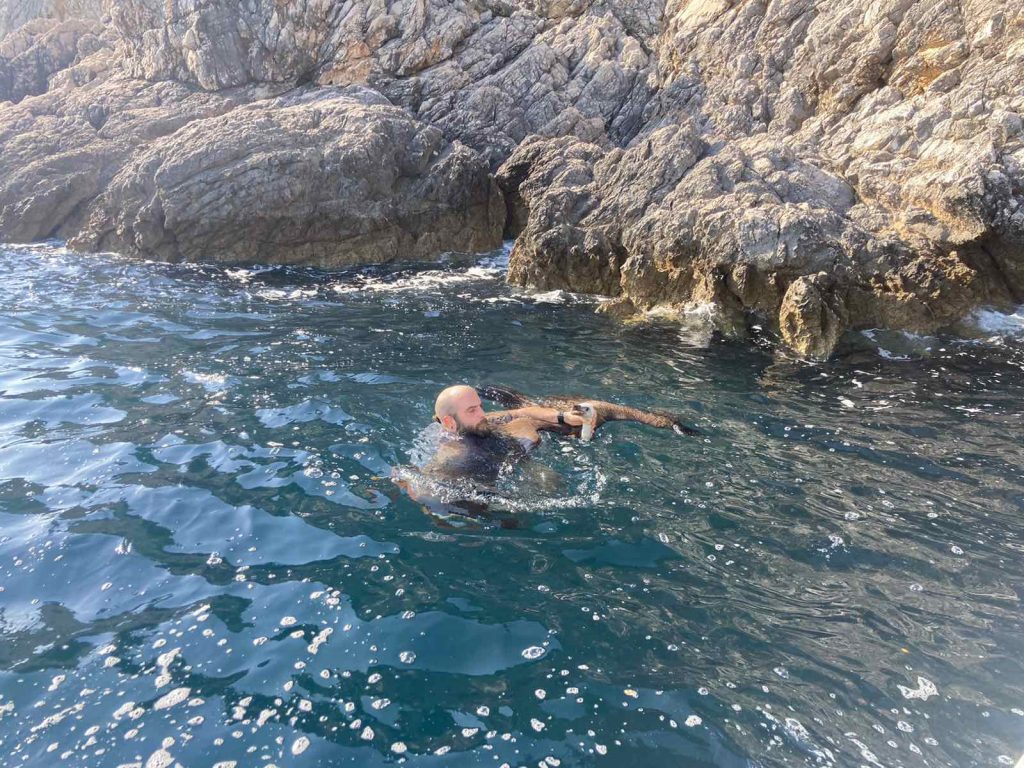
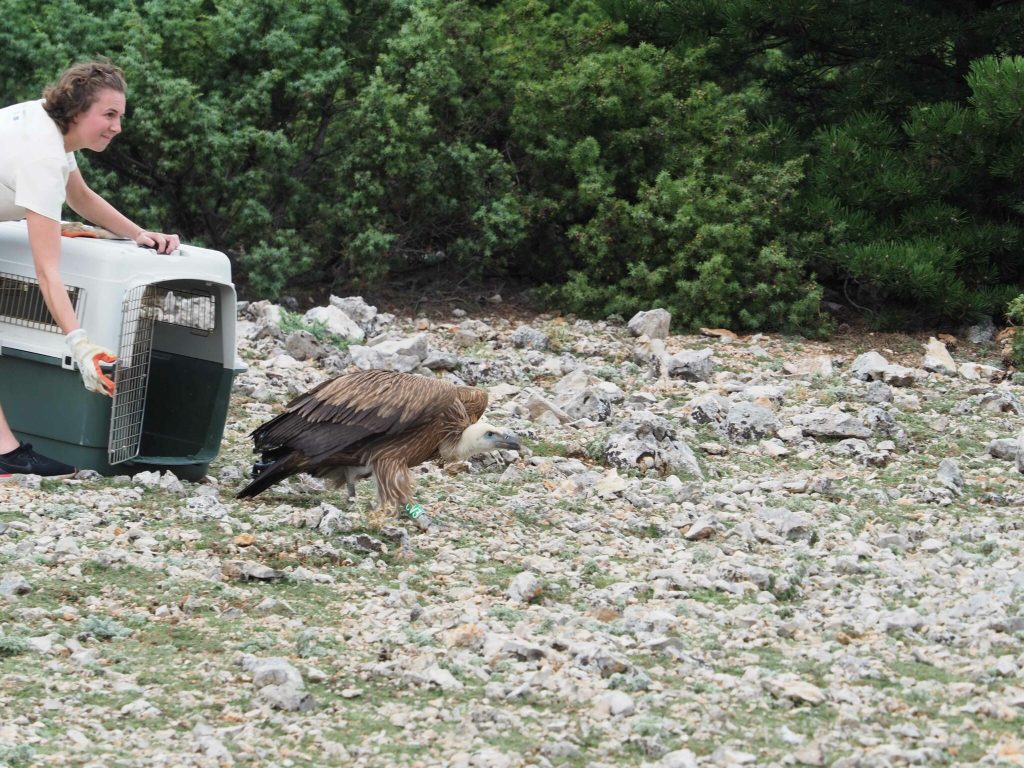

Beli has a permanent population of just 15. Even before Dr. Goran Šusić opened the original centre there, it attracted thousands of wildlife advocates and volunteers each year. Šusić admits “It’s hard to make a living here. The Eco Centre is already providing incomes; I hope ecotourism will be the future.”
Articles by and about Dr. Goran Susic
The Long Term Trend, Reproductive Performance and Colony Shifting of the Eurasian Griffon Gyps fulvus in Croatia/Dugoročni trend, reprodukcijski parametri i pomicanje kolonija bjeloglavog supa Gyps fulvus u Hrvatskoj March 2022 Larus godišnjak Zavoda za ornitologiju Hrvatske akademije znanosti i umjetnosti 56:20-57 by Dr. Goran Susic Croatian Academy of Sciences and Arts DOI:10.21857/y54jofk34m
Simply Beautiful the Natural Heritage of Primorje-Gorski Kotar County (https://ju-priroda.hr/wp-content/uploads/2018/02/SimplyBeautiful-PGZ-compressed-v2.pdf) Sušić, Goran; Radek, Vesna. 2007. Bioraznolikost kroz lokve otoka Cresa. Eko-centar Caput Insulae – Beli. Rijeka.
Flight club: One man’s crusade to protect an endangered colony of griffon vultures on Cres, Frank Partridge 27 June 2009 for The Independent Saturday https://www.independent.co.uk/travel/europe/flight-club-one-man-s-crusade-to-protect-an-endangered-colony-of-griffon-vultures-on-cres-1720998.html
Stranded, Weak Birds Get A Second Chance Thanks To Fearless Rescuers, Cornelia Kruchten 30 October 2015 for The Dodo https://www.thedodo.com/topics/animal-encounters
Resources for Griffon Vulture Rescue and Recovery
Učka Nature Park to Host Feeding Ground for Griffon Vultures Total Croatia News January 2, 2018
Vulture Conservation Foundation https://4vultures.org/blog/a-new-life-for-four-griffon-vultures-in-croatia-life-support/#:~:text=The last vulture species in Krk, Plavnki and Prvić
The Protection of Nature in Primorje-Gorski Kotar County https: //ju-priroda.hr/en/
 From the same tree